India’s 2018 tiger census has made a world record of being the largest ever camera trap wildlife survey. The census has entered the Guinness Book of World Record. The fourth edition of the census, which was carried out between 2018-19, was “the most comprehensive to date, in terms of both resource and data amassed,” mentions the Guinness Book of World Record on its website.
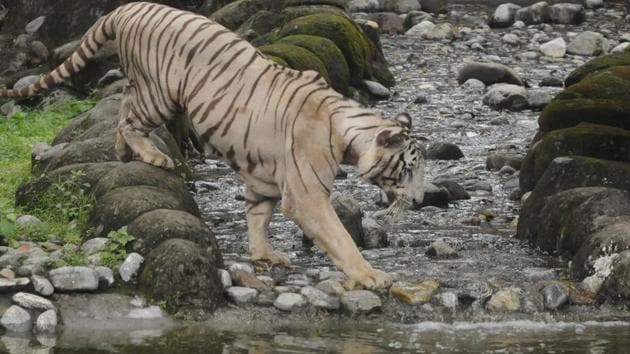
Environment minister Prakash Javadekar reacted to the feat and said that the aim is to double the numbers achieved four years before target.
“Our census of tigers entered Guinness World Records because we have installed more cameras to monitor them as compared to other countries. Their population is nearly 70% of the world’s tiger population,” he told news agency ANI.
Since 2006, the government of India has been conducting the census every four years led by the National Tiger Conservation Authority (NTCA) and the Wildlife Institute of India (WII) with cooperation from various state forest departments and conservation NGOs.
{{/usCountry}}Since 2006, the government of India has been conducting the census every four years led by the National Tiger Conservation Authority (NTCA) and the Wildlife Institute of India (WII) with cooperation from various state forest departments and conservation NGOs.
{{/usCountry}}The exercise aims at arriving at a nationwide assessment into the country’s population and habitat of tigers (Panthera tigris tigris).
Also read: SC committee asks Assam to submit report on illegal construction in Kaziranga animal corridor
The latest survey was carried out in three phases, marked by an “unprecedented camera trap usage”.
“Camera traps (outdoor photographic devices fitted with motion sensors that start recording when an animal passes by) were placed in 26,838 locations across 141 different sites and surveyed an effective area of 121,337 square kilometres (46,848 square miles),” the website noted.
Around 34,858,623 photographs of wildlife (76,651 of which were tigers and 51,777 were leopards; the remainder were other native fauna) were captured during the survey from which 2,461 individual tigers (excluding cubs) were identified.
The 2018 “Status of Tigers in India” assessment also conducted extensive foot surveys that covered 522,996 km (324,975 mi) of trails and sampled 317,958 habitat plots for vegetation and prey dung. It’s estimated that the total area of forest studied was 381,200 km2 (147,181 sq mi) and cumulatively the collection and review of data equated to some 620,795 labour-days.
A positive outcome of the survey was that it concluded that India’s tiger population had increased by roughly one-third - from 2,226 in 2014 to 2,927 in 2018, though some have cautioned that this rise may in part reflect more comprehensive surveying as opposed to purely a population surge.
Areas of improvement include better “corridors” between isolated pockets of tiger territory, reduced poaching and building up prey numbers through habitat restoration.