Onion prices have risen marginally in key cities due to an estimated smaller crop in 2017-18 and a current slowdown in market arrivals, but a senior government official said authorities are keeping a watch on traders.
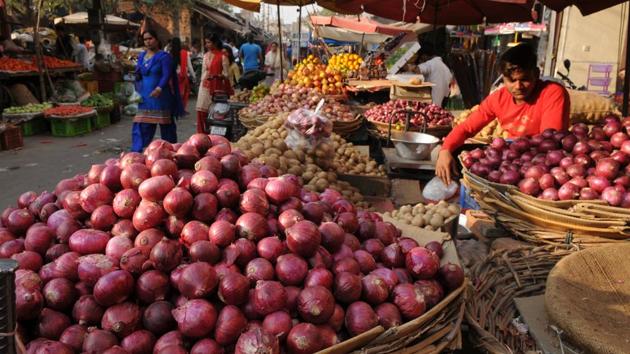
Onion production is expected to decline 4.5% to 21.4 million tonne in 2017-18 against the previous year’s 22.4 million tonne, according to the agriculture ministry’s estimates.
The commonly consumed vegetable is currently selling at Rs 50 a kg in markets of Delhi and its surrounding areas as well as in Mumbai and Kolkata, retail-price data on Thursday showed, which is higher by about Rs 10-Rs 12. Higher onion prices during bad crop years tend to stoke public anger and become a tricky problem for governments.
Overall, the output of horticulture crops — vegetables and fruits — is forecast to go up to a record 305.4 million tonne in 2017-18, up 1.6% higher than the previous year, according to the government’s advance estimates released last week.
Potato production will likely be 49.3 million tonne, slightly more than the previous year’s 48.6 million tonne, and tomato output is also estimated to be up 7.7% at 22.3 million tonne. However, the onion output is set to drop.
{{/usCountry}}Potato production will likely be 49.3 million tonne, slightly more than the previous year’s 48.6 million tonne, and tomato output is also estimated to be up 7.7% at 22.3 million tonne. However, the onion output is set to drop.
{{/usCountry}}Agriculture secretary SK Pattanayak said he did not expected an onion supply crunch and prices would stabilise once harvests start kicking in. “It is a temporary phase. Traders are taking advantage of the temporary ups and downs. But the fundamentals are strong,” he told PTI.
PK Gupta , acting director of the Nasik-based National Horticultural Research and Development Foundation, said prices have risen because the kharif-sown harvest is yet to reach the markets. Arrivals are expected to pick up by the end of January.
The summer output, which will replenish markets over January and February, is estimated to be lower because plantings were down 20%-25% due to poor rains in key producing states such as Andhra Pradesh, Maharashtra, Karnataka, and Tamil Nadu, he said.