The 2017 amendment, which provided for increased paid maternity leave from 12 weeks to 26 weeks for the first two children, followed by an 8.4% decline in women’s employment and a 2.6% rise in men’s employment at covered manufacturing firms, according to a study.
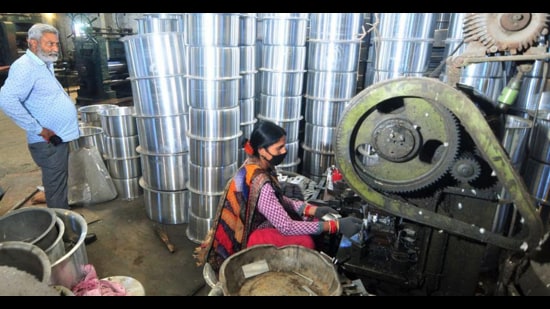
The Maternity Benefit (Amendment) Act, 2017, mandated employers to bear the cost of the leave. It changed the provisions of an over 55-year-old law, entitling women employees to certain benefits. The new law made it mandatory for every establishment with 50 or more employees to have the facility of a creche within a prescribed distance. The employers were bound to allow a woman employee four visits a day to the creche.
The study, ‘Mandated Maternity Leave and Labour Substitution: Firm-Level Evidence from India’, found that the number of days women worked fell by 9.5%. The number of days men worked rose by 2.1%.
The study was published in August as part of the IZA Discussion Paper Series by IZA@LISER Network, a global community of over 2,000 labour economics scholars across more than 450 institutions. The Luxembourg Institute of Socio-Economic Research coordinates the network
The researchers, Souvik Banerjee, Preeti Jaiswal (IIT Bombay), and Sankar Mukhopadhyay of the University of Nevada, Reno, and IZA@LISER, used Annual Survey of Industries data from 2012-13 to 2019-20 to examine employment changes at firms covered by the law. They found that firms hired fewer women and more men after the amendment. The study found no significant change in firms’ output and profits.
{{/usCountry}}The researchers, Souvik Banerjee, Preeti Jaiswal (IIT Bombay), and Sankar Mukhopadhyay of the University of Nevada, Reno, and IZA@LISER, used Annual Survey of Industries data from 2012-13 to 2019-20 to examine employment changes at firms covered by the law. They found that firms hired fewer women and more men after the amendment. The study found no significant change in firms’ output and profits.
{{/usCountry}}The effects were greater in industries that employed more women. In these industries, women employment fell 12%, while male employment rose 4.1%.
Harshil Sharma, who holds a PhD in labour studies and has more than a decade of experience in labour welfare and policy reforms, said his fieldwork also showed similar barriers to women’s employment in construction. “PLFS [Periodic Labour Force Survey] data tells the same story: construction employs about 15.6% of India’s male workers but less than 5% of its women workers,” Sharma said.
He said men had moved from agriculture into construction, while women’s share in the sector had remained flat. “On site, contractors avoid hiring women to sidestep obligations on separate toilets, maternity and safety, and to house more men in shared quarters,” he said. “Laws meant to empower women end up acting as a barrier to their entry.”
The researchers recommended shifting maternity leave financing from individual employers to social insurance, introducing government-financed paternity leave and extending maternity protections to informal-sector workers.