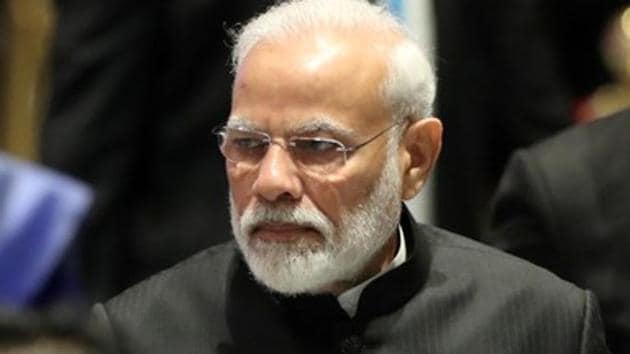
At the conclusion of an unsatisfactory meeting to review the government’s “Ek Bharat, Sheshtra Bharat” programme on October 12, Prime Minister Narendra Modi told the top bureaucrats present at the meeting that they had spoiled his first five- year tenure but that he would not allow them to spoil the second. “Apne mere paanch saal barbad kiye hai, main apko agle paanch saal barbad nahin karne doonga,” he said, according to people present in the meeting, holding the bureaucracy responsible for delays in programme implementation.
Since its conception by then home minister Sardar Patel, the Indian bureaucracy has largely moved from a national to a self-serving agenda in which the focus is on processes, not outcomes. There is no penalty for acts of omission, although acts of commission are often questioned with a significant number of officers under the scanner for corruption and malfeasance. The once steel frame of Indian governance architecture has rotted with each service operating within its own silo and ready to go to war within the government to protect its own haloed turf.
The Modi government’s decision to hold a common foundation course for all Group A services including the Indian Administrative Service (IAS) from 2020-2021 is the first step in breaking these silos and elite clubs that function within the Indian bureaucracy. That the twice-born IAS will have to rub shoulders with lesser mortals at the foundation stage and work towards a common purpose may change the game after all.
By holding the 94th Foundation Course for 744 candidates to be appointed in IAS and other Group A services from August 26 to December 6, 2019, the government has made the right beginning with a six-day module at the feet of the Sardar Patel statue at Kevadia village in Gujarat. It was at this module that PM Modi exhorted trainee bureaucrats to double their outcomes so that India becomes a $5 trillion economy by 2022.
{{/usCountry}}By holding the 94th Foundation Course for 744 candidates to be appointed in IAS and other Group A services from August 26 to December 6, 2019, the government has made the right beginning with a six-day module at the feet of the Sardar Patel statue at Kevadia village in Gujarat. It was at this module that PM Modi exhorted trainee bureaucrats to double their outcomes so that India becomes a $5 trillion economy by 2022.
{{/usCountry}}Rather than trod the well beaten path of injecting the officers with oft-repeated and boring lectures on administrative governance, the 94th Foundation Course’s trainees were exposed to the future of technology and exponential thinking. With the help of the Bill and Melinda Gates Foundation, the US-based Singularity University, the Institute of Future and LBS National Academy of Administration, the officer trainees were made aware of several issues and trends and their possible impact on the Civil Services: artificial intelligence, Big Data, the future of manufacturing and logistics, and other such. At the six-day Kevadia module, the trainees were addressed by experts including David Malpaas, president, World Bank; Sir Suma Chakraborti, president, European Bank for Reconstruction and Development; and Juergen Voegele, global director of Climate Change at the World Bank.
Using the Statue of Unity in the backdrop to instil national pride, the trainee officers were also reminded by PM Modi that, with the installation of the new steel frame of Indian bureaucracy, the time for accountability has also come. This is evident in the fact that Group A services officers, including from the IAS, have been compulsorily retired or repatriated back to their parent cadres on grounds of non-performance. The only service still to take action against non-performers is the Indian Foreign Service, which comes under the ministry of external affairs.
When PM Modi took over reins of power in 2014, a number of his advisers told him that his biggest challenge would come from resident permanent opposition, the Indian Civil Services, which view governments as a passing phase of five years while they stay in power for 35 years. It his clear from his recent actions that Modi, who seemed to have bushed aside the advice then, is trying to change things in his own way.