India will have no shortage of fertilisers critical for the country’s food security as there are adequate reserves amid a deepening Red Sea crisis, which has upended global trade, delayed shipments and stoked logistics costs, Union minister for health, fertilisers and chemicals Mansukh Mandaviya said on Wednesday.
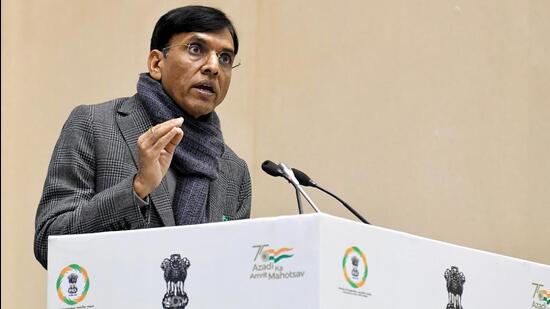
The minister said the longer-term impacts of crises in the Black Sea and Red Sea were not possible to foretell, but current inventories were more than sufficient to cover both the ongoing winter or rabi season as well as the coming June-September kharif farming cycle.
The Union government has set up an interministerial group anchored in the commerce ministry to monitor the crisis, which is witnessing a violent regional spillover of Israel’s war with Hamas, HT had reported on Tuesday.
The Red Sea, which leads up to the Suez Canal, lies on the east-west trade route from Asia to Europe. About 80% of India’s shipping traffic accesses the Suez Canal via the Red Sea. Most Indian exports are now going around the Cape of Good Hope, adding up to 6000 nautical miles and 14 days extra.
“I can say three things. There will be no shortage because of adequate advance stocks. The government and the ministry of external affairs are planning interventions and monitoring the situation while all vessels are being escorted by the Indian navy,” the minister said, presenting his book “Fertilsing the Future”, a volume on India’s stride towards self-sufficiency in the sector.
{{/usCountry}}“I can say three things. There will be no shortage because of adequate advance stocks. The government and the ministry of external affairs are planning interventions and monitoring the situation while all vessels are being escorted by the Indian navy,” the minister said, presenting his book “Fertilsing the Future”, a volume on India’s stride towards self-sufficiency in the sector.
{{/usCountry}}The country’s food security is closely linked to the availability of fertilisers, which are federally subsidised for millions of farmers. India relies on imports to meet its total demand. Global prices rocketed in 2022 due to the Ukraine conflict, stretching the government’s estimated spending on crop-nutrient subsidies for 2022-23 to a record ₹2.5 lakh crore.
During 2022-24, the government hopes to spend ₹1.70-1.80 lakh crore as fertilizer subsidy, the minister said, against a budgeted ₹1.75 lakh crore.
The cost of shipping out Indian goods has more than doubled in the past week. A standard 24-foot-long container to Europe costs nearly $1600-1700, up from $500-600 before the Red Sea crisis erupted, an exporter said, wishing anonymity.
India’s import of urea had come down because of higher domestic production, including the commissioning five new manufacturing plants.
To hedge against price and supply swings amid a lingering Russia-Ukraine conflict and other geopolitical risks, the Modi government has signed several long-term import deals at pre-negotiated rates with several nations.
The fertilizer ministry in coordination with the external affairs ministry has overseen a slew of these deals. Indian firms have for the first time finalised investments in several North African mineral-rich nations, part of measures aimed at securing long-term fertilizer supplies.
According to official figures, among key farm chemicals, the country has reserves of 7 million tonnes of urea, two million tonnes of DAP, one million tonne of MoP, 4 million tonne of NPK and 2 million tonne of SSP, which are adequate to meet the next season’s need.