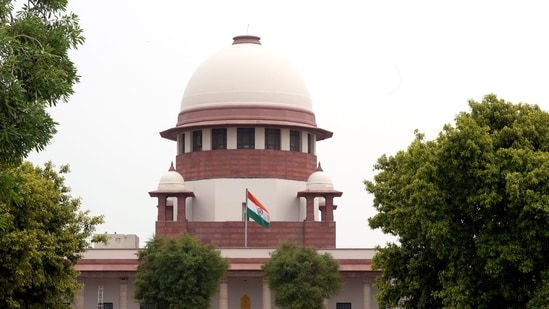
Nobody is above the law in this country, a three-judge bench of the Supreme Court on Thursday observed in a dispute between a man and his estranged wife, reported PTI.
Justices B R Gavai, Augustine George Masih, and K Vinod Chandran made the remark after the man's counsel expressed concern that he would be made to suffer for the rest of his life due to his estranged wife being an IPS officer.
Also Read: Death penalty an exception, not the rule: SC
The bench said that the two parties should settle their disputes in the interest of justice and added that they couldn't force a settlement on the parties if they were unwilling.
"She is an IPS officer. You are a businessman. Rather than wasting your time in the court, you should settle it. We are here to protect you if there is any victimisation," the bench said.
Also Read: No right to DNA test, paternity determined by legitimacy: SC
{{/usCountry}}Also Read: No right to DNA test, paternity determined by legitimacy: SC
{{/usCountry}}"Nobody is above the law in this country," they added.
The man's lawyer stated that his client and his father had been jailed in connection with cases lodged by the woman. He alleged that the estranged wife had lied in her declaration that no FIR was registered against her and that she faced two FIRs on the day she filled a form at the time of joining the police service.
The wife's counsel said that if she had made a wrong declaration, it was up to the home ministry to decide and take action.
Also Read: SC calls for immediate end to manual scavenging in metro cities
"You are not interested in saving your life. You are interested in ensuring that her career goes. Ultimately, in the process of ruining her life, you will also ruin your life," said the court.
"If you have any apprehensions, we will take care of that in our order," they added. The bench posted the hearing after two weeks.
The lawyers for both parties said they would attempt to find an amicable solution to the dispute.
One of the pleas filed by the woman in the Supreme Court challenged the Allahabad high court's June 2022 verdict in the Mukesh Bansal vs state of UP case, which stated that after lodging an FIR or complaint, a “Cooling-Period” of two months needed to be served where no arrest or coercive action can be taken against the husband or his family members.
The high court discharged the parents of the man in a criminal case lodged by the woman against him.