The Supreme Court on Monday dismissed the Union government’s appeal against a Delhi High Court order allowing Vedanta Ltd and Ravva Oil (Singapore) Pvt Ltd to enforce foreign arbitration awards involving claims of $99 million, criticising the Centre for resisting enforcement of awards that date back more than two decades and warning that such litigation could undermine confidence in India’s arbitration regime.
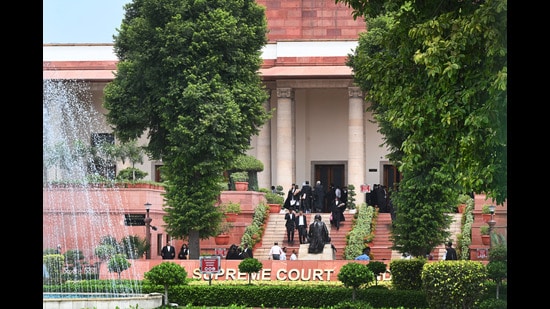
A bench of justices JB Pardiwala and Manmohan questioned the government’s approach to arbitration, asking why it was frustrating enforcement of an arbitral award even after the dispute had been adjudicated by foreign courts. The bench also questioned the Centre’s commitment to promoting arbitration as an effective means of dispute resolution.
“What are these arguments? You are frustrating an arbitral award like this? At the stage of enforcement of it?” remarked the court, expressing concern over the message such litigation would send to international investors and parties choosing India as an arbitration destination.
“And we talk about all of this arbitration and seat and this and that?...Nobody will trust you,” said the court, questioning the government’s continued resistance to the awards.
The bench ultimately found no reason to interfere with the high court’s July 1, 2026 judgment, which had rejected the Centre’s objections to enforcement of the awards passed in 2004 and 2016 by an arbitral tribunal seated in Kuala Lumpur, Malaysia.
{{/usCountry}}The bench ultimately found no reason to interfere with the high court’s July 1, 2026 judgment, which had rejected the Centre’s objections to enforcement of the awards passed in 2004 and 2016 by an arbitral tribunal seated in Kuala Lumpur, Malaysia.
{{/usCountry}}“We are of the view that no error, not to speak of any error of law, could be said to have been committed by the high court in passing the impugned judgment and order,” said the Supreme Court while dismissing the appeal.
The dispute traces its origins to a 1994 production-sharing contract between the government and a consortium comprising ONGC, Videocon Petroleum, Ravva Oil and Cairn Energy (whose interest subsequently passed to Cairn India and later Vedanta) for the development of the Ravva oilfield in the Krishna-Godavari basin.
The dispute centred on the accounting of payments made by the companies towards ONGC’s historical costs while calculating their respective shares of revenue from oil production, an issue referred to as the ONGC Carry dispute. Under the contract, disputes were to be resolved through arbitration in Kuala Lumpur under Malaysian law and the United Nations Commission on International Trade Law (UNCITRAL) Arbitration Rules.
In October 2004, the arbitral tribunal delivered a partial award, ruling in favour of the companies on two of six issues while deciding the remaining four in favour of the government. It left the quantification of the ONGC Carry issue unresolved, retaining jurisdiction to determine the amount if the parties failed to reach an agreement.
The government challenged the partial award before Malaysian courts. Although it was initially set aside by the Kuala Lumpur High Court in January 2009, the Malaysian Court of Appeal restored it in September that year, a decision subsequently upheld by the Malaysian Federal Court in October 2011.
In July 2014, the government issued show-cause notices seeking recovery of approximately $64 million from Vedanta and $35 million from Ravva Oil, threatening to adjust the amounts against proceeds payable to the companies from oil sales.
The companies disputed the claims and approached the arbitral tribunal to determine the outstanding amounts. A reconstituted tribunal delivered its final award on October 26, 2016. The Centre again challenged the award before Malaysian courts, but its challenge was rejected, with the Malaysian Federal Court upholding the award on February 28, 2019.
Vedanta and Ravva Oil subsequently approached the Delhi High Court seeking enforcement in India of the two awards. The Centre opposed their plea, raising objections based on limitation, public policy and the tribunal having become functus officio, or having exhausted its authority after delivering the earlier award.
Rejecting these objections, the high court held that the enforcement court could not reopen the merits of the underlying dispute or revisit the arbitral tribunal’s findings merely because the government disagreed with them. It also held that the enforcement proceedings were within limitation and directed the release of bank guarantees furnished by the companies within eight weeks. The Supreme Court’s dismissal of the Centre’s appeal now leaves the high court’s directions undisturbed.