
 E-Paper



Now is time to invest in India: Modi at WEF
The PM also called for a reform in global governance structures to deal with contemporary policy challenges, including developing a uniform view on cryptocurrency.

 Prefer HTon Google


Declaring that India has given a “bouquet of hope” to the world, Prime Minister Narendra Modi listed a comprehensive set of economic reforms initiated by his government in recent years and called it the “best time” to invest in India.
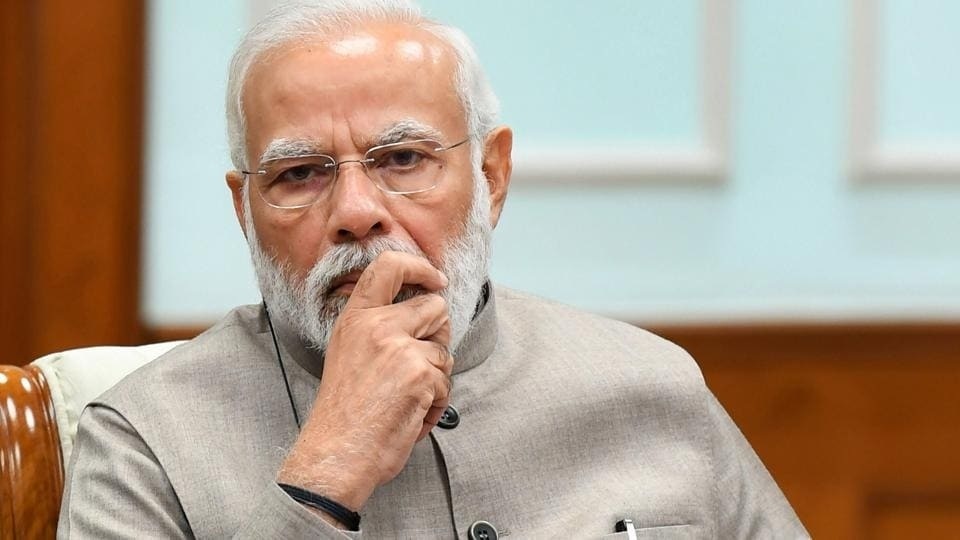
Addressing the annual gathering of the World Economic Forum virtually, on the state of the world today, Modi reiterated the country’s “100% commitment” to fighting the climate crisis despite being responsible for only five per cent of global emissions, and claimed that Indians have “unbreakable trust” in their democracy. The PM also called for a reform in global governance structures to deal with contemporary policy challenges, including developing a uniform view on cryptocurrency.
“This bouquet of hope includes the unbreakable trust that Indians have in democracy; it includes technology which will empower the 21st century; it includes our temperament and talent. The multilingual and multicultural environment in which we live is a strength not just of India, but also of the world. This strength teaches us to work for humanity, not just for oneself,” he said.
The PM focused on two broad elements in his speech – the steps undertaken by India even during a crisis such as the pandemic to advance its economic growth prospects and contribute to global good; and the need for reforms to make multilateralism more effective, given the interconnected nature of current day crises from supply chain disruptions to inflation to the climate crisis and the need to reflect contemporary realities.
Also read | Global throwaway culture to investing in India: Highlights of PM Modi’s Davos address
Experts said that while the PM deserved credit for his reformist commitment, India needed to do more in addressing critical gaps.
Stating that India was battling the current wave of Covid-19 infections with “caution and alertness”, the PM focused on India’s contribution during the pandemic in contributing to global needs – be it through provision of vaccines and medicines to other countries, its role as the “pharmacy of the world”, the contribution of its health care professionals whose “sensitivity and expertise” stood out, the role of Indian software developers, in India and elsewhere, in saving lives, and the development of innovative digital platforms such as Aarogya Setu and Cowin which, he said, has drawn the attention of the world. This, the PM said, was a part of India’s vision of “one earth, one health”.
The PM, in a clear message to both foreign governments and global investors, who pay close to attention to the annual Davos forum, then turned to how India used this period of distress to focus on “deep economic reforms”. “There was a time when India was associated with license raj. The government controlled many areas. I understand the challenges that existed for businesses in India. We are continuously working towards removing all these obstacles. India is encouraging the ease of doing business and minimising government interference.” In this regard, the PM focused on steps taken to ease the regulatory environment, encourage investment, focus on productivity, and participate in global supply chains.
He mentioned the simplification of corporate taxes to make India’s tax regime the “most competitive” in the world; the reduction of 25,000 regulatory compliances in the past year itself; the resolution of issues such as retrospective taxation as a signal to the business community; the deregulation of sectors such as drones, space and geospatial mapping; and reforms in outdated telecom regulations related to information technology and business process outsourcing sectors. The PM also spoke of the modernisation of both physical and digital infrastructure – this includes the effort to connect 600,000 villages with optical fibre network; the planned $1.3 trillion investment in infrastructure; asset monetisation as an innovative financing instrument to raise $80 billion; and the Gatishakti national master plan to ensure seamless integration between planning, development and implementation of infrastructure.
Referring to the production-linked incentive scheme of the government in 14 sectors, to the tune of $26 billion, the PM added, “India’s focus is not just in easing processes, but also incentivising production and investment.” He spoke of telecom, insurance, aerospace, and semiconductors as sectors with possibilities in the country. At a time when there has been speculation about India’s future approach to trade, the PM spoke of India’s commitment to being a reliable partner in global supply chains, and its preparation to sign free trade agreements with other countries.
“India’s ability to innovate and adapt to technology, and the spirit of entrepreneurship, will give new energy to our global partners. This is why it is the best time to invest in India.” He cited the example of start-ups to point to the entrepreneurship of young Indians, claiming that in 2014, there were a 100-odd start-ups; this number is now 60,000, with more than 80 unicorns, out of which 40 reached that position (a valuation in excess of $1 billion) in 2021 itself.
Richard M Rossow of the Centre for Strategic and International Studies in Washington DC said that the government had recommitted to key reforms over the past year. “The government has pursued important domestic de-regulations in areas such as port operations and labor and relaxed foreign investment regulations in sensitive sectors like defence, insurance, and telecommunications. Though the pushback has been strong, as seen with the withdrawn agriculture reforms, and the inability so far to pass the important Electricity Act amendments.”
Looking ahead, Rossow said that two things were critical. “One, the government must re-commit to holding Indian states accountable for their business environments. Ultimately, states play the larger role in India’s business environment. And second, the government must continue to improve legal recourse for business disputes. This remains one of the weakest areas of India’s business environment. But promoting digital courts, arbitration, and other such steps can help reduce the backlog and improve business confidence.”
But while focusing on India’s growth potential, the PM reiterated the country’s commitment to a net-zero emissions by 2070 – an announcement he first made at COP26 in Glasgow. “Our growth will be green, clean, sustainable, and reliable,” he said, citing the example of how India was well ahead of its timeline in meeting its Paris commitments.
The PM concluded his speech by pointing out that amid changes in the global order, the only way to deal with global challenges was through “collective and synchronised action”, mentioning cryptocurrency as an example. “Given the kind of technology associated with it, a decision taken by only one country will be inadequate in meeting the challenges posed by it. We will have to develop a common thinking.” Reiterating a point made by India repeatedly over the years, the PM asked if multilateral organisations had the capability to deal with these challenges without reforms within these organisations to reflect current global realities.


