E-Paper



Number Theory: Who will employ India's enterprising worker?
This is the last of a two-part data journalism series which asks whether Indian workers do not work hard enough
Updated on: Nov 3, 2023, 09:28:16 IST

 Prefer HTon Google
Share via


Copy link

The first part of this series uses PLFS data to argue that the average Indian worker is anything but underworked and most younger workers are facing high unemployment rates despite their willingness to endure hardship at work. PLFS data also shows that these statistics, when read with Narayan Murthy’s comment about India’s young workers preferring leisure to work, seem to be counter-intuitive. What explains this paradox? The answer to this question has to be found in the scarcity of firms which can create economic value with hard working employees. Here are three charts which explain this in detail.

Who will employ India's enterprising worker?
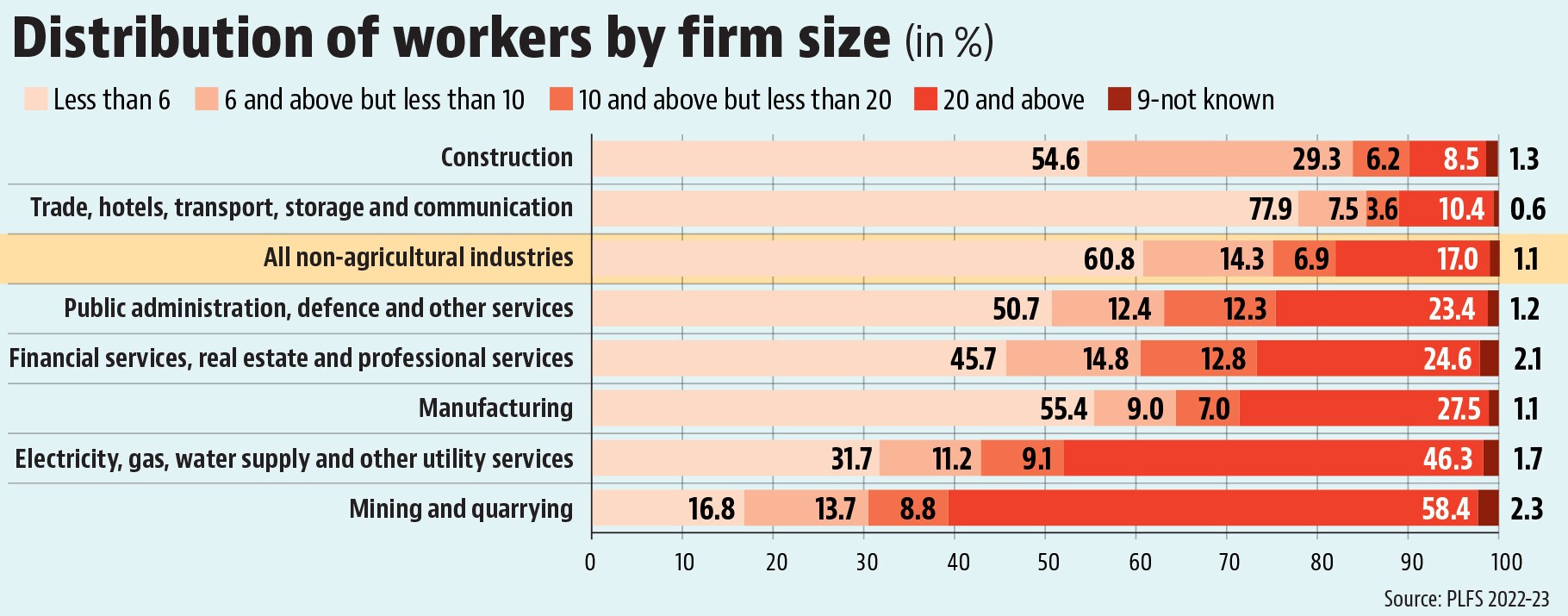
 Most Indian workers are employed in very small firmsThe sixth Economic Census – it is the latest – which was conducted between January 2013 and April 2014 shows that an average economic establishment employed just 2.24 workers in India. While these numbers are a bit dated, an HT analysis of unit level data from the PLFS shows that most Indian workers continue to be employed in firms which are very small. According to 2022-23 PLFS, 61% of non-agricultural workers in India were employed in enterprises which had fewer than six workers. More than 80% of India’s non-agricultural workers work in enterprises which have fewer than 20 workers. Even in manufacturing, more than 70% of workers are employed with firms with fewer than 20 workers. Everyone will agree that firms of such small size are very unlikely to create value no matter how hard one works there.
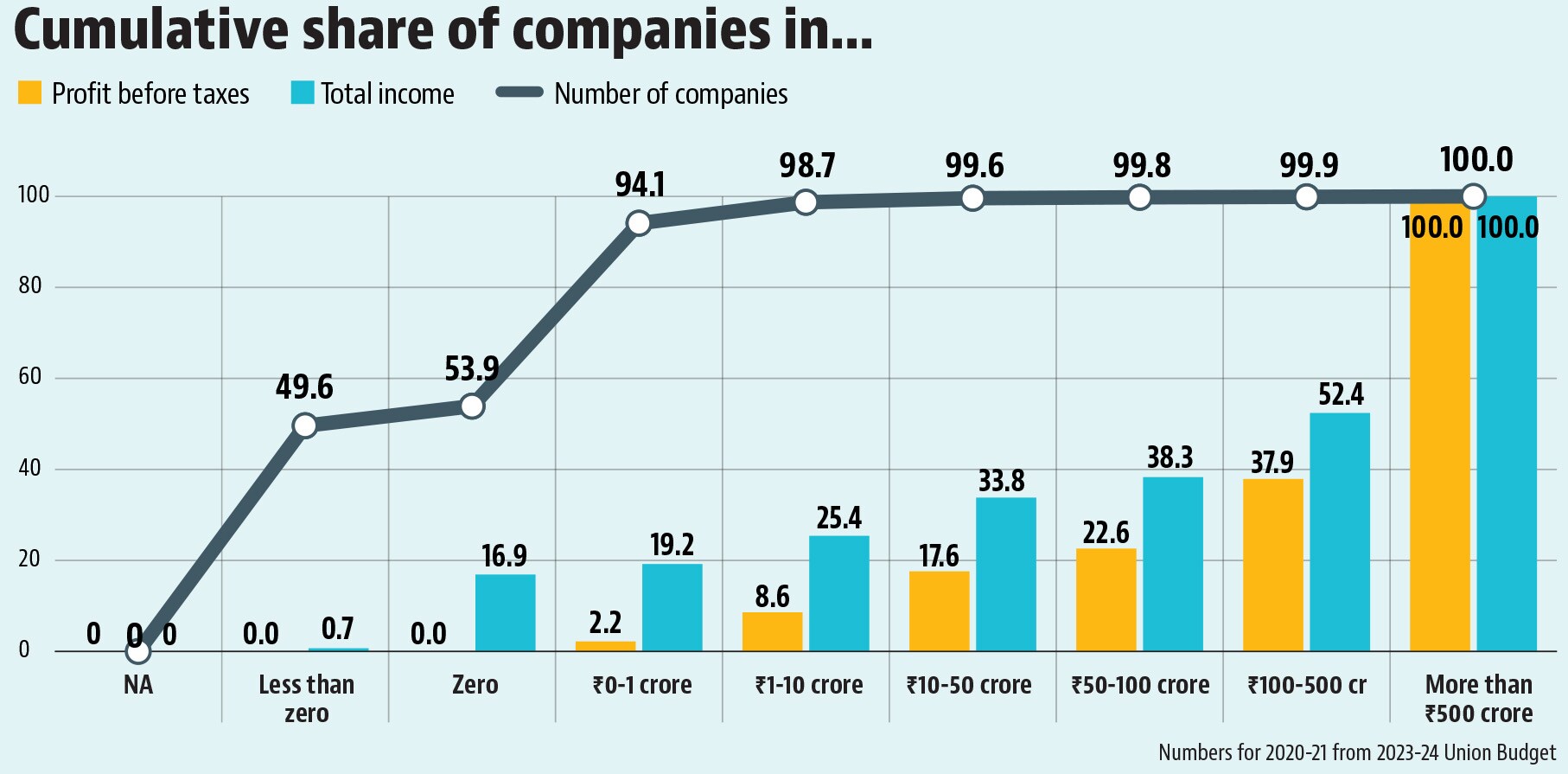
- This also reflects in a huge concentration of corporate profits in IndiaThis also manifests itself in a massive concentration of incomes and profits at the level of companies. The Union Budget gives data on the break-up of profits and income by size of profits before taxes. The 2023-24 Budget has this data for fiscal year 2020-21. It shows that just 0.05% of 9.61 lakh companies – this small proportion boasted at least ₹500 crore profit before tax – had a share of 62% in profits before taxes and 48% in total income in India. If one were to expand this definition to include companies in the ₹100-500 crore profit before taxes category as well, 0.21% of companies control more than 60% of total income and 75% of profits before taxes. A comparison of 2020-21 with 2010-11 numbers suggests that the situation has hardly changed. This shows that lack of viable firms is a bigger problem in India than workers who are willing to work hard.
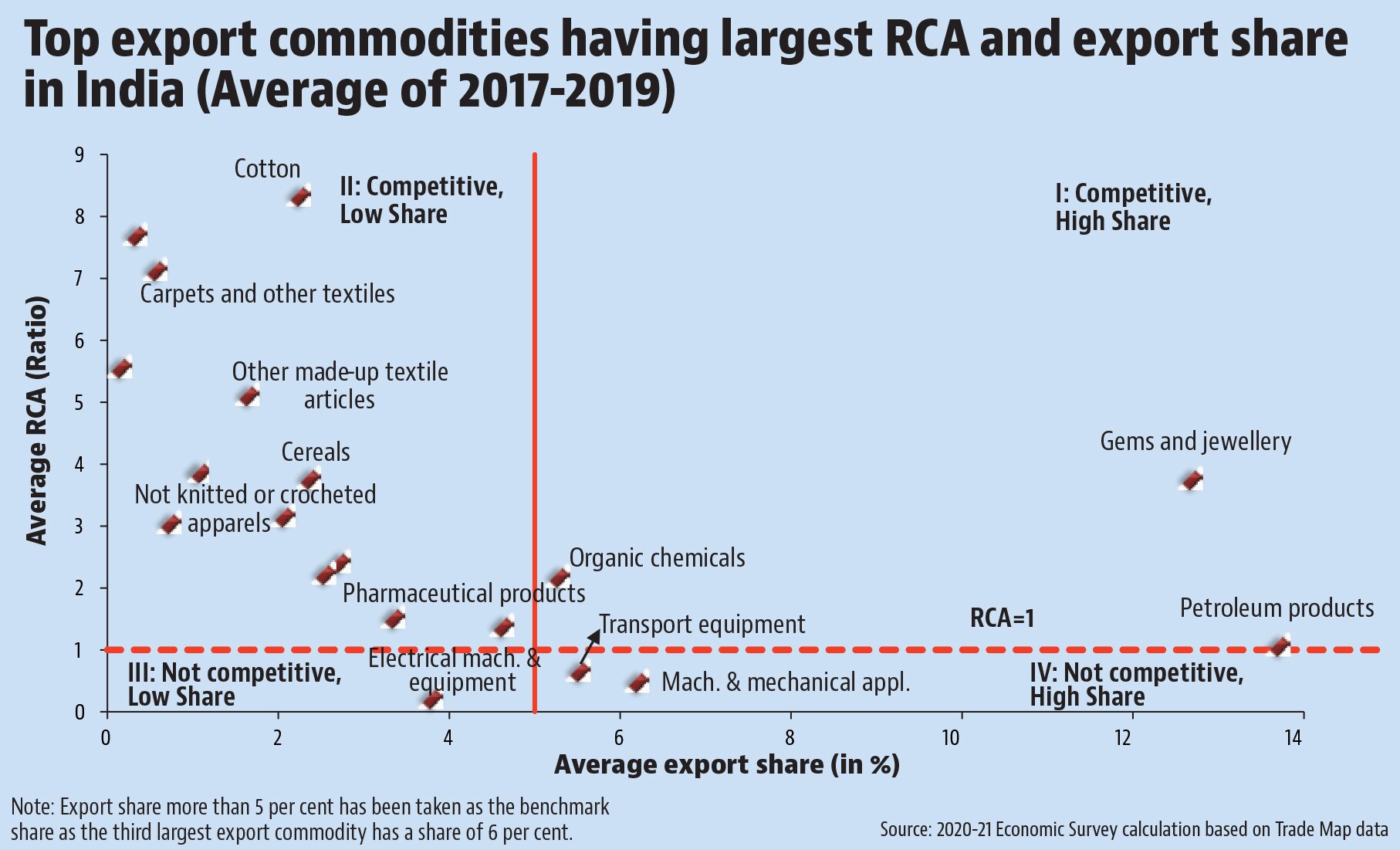
- Big capital’s domination coexists with India’s failure to exploit its comparative advantageElementary trade theory teaches us that a country should specialise in areas where it has a comparative advantage over others. India is the world’s most populous country with lower-middle income per capita levels. This means that India’s comparative advantage should lie in labour intensive products. The success of companies such as Infosys is based exactly on this principle, as they offer IT-enabled services to advanced countries at much cheaper rates than what would have to be paid to such workers in rich labour-scarce countries. However, the Indian economy has not been able to leverage this advantage outside the IT universe. The 2020-21 Economic Survey had highlighted this clearly by pointing out that India’s export share for commodities where it had a high revealed comparative advantage was much lower than a country like Bangladesh which has made a mark in labour intensive exports in the recent past.
- India’s biggest economic challenge, as of now, is whether it can break new ground in creating dynamic firms which can exploit our comparative advantage in labour intensive products to create tailwinds for economic growth. Narayana Murthy’s prognosis about Indian workers not working hard enough might be wrong, but he and his peers built the IT industry in India -- the only business which has been able to rise up to this challenge.