A district court in tribal-dominated Kandhamal district disqualified a woman representative of a Panchayati Raj body from her post after it found her guilty of violating the two child norm set by an Act restricting anyone with more than two children from holding posts in such bodies.
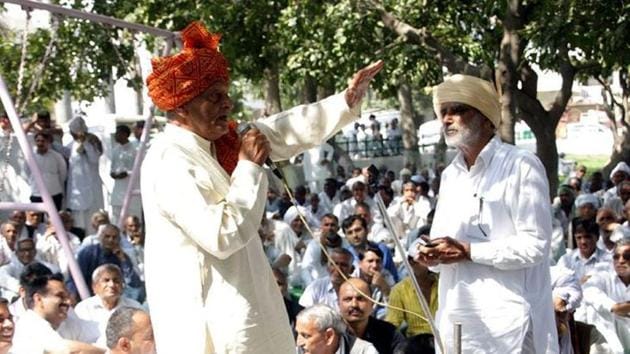
Kandhamal district judge Goutam Sharma disqualified Subhrenti Pradhan, chairperson of the Daringibadi Panchayat Samiti in Kandhamal district from her post under the Odisha Panchayat Samiti Act which in 1994 through an amendment had prohibited anyone having more than two children from holding any post in Panchayati Raj bodies.
Pradhan is the wife of sitting BJD MLA from G Udaygiri assembly constituency, Saluga Pradhan.
A member of Tajungia panchayat samiti, Ruda Mallik had filed a petition against Pradhan alleging that she had hidden the number of children she had to escape the provisions of the Act. Pradhan was elected as chairperson of the Daringibadi panchayat samiti in 2017.
Siddheswar Das, Mallick’s lawyer said Pradhan had willfully hidden the number of children she had so that she could get elected as a Panchayati Raj representative. “In 1996 she had a son. Before that she had two kids,” he said. Pradhan said she would appeal against the district court’s order before the Orissa High Court.
The history of the two-child norm in panchayats began after the 1991 census when the National Development Council set up a committee on population under the chairmanship of erstwhile Kerala CM K Karunakaran in 1992. The Karunakaran panel recommended that legislation be made prohibiting persons with more than two children from holding any post from panchayats to the Parliament in future.
{{/usCountry}}The history of the two-child norm in panchayats began after the 1991 census when the National Development Council set up a committee on population under the chairmanship of erstwhile Kerala CM K Karunakaran in 1992. The Karunakaran panel recommended that legislation be made prohibiting persons with more than two children from holding any post from panchayats to the Parliament in future.
{{/usCountry}}Rajasthan became the first state to adopt the norm for panchayats and municipalities in 1992 before the Karunakaran panel made its recommendation. While Andhra Pradesh and Haryana introduced it in 1993, Odisha adopted it for zilla parishads in 1993 and panchayat samitis and gram panchayats in 1994. Himachal Pradesh and MP adopted it in 2000 and Maharashtra in 2003 with retrospective effect from 2002.
When Odisha adopted the two-child norm, its population was 3.16 crore with a decadal growth rate of 20.06 per cent. In 2011, it rose to 4.19 crore. However, the state’s population growth rate in 2001-2011 was 13.97 per cent, far less than country’s decadal growth rate of 17.64 per cent.
Activist Rituparna Mohanty said considering the slow growth of Odisha’s population, the state government should amend the Acts on two-child norm. “When there is no such rule for those entering Assembly and Parliament, why does such discrimination exist for those entering Panchayati Raj bodies, considered as bedrock of grassroots politics? Tribals and women have to bear the brunt of the two child norm. The government should repeal the provision,” Mohanty said.
In October last year, the Supreme Court had upheld the dismissal of a former tribal Sarpanch in Nuapada district from his post, for having three children. Minasingh Majhi of Nuapada, Odisha, got elected in February 2002 and was disqualified from the post by the Odisha High Court after the birth of her third child in incumbency in August 2002. She had appealed against the order, but the SC upheld the HC order.