Parliamentary communications may soon switch to a paperless system called e-Sansad that will allow the secretariat, ministries, members and citizens to access information digitally in a secure manner, officials familiar with the matter said on Saturday.
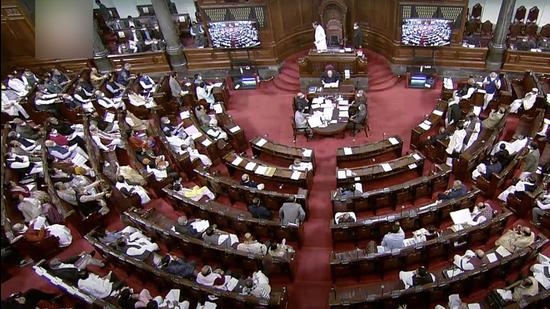
The government is also looking at global best practices as it plans the new e-Sansad initiative for a digitally driven Parliament.
The government is making an effort to introduce advanced technological capabilities for the new Parliament house that is being built, a parliamentarian familiar with the initiative said. “The system borrows from the best practices of several parliaments across the world, and takes examples from the Estonian model and two other countries,” the MP said on condition of anonymity.
Also read | Opposition raises concerns over parts of two bills, wants detailed review
E-Sansad aims to create an internationally competitive “eco-system to provide a centralised electronic platform that facilitates end-to-end information flow and is neutral and open to ensure secure exchanges between stakeholders”, while maintaining confidentiality, documents reviewed by Hindustan Times show.
The project is in its early stages, said officials of the ministry of electronics and information technology (Meity). “The government is looking at an amalgamated platform that will streamline information flow,” an official said. “The government is working with parliamentarians and taking feedback on the project.”
{{/usCountry}}The project is in its early stages, said officials of the ministry of electronics and information technology (Meity). “The government is looking at an amalgamated platform that will streamline information flow,” an official said. “The government is working with parliamentarians and taking feedback on the project.”
{{/usCountry}}The government on December 15 circulated a document that detailed the agenda of the project, which is managed by the committee on information communication technology management (ICTM). The committee is working with National Informatics Centre, which provides computer programming support to the government.
HT reached out to Meity secretary Ajay Sawhney, who did not respond immediately.
Two sub-committees have been constituted under the ICTM, the officials said. One of them will look at existing systems, identify gaps and prepare recommendations. The other will flesh out the concept of a futuristic Parliament by studying global best practices.
The committees will prepare the groundwork to develop an application similar to National e-Vidhan Application (NeVA), which is used by some state legislatures. It will also use a version of Sandes, the government’s end-to-end encrypted messaging application.
E-Sansad will include features for multiple stakeholders from the speaker of the Lok Sabha, chairperson of the Rajya Sabha, members, secretariat, ministers, ministries, the digital library and the general public. This would ease tracking and tracing of documents while ensuring data confidentiality, according to the document cited earlier.
For the speaker and chairperson, the features may include access to list of business of the Houses, list of the questions, papers to be laid, bills to be introduced, zero-hour discussions, and so on. Similar provisions will be made for the ministries as well.
For parliamentarians, it will elaborate on their engagements in Parliament for the day, committee meetings, notices, participation, communications received and sent, complete activities of the committees and even payment details. The secretariat will be able to access activities of the Table office, the question branch, the committees, the legislative branch and others, including members’ salaries and allowances, welfare and services.
The core business systems will cover submitting requests, notices, precessing documents, session business support, connection with stakeholders and information dissemination.
E-Sansad will “revolutionise” Parliament by “integration of stakeholders functionalities, seamless navigation of information, ease of dissemination, artificial intelligence backed search, cloud development with a single point access and Sansad process automation”, the document stated.
The public platform will enable citizens to access members’ profiles, constituency reports, questions raised, responses submitted, legislative bills, committees, debate synopsis and government assurances. The debates portal will also contain video archives, verbatim records of the debates and use keyword mapping to search for bills, sector, legislation and members.