Eminent paediatrician Dr Dilip Mahalanabis, who pioneered the use of oral rehydration therapy during the outbreak of cholera among refugees of the 1971 Bangladesh Liberation War, died at a private hospital in Kolkata late on Saturday night. He was 88.
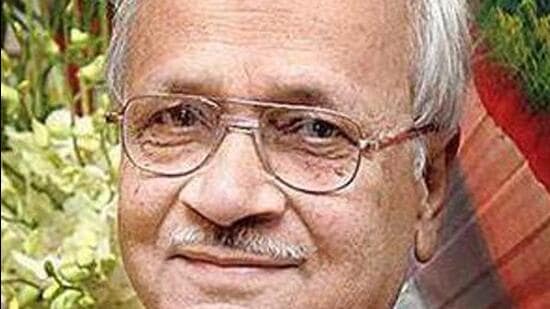
Dr Mahalanabis, because of whom oral rehydration solution (ORS) has almost become a household item today, was undergoing treatment for age-related ailments for quite some time, hospital authorities said.
Born at Kishoreganj in undivided Bengal in 1934, Dr Mahalanabis graduated from Calcutta Medical College in 1958 before joining the hospital’s paediatric department as an intern.
He got an opportunity to study medicine in England because the British government started the National Health Service in the 1950s for which he was selected. After acquiring two degrees in London and Edinburgh, Mahalanabis became the first Indian to be selected as registrar of the Queen Elizabeth Hospital for Children in London.
Dr Mahalanabis studied cholera and other diarrhoeal diseases at the Johns Hopkins International Center for Medical Research and Training that the American government had set up at the Beliaghata Infectious Diseases Hospital in Kolkata.
The outbreak of cholera among refugees from Bangladesh during the Liberation War gave the doctor an opportunity to use his training on the field. He went to a refugee camp at North 24 Parganas district’s Bongaon near the India-Bangladesh border.
{{/usCountry}}The outbreak of cholera among refugees from Bangladesh during the Liberation War gave the doctor an opportunity to use his training on the field. He went to a refugee camp at North 24 Parganas district’s Bongaon near the India-Bangladesh border.
{{/usCountry}}The young doctor successfully showed that even untrained people could administer an ORS solution and tackle the crisis. His work was widely recognized.
Between 1975 and 1979, Dr Mahalanabis worked for the World Health Organisation (WHO) in cholera control units in Afghanistan, Egypt and Yemen. During the 1980s, he worked as a WHO consultant on management of bacterial diseases.
In an interview to the bulletin of WHO in 2009, he recounted his 1971 experience.
“There were many deaths from cholera, many horror stories. When I arrived, I was really taken aback. There were two rooms in the hospital in Bangaon that were filled with severely ill cholera patients lying on the floor. In order to treat these people with IV saline, you literally had to kneel down in their faeces and their vomit. Within 48 hours of arriving there, I realized we were losing the battle because there was not enough IV saline and only two members of my team were trained to give the fluids,” he said.
“I didn’t have the privilege of consulting knowledgeable people at that time. I had to decide on my own what to do. I had no choice but to go ahead and use ORS to the maximum, hoping for the best. I was confident that it could work, but not necessarily in these circumstances. I also feared that if it didn’t work, we would have no more options. It was a huge relief when we saw that it really did work,” the doctor told the WHO bulletin.
Dr Santanu Sen, former president of the Indian Medical Association, said: “This is an irreparable loss for humanity and the entire medical fraternity. A star has fallen.”