The Supreme Court on Friday ruled against the idea of “a communal reservation”, saying the policy of quota is not intended at denying meritorious candidates job opportunities even if they belong to reserved categories.
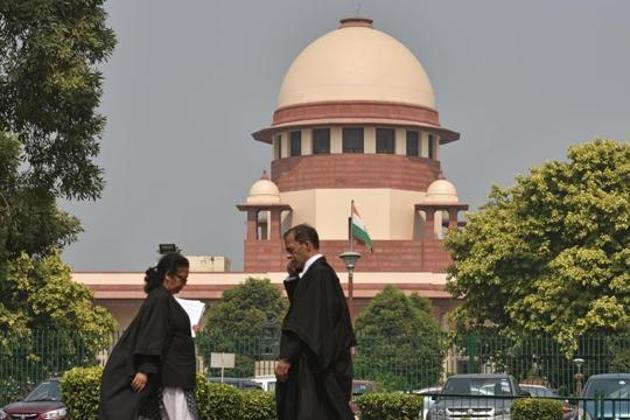
The SC bench, headed by Justice Uday Lalit, ruled that subject to permissible quota benefits, any method of filling up seats must focus on merit and should aid meritorious candidates, irrespective of their categories and caste. It said that the contest in the open category must be purely on merit.
“Reservations, both vertical and horizontal, are method of ensuring representation in public services. These are not to be seen as rigid ‘slots’, where a candidate’s merit, which otherwise entitles her to be shown in the open general category, is foreclosed,” held the bench in a separate but concurring judgment penned down by Justice S Ravindra Bhat.
Justice Bhat added: “Doing so, would result in a communal reservation, where each social category is confined within the extent of their reservation, thus negating merit. The open category is open to all, and the only condition for a candidate to be shown in it is merit, regardless of whether reservation benefit of either type is available to her or him.”
The bone of contention in this matter was the manner in which vacancies under the special classes, such as freedom fighters or ex-servicemen, were to be filled up for posts of female constable in Uttar Pradesh.
{{/usCountry}}The bone of contention in this matter was the manner in which vacancies under the special classes, such as freedom fighters or ex-servicemen, were to be filled up for posts of female constable in Uttar Pradesh.
{{/usCountry}}While the state had a policy that all male candidates securing marks more than the cut-off marks for the general category will be selected, the same rule was not applicable for female candidates.
Further, several rulings by high courts held that a meritorious candidate belonging to a socially reserved class such as a Scheduled Class (SC) or a Scheduled Tribe (ST) or Other Backward Classes (OBC) can migrate to the general/open category, leaving that seat for another candidate from the reserved category. But for seats meant for special classes such as freedom fighters’ families or ex-servicemen, SC/ST/OBC candidates can migrate even when some seats are left vacant.
This principle and interpretation of rule was struck down by the top court on Friday.
Writing for himself and Justice Hrishikesh Roy, Justice Lalit emphasised that a less meritorious candidate cannot be allowed to fill up a vacancy under the special classes instead of allowing a more meritorious candidate only for the reason that the latter belongs to SC, ST or OBC.
“Subject to any permissible reservations i.e. either social (vertical) or special (horizontal), opportunities to public employment and selection of candidates must purely be based on merit. Any selection which results in candidates getting selected against open/general category with less merit than the other available candidates will certainly be opposed to principles of equality,” said the court.
Relying on the constitutional provisions of reservation and the principle of affirmative action, the bench said that it is possible that a more meritorious candidate coming from a general category may not get selected for a seat meant for a reserved category.
“But the converse can never be true and will be opposed to the very basic principles which have all the while been accepted by this Court. Any view or process of interpretation which will lead to incongruity as highlighted earlier, must be rejected,” it held.
In the present case, the court ruled in favour of 21 female candidates who had secured more marks than the marks secured by the last candidate appointed in ‘General Category–Female’ and directed the Uttar Pradesh government to appoint them as police constables.