E-Paper



SC nod for ArcellorMittal Nippon Steel, IOCL to appoint arbitrators in Essar case
The top court further held that both sides would have the liberty to argue on the aspect of whether the dispute was arbitrable or not, adding all rights and contentions of the parties are kept open

 Prefer HTon Google


The Supreme Court on Monday cleared the decks for the initiation of arbitration proceedings by Arcelor Mittal Nippon Steel India Limited (AMNSIL) and Indian Oil Corporation Ltd (IOCL) for resolving their dispute relating to Essar Steel India Limited (ESIL).
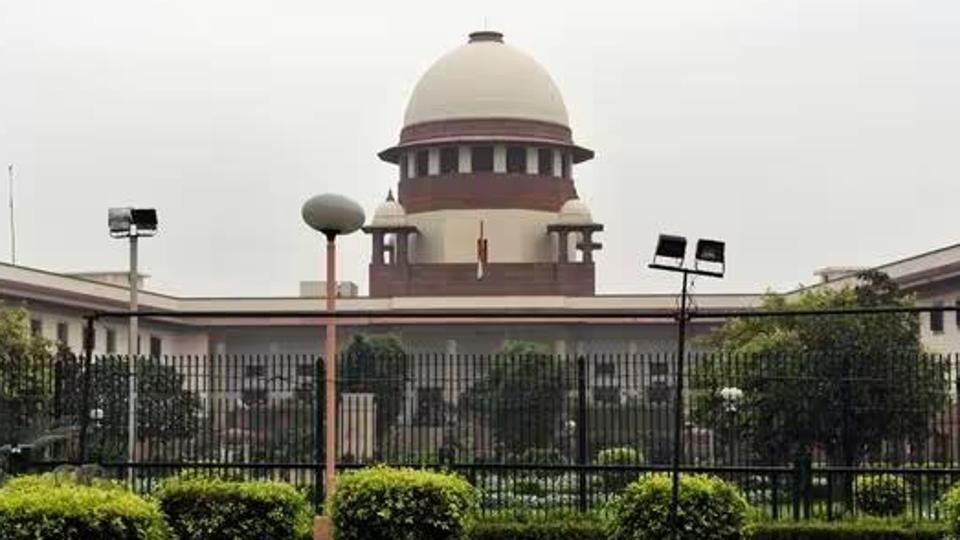
ESIL was acquired by AMNSIL in 2019 through the corporate insolvency resolution process.
A bench, led by Chief Justice of India Dhananjaya Y Chandrachud, took on record the joint agreement of IOCL and AMNSIL regarding appointment of an arbitrator each within a week.
“The parties have agreed to nominate two arbitrators within a week. The two arbitrators so appointed will nominate the third arbitrator. In view of the agreement of the parties, the Delhi high court’s judgment dated October 10, 2023, is rendered infructuous,” stated the bench, which also included justices JB Pardiwala and Manoj Misra.
Also Read: ArcelorMittal venture executes India’s first ‘paperless bill discounting transaction’
The top court further held that both sides would have the liberty to argue on the aspect of whether the dispute was arbitrable or not, adding all rights and contentions of the parties are kept open.
While solicitor general Tushar Mehta represented IOCL, senior lawyers Harish Salve and Abhishek Manu Singhvi appeared for AMNSIL in the matter.
On February 5, the Supreme Court had reserved its judgment in the appeal filed by IOCL against the October 2023 judgment of the Delhi high court.
In its ruling, the high court had dismissed IOCL’s plea to appoint an arbitrator to adjudicate a dispute that emanated from a gas supply agreement (GSA) that it entered with ESIL in 2009.
The contract was terminated by ESIL in 2017, but IOCL objected because it had not broken any of the agreement terms and that the termination notice must be regarded as ineffectual. After ESIL did not respond to IOCL’s demand notice for termination of the GSA, the latter invoked arbitration but to no avail.
In August 2017, the National Company Law Tribunal (NCLT) in Ahmedabad admitted ESIL into insolvency proceedings and appointed a Resolution Professional (RP). IOC lodged a claim of over ₹3,500 crore with the RP; who admitted the claim for a notional value of ₹1. This notional value featured in Arcelor Mittal’s resolution plan, which was finally approved by the Supreme Court in November 2019. The resolution plan was implemented and AMNSIL took over the company.
However, IOC approached the Delhi High Court in 2022 for the appointment of an arbitrator to adjudicate its dispute. The high court turned down IOCL’s plea, noting that the resolution plan was approved by the Supreme Court after hearing the parties and hence it lends an evident quietus to the entire controversy. The high court added that once a party accepts the approval of the resolution plan, which results in the extinguishment of their claims, it cannot be reopened.