The Supreme Court on Wednesday refused to extend the deadline for submitting representations to the high-powered committee (HPC) tasked with defining the Aravalli hills, saying any such judicial extension could be misused by vested interests to delay the process.
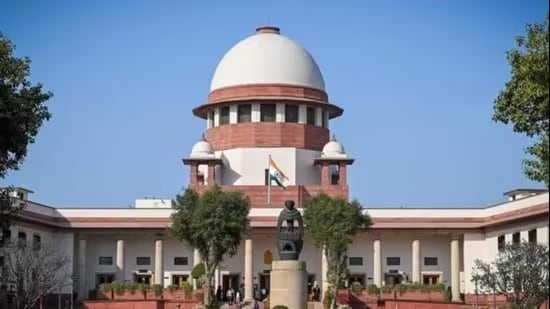
Chief Justice of India (CJI) Surya Kant said the court would not extend the deadline through a judicial order, while indicating that representations could still be submitted to the committee.
“We will not extend time through a judicial order. We know people with vested interests having deep-rooted interests who will try to delay this process, if any extension is granted,” the CJI said.
The matter was mentioned for urgent listing by senior advocate Devashish Bharuka, who said the deadline for suggestions and representations ended on August 11 and the committee would not accept submissions unless the court permitted it.
Bharuka said he represented a non-profit organisation working with tribal communities in Gujarat, many of whom were digitally illiterate and unaware of the committee’s online notice. He also alleged that the committee had overlooked Gujarat and conducted site inspections only in Delhi, Haryana and Rajasthan.
The CJI rejected the criticism, saying the court would wait for the committee’s report.
{{/usCountry}}The CJI rejected the criticism, saying the court would wait for the committee’s report.
{{/usCountry}}“We do not want such piecemeal criticism of the committee. We will wait for the report. It is not that they have closed site visits,” he said.
The bench also said the committee’s notice had been widely publicised and rejected the suggestion that stakeholders were unaware of the exercise.
“It is very difficult to believe that people did not know. However, you can submit your suggestions. If they do not take it, come to us. This is not like any limitation period that they will not consider beyond a date,” the bench said.
The court had in June constituted the five-member HPC, headed by Kanchan Devi, director general of the Indian Council of Forestry Research and Education (ICFRE), to arrive at a uniform definition of the ecologically fragile Aravalli hills and ranges and recommend measures to regulate future mining.
The committee has been asked to submit its report by August 31, with recommendations for conserving the Aravalli ecosystem across Gujarat, Haryana, Rajasthan and Delhi.
Other members are former Forest Survey of India (FSI) director general Subhash Ashutosh; former Geological Survey of India (GSI) director Rajendra Kumar Sharma; former joint secretary in the environment ministry Brij Mohan Singh Rathore; and former Delhi University botany professor Ashok K Bhatnagar.
The court will consider the committee’s report on September 7, when it is also expected to decide whether to lift its stay on mining across the Aravalli region.
The HPC was constituted after the Supreme Court, on December 29, 2025, recalled its November 20 order laying down a uniform definition of the Aravalli hills. The court said the committee should assess the short- and long-term environmental impact of the proposed definition and consider the “varied and competing considerations” involved.
It directed the panel to consult environmentalists, non-profit organisations, mining lease holders, project proponents, villagers, particularly farmers, and local communities whose livelihoods are linked to the Aravalli ecosystem.
The Aravalli range is considered a key ecological barrier separating the arid northwestern desert from the fertile northern plains and acts as a “green lung” for northwestern India. The Supreme Court has regulated mining in the region since 2002. A 2018 FSI report found evidence of extensive illegal mining, including the disappearance of 31 hillocks across 3,000 sites in Rajasthan and Haryana.