New Delhi:
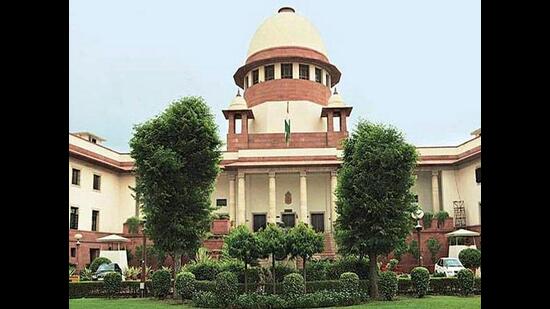
The Supreme Court on Tuesday ruled that individuals cannot be denied opportunities in educational institutions based on rigid disability standards, directing that disability assessment boards must evaluate whether an individual’s impairment genuinely prevents them from completing the course successfully.
Addressing a long-standing issue of accessibility, a bench of justices Bhushan R Gavai, Aravind Kumar and KV Viswanathan ruled that a candidate will be eligible if the disability assessment board determines that they can pursue the course in question and that having a “benchmark disability” or quantified disability under the pertinent regulations is not enough to prevent them from doing so.
“We hold that quantified disability per se will not disentitle a candidate with benchmark disability from being considered for admission to educational institutions… mere existence of benchmark disability of 40% or above (or such other prescribed percentages depending on the disability) will not disqualify a candidate from being eligible for the course applied for,” held the bench.
“The Disability Assessment Boards assessing the candidates should positively record whether the disability of the candidate will or will not come in the way of the candidate pursuing the course in question. The Disability Assessment Boards should state reasons in the event of the Disability Assessment Board concluding that candidate is not eligible for pursuing the course,” the court further held while directing the central government and the National Medical Commission (NMC) to put in place a mechanism to appeal against the assessment boards’ orders.
Pending creation of such appellate bodies, the bench directed, negative opinion of the disability assessment boards would be amenable to challenge in judicial review proceedings. “The courts seized of the matter should refer the candidate to any premier medical institute having facility for an independent opinion and relief to the candidate would be granted or denied based on the opinion of the said medical institution,” it further said.
{{/usCountry}}Pending creation of such appellate bodies, the bench directed, negative opinion of the disability assessment boards would be amenable to challenge in judicial review proceedings. “The courts seized of the matter should refer the candidate to any premier medical institute having facility for an independent opinion and relief to the candidate would be granted or denied based on the opinion of the said medical institution,” it further said.
{{/usCountry}}The judgment came in the case of allowing a candidate, who had a 44% speech and language disability, to pursue medical education. The petitioner was denied admission due to a rigid rule enforced by the NMC, which prevents candidates with more than 40% speech and language disability from being eligible for medical courses.
The ruling has significant implications for medical education in India, as it challenges the Graduate Medical Education Regulation of 1997, which currently excludes individuals with a disability of 40% or more from MBBS courses. The bench criticised this rule, noting that it not only fails to distinguish between different types of disabilities but also does not account for a candidate’s actual ability to perform.
The Supreme Court’s decision ultimately calls for a recalibration of how the education system and other sectors approach disability. The ruling underscored the importance of looking beyond labels and percentages, championing an individualised evaluation that recognises the true capabilities of each person.
While the admission of the petitioner in a medical course was allowed by a brief order on September 18, Tuesday’s ruling provided the court’s rationale for that decision, asserting that each candidate must be assessed individually to ensure that disability is not misused as a pretext for exclusion.
It noted that assessment boards must adopt a holistic approach, evaluating not only the percentage of disability but also its impact on the candidate’s ability to complete the coursework.
The judgment, authored by justice Viswanathan, elaborated: “Disability assessment boards are not just monotonous automation to just look at the quantified benchmark disabilities as set out in the certificate of disability to cast aside a candidate. Such an approach would be antithetical to Articles 14 and 21 (equality and dignity) of the Constitution and all canons of justice, equality, and good conscience.”
The bench went on to clarify that even if a disability assessment board determines that a candidate’s impairment would impede their progress, this decision can still be challenged through the courts – reinforcing the idea that judicial review remains an option until specific appellate structures are in place.
Calling for a more inclusive and progressive interpretation of the Right of Persons with Disabilities Act, 2016, the bench emphasised that any future regulations should adopt an “inclusive attitude”, ensuring that opportunities are granted to people with disabilities rather than denied.
The ruling also referenced the concept of “reasonable accommodation”, a standard set forth in the Disabilities Act requiring that institutions take proactive measures to facilitate access and participation for those with disabilities. The bench further commended the Union ministry of social justice for its progressive communication with the NMC and urged similar changes in regulatory frameworks.
Nudged by a court order in separate proceedings, the Union ministry of social justice and empowerment had issued a communication dated January 25, 2024, to the NMC, asking the latter to take into account the developments in aids and assistive devices and also in other technologies which are capable of reducing the effects of disability and ensure that the statutory requirements of the 2016 Act are followed in letter and spirit. It added that proper classification of disabilities should be made in application forms so as to ensure that once the candidate is allowed to take the examination, they are not denied admission on the grounds of disability. This communication also proposed setting up appellate bodies for challenging the orders of the assessment boards.
The judgment disapproved of a provision in the Graduate Medical Education Regulation that uniformly denies candidates with any disability exceeding 40% the opportunity to pursue MBBS.
“A constitutional court examining the plea of discrimination is mandated to consider whether real equality exists. The court should not be carried away by a projection of facial equality,” stated the bench, advocating for a system that recognises and values individual differences rather than glossing over them.
Highlighting the role of institutions in fostering an environment that welcomes individuals with disabilities rather than seeking reasons to exclude them, the court added: “The approach of government instrumentalities and private entities should be how best they can grant an opportunity to candidates with disabilities and the approach should not be to how to disqualify them.”
It further urged the NMC to issue revised regulations that reflect this inclusive mindset, stating: “The concept of reasonable accommodation would compel the court to interpret the Regulations in a manner that furthers the objectives of the Rights of Persons with Disabilities Act.”
The judgment cited several celebrated figures with disabilities, both in India and globally, who have made remarkable contributions despite their challenges. Indian achievers like Bharatanatyam dancer Sudha Chandran, mountaineer Arunima Sinha, and disability rights activist Dr Satendra Singh were mentioned as examples.
Additionally, the bench invoked historical icons in its concluding part. “The world would have been so much poorer if Homer, Milton, Mozart, Beethoven, Byron and many more would not have been allowed to realise their full potential,” it said.