
 E-Paper



India's Shubhanshu Shukla turns space farmer, grows methi and moong seeds on ISS
Shukla took photographs of the seeds sprouting in petri dishes and while keeping them in a storage freezer.

 Prefer HTon Google


Indian astronaut Shubhanshu Shukla, who is in the final week of his stay at the International Space Station, tried his hand at space farming as part of a study.
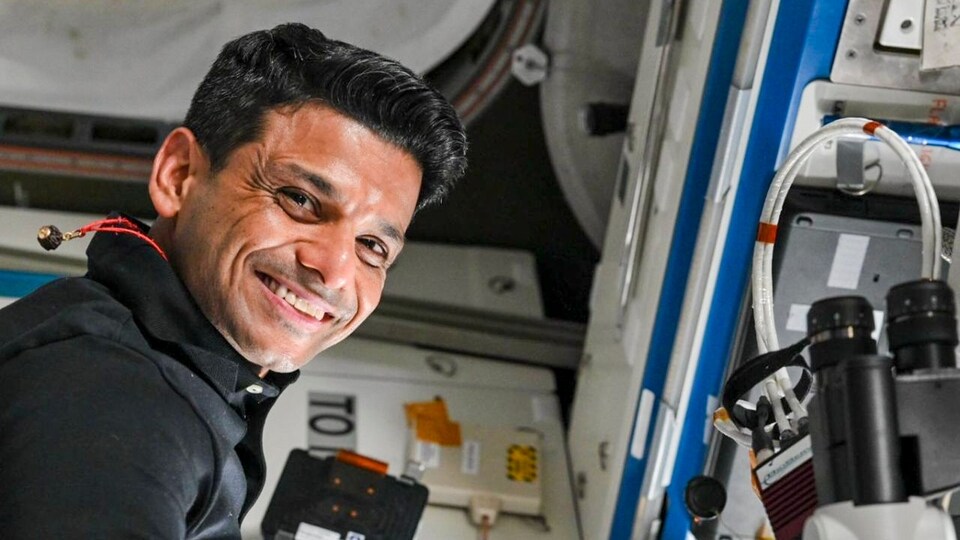
Shukla turned farmer onboard the ISS, growing moong and methi seeds, PTI reported. He also took photographs of the seeds sprouting in petri dishes and while keeping them in a storage freezer.
The activity is part of a study into the influence of microgravity on germination and early plant development. These seeds will be cultivated over multiple generations after their return to eath, with researchers looking into changes in their genetics, microbial ecosystems and nutritional profiles, Axiom space said in a statement.
Shukla, who is on the space station as part of the Axiom-4 mission, will be returning to earth after July 10. NASA is expected to announce the date for the undocking of the space mission soon, depending on the weather conditions off the Florida coast.
The experiment for the germination of sprouts is part of a study headed by scientists Ravikumar Hosamani and and Sudheer Siddapureddy, according to PTI.
While Hosamani is an assistant professor at the University of Agricultural Sciences, Dharwad, Siddapureddy is from the Indian Institute of Technology, Dharwad.
Six varieties will be grown over generations under the crop seeds experiment in order to identify any desirable traits for genetic analysis in regards to sustainable space farming.
Shukla on his research tasks onboard the space station
Speaking about his research tasks on the ISS, Shukla said they had been “fantastic”. "Right from doing stem cell research and looking at the effect of microgravity on seeds, evaluating the cognitive load on astronauts while they are interacting with screens onboard the station," PTI quoted him as saying.
He added that he felt “proud” to be acting as a “bridge” between the researchers and the space station, and conduct these experiments on their behalf.
He further said that he was “really excited” about the study on stem cells. Under this, scientists are trying to determine whether the growth, recovery and repair process can be accelerated in stem cells by adding supplements.
“It has been great to work in the Glove Box doing this research for them. I am really excited to be doing this,” Shukla said.


