
 E-Paper



Southern Lights | Indian Union Muslim League sets its sights beyond Kerala
Aiming to fill the vacuum of a moderate Muslim voice in mainstream politics in India, the Kerala-based party is looking to widen its influence

 Prefer HTon Google


Seventy-six years after its formation, the Indian Union Muslim League (IUML) is looking to expand its footprint outside Kerala, ET Mohammed Basheer, national organising secretary and Kerala state party secretary said.
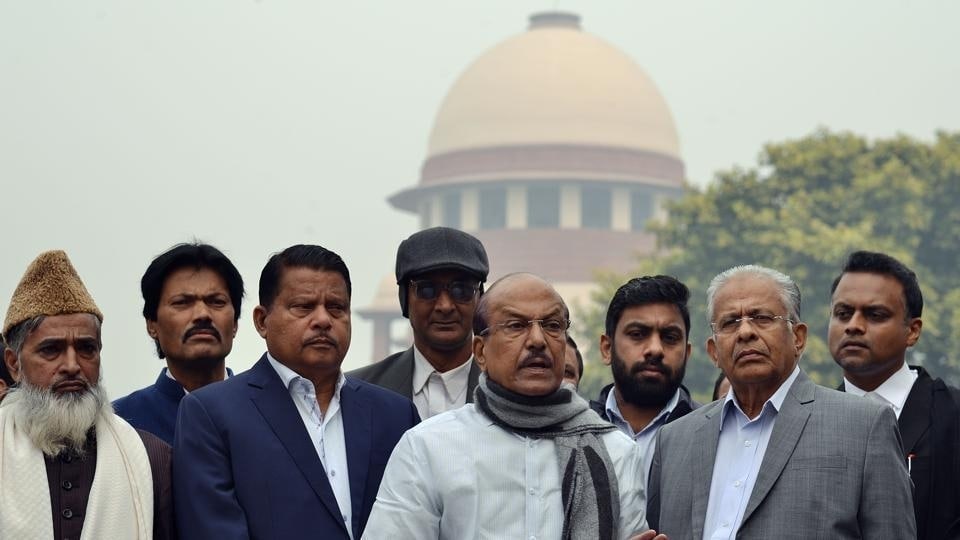
“We are looking to build leadership outside of Kerala. Through our work in the last seven decades, we have proven that we can deliver on development for not just our community, but for all Indians as well. That communal harmony can be synonymous with Muslims is something we have unequivocally established in the state of Kerala,” Basheer said.
Earlier this month, the League, as the party is referred to, inaugurated its central committee office in New Delhi. The party had opened an office for its student wing, the Muslim Students Federation (MSF), in Delhi after Covid, in a bid to assist students pursuing higher education in the Capital city. The Daryaganj office, however, located in a multi-storeyed building, will become fully operational by the end of the year, and will house the party headquarters that is currently in Chennai. All units of the IUML will soon function from Delhi. Until now, various committees of the League were either functioning from MPs’ offices or members’ residences.
Already the party’s presence extends to other states through the MSF; the party has also run membership drives in northern and eastern states, including Uttar Pradesh and Jharkhand. What has taken the IUML so long to establish a national presence? A brief history of its existence might help us understand its predicament.
The League’s history
The IUML was formed in 1948 as the Indian counterpart of the All-India Muslim League (AIML), which began functioning in Pakistan after partition. Taking with it its Muslim intellectuals, financiers, and political heavyweights, it left behind a stump of a party in India. The Pakistan Muslim League succeeded the AIML in Islamabad but later splintered into various parties in the years that followed.
“In India, there was so much bad blood already post-partition between the Hindus and Muslims. So the Indian Muslims in Lucknow, where AIML was headquartered at the time, were powerless and scared. They suggested the discontinuation of pursuing politics to secure the community’s interests. However, leaders from southern India were against this idea. They were willing to take on the leadership and this brought about the creation of the IUML in India,” said NP Chekkutty, former journalist and author of the book History of the Indian Union Muslim League.
Thus, IUML came to be headquartered in Chennai (then Madras) and Muhammad Ismail, the then president of the Madras unit of the Muslim League was named its convenor. Subsequently, the political prominence of Dravidian politics allowed the League more wiggle room in Kerala, where the Travancore and Malabar units merged into the parent IUML.
Political activity of the IUML
The presence of a large number of Muslims in the Malabar region helped IUML establish its influence in Kerala. In 1957, B Pocker Sahib (of AIML) was elected to Parliament and KM Seethi Sahib (of IUML) became the state assembly’s speaker in 1960. Until the 1980s, the League’s participation in politics became a regular feature in the Communist Party of India (Marxist)-led Left Democratic Front (LDF) and Congress-led United Democratic Front (UDF) governments, with one of their leaders even occupying the chief ministerial seat, albeit for just three months.
Some of the IUML’s major achievements in the decades of its quiet involvement in Kerala’s politics include overseeing the creation of the Calicut University in Kozhikode, the Sree Sankaracharya University of Sanskrit in Kalady, and the formation of the Malappuram district in 1969.
Najma Thabsheera, IUML spokesperson said, “We were actively part of the Renaissance in Kerala and focussed on education, health, and rural uplift. We are a community-oriented party, but secularism is our priority.”
Moderate political Islam
The IUML has a stronghold over four districts of the Malabar region: Kasargod, Wayanad, Malappuram, and Kozhikode. It is headed by members of the Panakkad Thangal family, who are looked upon for political as well as religious guidance. Historian Ronald Miller writes in his book, Mappila Muslim Culture that the Syed Mohammedali Shihab Thangal “wisely and sensitively, led Muslims through the landmines of state politics for over three decades. He also led the way into cordial relationships with members of other religious communities.”
At the inauguration of the Ram Mandir in Ayodhya in January this year, IUML Kerala president Sadiq Ali Shihab Thangal said at a public rally, “A major development has taken place in the country. The Ram temple was a desire of the majority; there is no need to protest…..In a pluralistic society, everybody has the freedom to go ahead as per their faith.”
Sadiq Ali succeeded his brother, Syed Hyder Ali Shihab Thangal in March 2022.
The Thangal family is of Yemeni descent and emigrated to India in the 18th century. Based in Malappuram, Kerala, they are revered and influential in business and politics in the northern districts of the state. Their patriarch, the late Mohammed Ali Shihab Thangal is known to have dissuaded his community members from taking any retaliatory action after the Babri Masjid demolition in December 1992. From settling disputes peacefully to encouraging the horticulturists in Malappuram to supply lotuses to all temples in Kerala, the Thangals and other leaders are seen as torchbearers of communal harmony.
The now-banned outfit Popular Front of India often clashed with the IUML cadre for not being allowed to function in the four Kerala districts which are the Thangals’ strongholds.
The party’s approach to politics has changed since the Partition, professor Damodar Prasad from Calicut University said. Its leaders worked hard to gain acceptance, build leadership, and toe the moderate line in intent and action in Kerala, he added. The party has been represented in the Parliament and assemblies of different states since the 1950s.
“We are a party for the minorities, but not a religious party,” Basheer said.
“Our decision to expand our footprint outside of Kerala is not to oppose Hindutva politics but is a response to Hindutva politics by empowering the secular fabric of the country. Our aim is to not isolate the Indian Muslim but to integrate him into the mainstream through social, political, and economic empowerment. We want to take a more serious view of our community's representation in mainstream politics,”
K Subair, National Assistant Secretary IUML said.
According to the League’s leaders, the BJP does not allot tickets to Muslim candidates; the Congress doesn’t encourage Muslim candidates either. Their national presence will fill this lacuna.
“Our students have started forming unions and intellectual think tanks in all central universities. We are all working on our language skills to be able to effectively communicate in Urdu,” Thabsheera said.
To buttress its acceptance, the IUML is looking to engage in socio-political alliances across the country and create a wider base, its leaders said. Taking a stand on national issues, and fighting for the marginalised backward classes and Dalits are part of the IUML’s plans to gain more acceptance. “Those who want shorter political gains will look to AIMIM’s Owaisi. But those who look for harmony and integration into mainstream India will work with us,” a senior leader of the party who did not wish to be named said.
The political Muslim
Mir Ayoob Ali Khan, who consults with the Maulana Abul Kalam Azad University, and has an honorary editor’s post at the Siasat Daily said, ‘There are two parallel Muslim stories in the south — one, AIMIM, and the other, IUML. While the IUML has been playing good politics that is largely non-confrontational and has also been in alliance with the Left and Congress-led governments in Kerala, MIM's narrative has not been accepted so easily. But more importantly, what is to be observed is that any Muslim party that rises to occupy a bigger stage is not allowed by other parties be it the Samajwadi Party, Bahujan Samaj Party in the north or the Trinamool Congress in the east. Why shouldn’t Muslims be allowed to come out as a force?''
Experts agree that there is a clear distinction between the IUML and Asaduddin Owaisi-led All-India Majlis-e-Ittehadul Muslimeen (AIMIM). For one, the Rashtriya Swayamsevak Sangh (RSS), the ideological fount of the ruling Bharatiya Janata Party (BJP), and which espouses the Hindutva ideology, has, on several occasions, referred to the League as a democratic organisation that supports nationalism. The RSS regional heads and state functionaries of Kerala have also demonstrated a willingness to engage with IUML's leaders. Owaisi and RSS have a more contentious relationship. For instance, last November during the Telangana assembly elections, Owaisi criticised Congress candidate Revanth Reddy (now CM) and called him a “puppet” of the RSS.
According to Fazal Tanweer, professor of Sociology at the University of Hyderabad and author of Being Muslim in Contemporary India: Nation, Identity and Rights, IUML and MIM’s positioning has a lot to do with the respective contexts in which they make their political assertions. “MIM has positioned itself as the voice of the oppressed Muslim and has been successful in taking this nationally. On the other hand, IUML has been the more moderate voice, taking a nuanced position. However, what will be put to test is whether the League will be able to maintain this position when it is asked to take a stand on national issues with the Hindutva debate forcing a polarising view. What it's been able to do in Kerala is because of a largely secular fabric which is not the case in the rest of India.”
In the seven and a half decades of IUML’s existence, it has never invited AIMIM or any other political party claiming to represent Muslims to Kerala nor has it seconded the opinion of any of these parties made elsewhere in India.
As far as AIMIM is concerned, the comparison between the two parties is moot.
"What prevented the IUML from entering politics all these years since 1947? If the League calls themselves nationalists, are we (MIM) separatists? So far they have not done anything for Muslims outside of Kerala. When they enter Uttar Pradesh, we will then assess the situation," advocate Ajmal Khan, AIMIM spokesperson (Uttar Pradesh), said.
Deepika Amirapu is a freelance journalist based in Hyderabad. Each week, Southern Lights examines the big story from one of the five states of South India.


