E-Paper



Supreme Court says society must learn to accept intercaste, interfaith marriages
A Supreme Court bench of justices Sanjay Kishan Kaul and Hrishikesh Roy further noted that it would “hardly be a desirable social exercise” for parents to shun their children only because they decided to marry outside their caste or community.

 Prefer HTon Google


The Supreme Court on Monday underscored the right of the adults to choose their life partner, and added that it is time society learns to accept inter-caste and inter-faith marriages without hounding the couples.
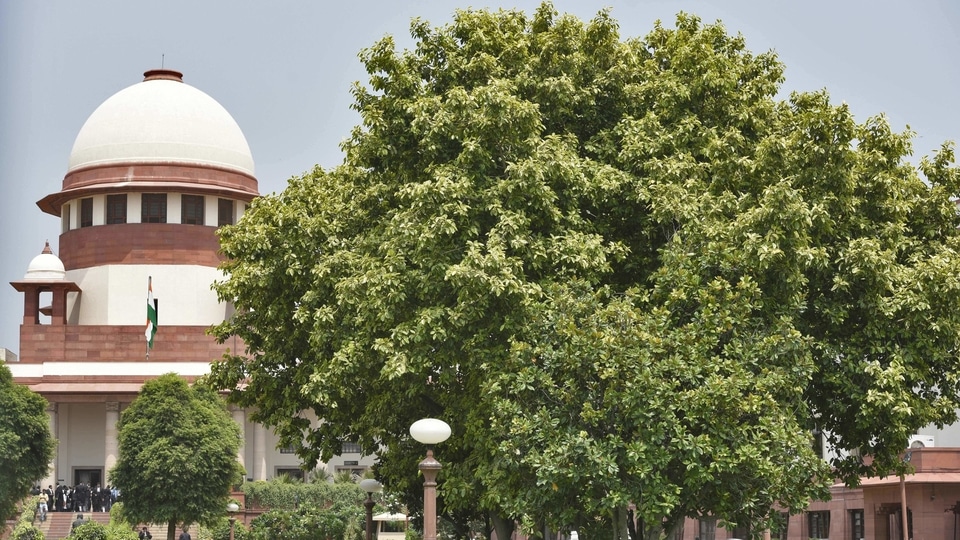
A Supreme Court bench of justices Sanjay Kishan Kaul and Hrishikesh Roy further noted that it would “hardly be a desirable social exercise” for parents to shun their children only because they decided to marry outside their caste or community.
The judges, in their order, also emphasised the need for specific guidelines and a training module for policemen to deal with such “socially sensitive cases”, so that couples can get due protection available to them under the law should the parents lodge criminal cases against them.
It took note that “educated young boys and girls are increasingly choosing their life partner on their own”, which might be viewed as a deviation by the society and the parents, but the police authorities were duty-bound to keep such couples out of harm’s way if there was no violation of the law.
The apex court’s comments are significant because they come in the wake of controversial ordinances passed by Uttar Pradesh and Madhya Pradesh that can be misused to obstruct inter-faith marriages.
The bench was hearing a case of an inter-caste marriage from Karnataka; the couple approached the top court, seeking protection from a criminal case lodged by the woman’s father.
The woman, 28, is from Karnataka while the man, 26, is from Uttar Pradesh. They fell in love while being trained for their jobs as assistant professor and lecturer in a college, and decided to get married. The woman’s parents strongly opposed this alliance. Her father filed a missing persons complaint lodged; this was converted into an FIR at Belagavi in Karnataka.
The couple rushed to the Supreme Court for protection, which stayed the first information report (FIR) by an order in December last year, and sought a response from the Karnataka government.
On Monday, advocate Subhranshu Padhi, appearing for the state government, informed the bench that the woman was yet to record her statement before at the concerned police station in Belagavi about her consensual relationship with the man concerned, and hence the investigation into the father’s complaint was still underway.
But the bench questioned Padhi as to why the investigating officer did not accept the woman’s request to record her statement at a place of her choice so that she could feel safe.
Advocate Prabhat Kumar Rai, who represented the couple, referred to the woman’s letter to the investigating officer and various other senior police officials in Karnataka. These letters disclosed that the couple were married in October 2020; and she also sent a copy of her marriage certificate. “The woman feared for her safety if she were to go to Belagavi for recording her statement. The right to marry a person of (one’s) own choice is an integral part of Article 21 (right to life and liberty),” added Rai.
Lamenting the attitude of the police officer, the court said the investigating officer should receive counselling and that the Karnataka government must consider conducting a training programme for all its police officers to sensitise them about such cases. The bench observed that it was desirable for all the police departments to lay down guidelines for handling such cases.
It regretted that the parents of the woman opposed the choice of their daughter even though both the man and the woman were highly qualified, independent professionals and Hindus, but not of the same caste and not from the same state.
Quashing the FIR, the bench stated that once two adults chose to be with each other and had a consensual relationship, they could not be made accused in a criminal case only on account of their parents’ refusal to accept their relationship.
“We hope that the parents of the petitioner no.1 (woman) will have better sense and accept the marriage to re-establish social ties with their daughter and her husband. That, we think, is the only way forward,” recorded the court in its order.