The Supreme Court on Tuesday stayed the National Green Tribunal (NGT)’s direction for appointing the Lieutenant Governor (LG) as the head of a high-level committee on Yamuna river pollution as it admitted the Delhi government’s appeal against the order.
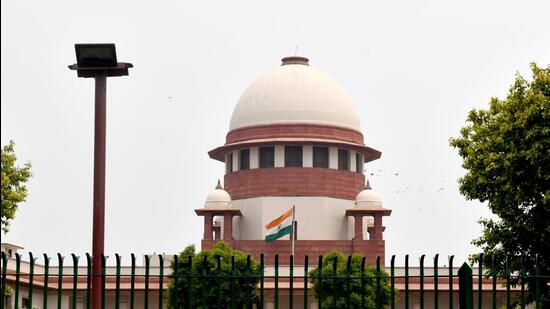
A bench comprising Chief Justice of India Dhananjaya Y Chandrachud and Justice PS Narasimha issued the interim order after the Aam Aadmi Party (AAP) government pressed for an immediate stay saying the NGT order will trigger “more friction” between the two authorities.
During the brief hearing, the court clarified that it is staying only that part of the NGT order on January 9 that named the LG as the head of the panel.
“We think the real issue is whether the tribunal could appoint the LG as the head of the panel or not. The NGT thinks since he is the chairman of the DDA [Delhi Development Authority], he should head the panel,” the bench told senior advocate Abhishek Manu Singhvi, who represented the Delhi government.
Singhvi responded saying DDA has nothing to do with the cleaning of the river and that NGT was completely wrong in involving the LG.
{{/usCountry}}Singhvi responded saying DDA has nothing to do with the cleaning of the river and that NGT was completely wrong in involving the LG.
{{/usCountry}}Admitting the Delhi government’s appeal, the court also issued a notice to the petitioner before the NGT, Ashwani Yadav, and fixed the next hearing after four weeks.
The AAP government in May approached the Supreme Court seeking directions to set aside the NGT order calling it unconstitutional and violative of the two Constitution bench decisions in July 2018 and May 11 this year, defining the remit of the powers of the LG.
“The NGT’s proposed remedial measures, such as utilising treated water for agriculture, horticulture, or industrial purposes, preventing waste discharge and dumping, protecting floodplain zones, maintaining dredging flow, implementing plantations, and desilting drains, require budgetary allocations that are approved by the legislative assembly. The role of the elected government becomes crucial in overseeing these measures,” said the government’s petition.
The appeal pointed out that the current scheme outlined in the NGT order establishes a committee led by an unelected figurehead, sidelining the elected and accountable government of the national capital territory of Delhi. “While an inter-agency committee is desirable for coordination purposes, it should be overseen by the elected head of government, the Chief Minister in this case.”
The NGT order came on Yadav’s petition highlighting the increasing pollution in Yamuna and the alleged failure of authorities to take remedial measures.
A five-member bench of NGT in its order said having multiple authorities in Delhi may be one of the reasons for not achieving success so far. “There appears to be lack of ownership and accountability.”
Besides LG as the chairman, the high-level committee includes the chief secretary, secretaries of the irrigation, forest, and environment, agriculture, and finance departments of the Delhi government, the chief executive officer of the Delhi Jal Board, the vice chairman of the DDA, a representative from the Union ministry of agriculture, the director-general of forests or his nominee, a representative from the ministry of jal shakti or ministry of environment, forests and climate change, the director-general of the National Mission for Clean Ganga, and the chairman of the Central Pollution Control Board.
The appeal filed through advocate Shadan Farasat said that the objective of cleaning Yamuna and implementing remedial measures requires interdepartmental coordination but in the garb of the order, executive powers cannot be granted to the LG as these exclusively rest with the elected government of Delhi. It said the language used in the NGT order sidelines the elected government.
Quoting portions from the 2018 decision which delineated how the LG is to act on aid and advice of the Delhi government, except in matters pertaining to land, public order, and police, the petition said that as per Article 239AA granting Delhi a special status, LG serves as a “nominal figurehead” in the administrative structure.
“It has been a well-established constitutional principle for the past 50 years that the powers vested in a nominal and unelected head of state should only be exercised under the aid and advice of the Council of Ministers,” the petition said. It added that granting executive powers to an authority that lacks the constitutional mandate to possess them undermines the elected government’s rightful jurisdiction.