The Supreme Court on Monday decided to examine the need for a secular law on wills and legacies for Muslims, which are governed by their personal law, specifically the Muslim Personal Law (Shariat) Application Act, 1937, when it comes to matters of inheritance and succession.
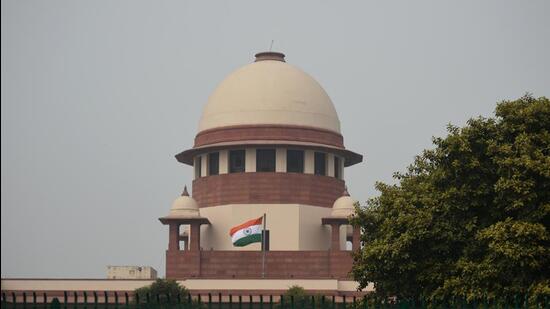
A bench, led by Chief Justice of India (CJI) Dhananjaya Y Chandrachud, put its focus on Section 58 of the Indian Succession Act, 1925, which is generally applicable to all other citizens regardless of their religious affiliations, except Muslims, in matters of testamentary succession.
The bench, which also comprised justices JB Pardiwala and Manoj Misra, issued notices to the Centre and the Kerala government on a petition arguing that Muslims should also have a choice to be governed by the Indian Succession Act instead of Muslim Personal Law -- especially individuals who are born Muslim but later renounce their faith.
The petitioner, Safiya PM, a resident of Kerala and the president of an organisation for former Muslims, contends that rather than being subject to Muslim Personal Law for inheritance purposes, she should be regulated by the 1925 Act.
Terming the issue “important”, the bench sought assistance from a law officer to be nominated by attorney general R Venkataramani and fixed the next hearing for the second week of July.
{{/usCountry}}Terming the issue “important”, the bench sought assistance from a law officer to be nominated by attorney general R Venkataramani and fixed the next hearing for the second week of July.
{{/usCountry}}During the hearing, advocate Prashant Padmanabhan, representing Safiya, highlighted the limitations imposed by Muslim personal law, where a Muslim cannot bequeath more than one-third of their properties by way of a will. He also pointed out the gender disparity in inheritance rights, where Muslim women are entitled to only one-half the share of male heirs.
Addressing the court, Padmanabhan illustrated the peculiar familial circumstances of his client, whose father, also a non-believer, is restricted by these laws from bequeathing more than a third of his property, adversely affecting his daughter and granddaughter. The counsel further pointed out that while there must be a declaration under the Muslim personal law for the applicability of the Shariat Act, his client cannot resort to the Indian Succession Act after renouncing her faith because Section 58 of this law declares that the provisions of the said Act shall not apply to testamentary succession to the property of Muslims.
Responding, CJI Chandrachud referred to the complexities introduced by Section 58 of the Indian Succession Act, which explicitly excludes Muslims, and Section 3 of the Shariat Act, which requires a specific declaration to opt-out. This creates a legal void for those like Safiya, who find themselves governed by a system that does not align with their current beliefs, the bench observed.
“You are born a Muslim. Section 58 of the Indian Succession Act says that it would not apply to Muslims. Even if you don’t make a declaration under Section 3 of the Shariat Act, there is no secular Act on wills and legacies by Muslims. You don’t have to seek that declaration because Section 3 of the Shariat Act says unless you don’t make a declaration, then you will not be governed by personal law. But there is still a void because if you don’t declare, then what will you be governed by?” the bench remarked, as it granted the petitioner liberty to amend her petition to challenge the validity of Section 58 of the Indian Succession Act.
Under the current system, those who are born Muslim but later renounce their faith or choose to be non-believers still find themselves bound by the Shariat law unless they make a formal declaration to opt out, as per Section 3 of the Shariat Act. However, even after they opt out, Section 58 of the Indian Succession Act disables them from the applicability of the general law on testamentary succession. Another petition challenging the validity of Section 58 of the Indian Succession Act is currently pending before the Supreme Court.
This case potentially can set a precedent regarding how religious law applies to those who have consciously distanced themselves from the faith they were born into, raising fundamental questions about freedom of belief and the rights to equality under the law.