The Taliban visited the closed Indian consulates in Kandahar and Herat on Wednesday, searched cupboards in Kandahar for papers, and took away parked vehicles from both embassies, even as it conducts door-to-door searches in Kabul to identify Afghans who worked for NDS, the state-run intelligence agency. Details of what’s happening to the Indian consulate in Jalalabad and the mission in Kabul are not available.
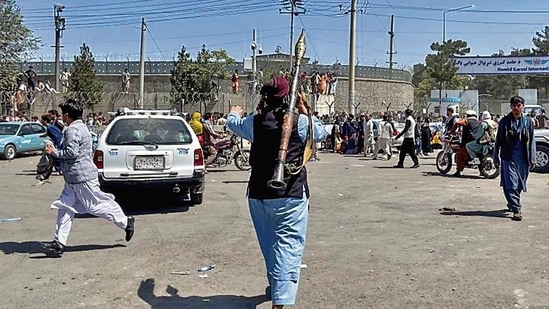
According to reports from Kabul, nearly 6,000 cadre of the Haqqani Network has taken control of the capital city, led by Anas Haqqani, brother of Sirajuddin Haqqani, head of the terrorist group and deputy leader of the Taliban.
While Anas Haqqani met former president Hamid Karzai, Chairman HCNR Abdullah Abdullah and Hezb-e-Islami veteran Gulbuddin Hetkmatyar, it is understood that the movements of both Karzai and Abdullah are restricted and controlled by the Taliban.
Negotiations are on to ensure to get both Karzai and Abdullah to formally hand over power to the Taliban leader Mullah Abdul Ghani Barader in the Presidential Palace in a staged event. Sirajuddin Haqqani is said to be passing on instructions from Quetta, where the Taliban’s council of leaders, the Quetta Shura is based.
Reports from Kandahar reveal that the Taliban cadre broke the locks of the Indian consulate and carried out searches. They took away parked diplomatic vehicles with them. At Herat, they entered the consulate compound and took away the vehicles without making forcible entry into the consulate.
{{/usCountry}}Reports from Kandahar reveal that the Taliban cadre broke the locks of the Indian consulate and carried out searches. They took away parked diplomatic vehicles with them. At Herat, they entered the consulate compound and took away the vehicles without making forcible entry into the consulate.
{{/usCountry}}While Haqqani network cadre are largely controlling Kabul, the Taliban faction headed by Mullah Yaqoob, son of the late Mullah Omar and head of Taliban military commission, is planning the take over of power and government from Kandahar, the traditional seat of Pashtuns. Mullah Barader met Mullah Yaqoob after he arrived from Doha on August 18. It was in Kandahar that Mullah Yaqoob’s father was declared Emir ul Momeen on April 4, 1996. The religious head of Taliban, Mullah Haibatullah Akundzada, is still based in Karachi in Pakistan.
Although negotiations are on within the Taliban leadership on the formation of government at Kabul, the Pakistan based Jaish-e-Mohammed (JeM), a fellow Deobandi terrorist group, is apparently demanding a stake in the Afghan pie with jagirs or land in south Afghanistan. With the ascent of Taliban in Kabul, there is a celebration both within the JeM as well as their handlers in Rawalpindi as troves of cash and top-of-the-line US weapons and military vehicles have been seized by the invaders.
While India and its close allies are in a wait and watch mode, the Taliban are getting support from Britain whose Chief of Defence Staff General Nick Carter is openly lobbying for the Sunni Pashtun group to be given a chance at Kabul.
In an interview with Sky News, he referred to them as “country boys ... with a code of honour”. It was Carter and the Pakistan Army that were instrumental in keeping the Doha process alive -- eventually resulting in what is now clear as a sub-optimal deal between the US and the Taliban.