Although technology is a great enabler, digital divide is a reality too, the Supreme Court highlighted on Tuesday as it came to the rescue of a young man whose aspiration to join the police force in Bihar was crushed because of a typographical error – his online application form recorded his date of birth as “08/12/1997” instead of “18/12/1997”.
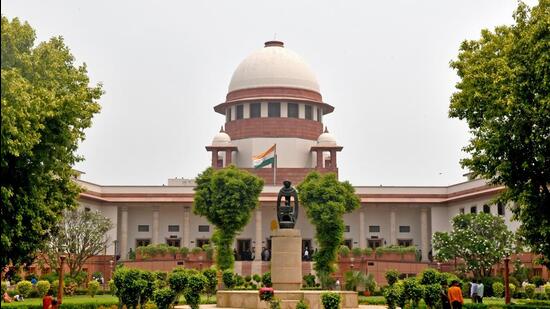
Noting that the “rarefied atmosphere of the cybercafe perhaps got the better” of the applicant who hailed from a small village in Bihar and belonged to the downtrodden segment of the society, a bench of justices JK Maheshwari and KV Viswanathan directed the state government to issue an appointment letter to the petitioner and recruit him as a constable within four weeks.
“We further direct that, in the event of there being no vacancy, the appointment letter will still have to be issued on the special facts of this case. We make the said direction, in exercise of powers under Article 142 of the Constitution of India. We further direct that the state will be at liberty in that event to adjust the vacancy in the next recruitment that they may resort to in the coming years,” said the judgment, authored by justice Viswanathan.
The bench maintained that it “cannot turn a Nelson’s eye to the ground realities that existed” in this case, adding that the Supreme Court has in a 2021 decision “rightly observed that though technology is a great enabler, there is at the same time, a digital divide”.
{{/usCountry}}The bench maintained that it “cannot turn a Nelson’s eye to the ground realities that existed” in this case, adding that the Supreme Court has in a 2021 decision “rightly observed that though technology is a great enabler, there is at the same time, a digital divide”.
{{/usCountry}}The petitioner in the case, Vashist Narayan Kumar, had applied for the post of constable in 2017 under the reserved category and cleared the written examination as well as the physical eligibility test. Kumar was however declared as failed in his final result since his educational certificates mentioned his date of birth as “18/12/1997” whereas the application form that he had filled in a cyber café in a nearby town recorded his date of birth as “08/12/1997”. He filled the online form with the assistance of the person running the cyber café.
Kumar’s challenge to the rejection of his candidature was also dismissed by the Patna high court, compelling him to move the top court. While the state defended its decision on the ground that the advertisement had clearly stipulated that candidates should correctly mention their date of birth according to their 10th board certificate, the petitioner’s counsel Shaswati Parhi emphasised that it was an inadvertent error on Kumar’s part and that he derived no benefit from it since he fulfilled the eligibility criteria and the age requirement either way.
Writing the judgment for the bench, justice Viswanathan rejected the state’s argument that the error was so grave as to constitute a wrong or misleading information, adding Kumar could not be penalised for an insignificant error which made no difference to the ultimate result.
“In this case, the appellant has participated in the selection process and cleared all the stages successfully. The error in the application is trivial which did not play any part in the selection process. The state was not justified in making a mountain out of this molehill. Perhaps, the rarefied atmosphere of the cybercafe, got the better of the appellant. He omitted to notice the error and even failed to avail the corrective mechanism offered,” the court said.
It pointed out that Kumar derived no advantage as even if either of the dates were taken. “He was eligible; the error also had no bearing on the selection and the appellant himself being oblivious of the error produced the educational certificates which reflected his correct date of birth...It is a trivial error which appears to be a genuine and bona fide mistake. It will be unjust to penalise the appellant for the same,” held the court.