At the time of its launch in 2005, the Mahatma Gandhi National Rural Employment Guarantee Scheme (MGNREGS) promised to fight poverty in four ways. First, the programme’s rights-based guarantee would ensure that any rural household facing crises could insure themselves against shocks by accessing wage-work whenever they needed support. Second, its “self-targeting” mechanism would ensure the programme was pro-poor, as well-off individuals would not want to participate in laborious public works. Third, the programme’s minimum wage guarantee would allow workers to negotiate better wages with private employers. And finally, the local assets built through MGNREGS, such as irrigation facilities, could improve income as well as productivity.
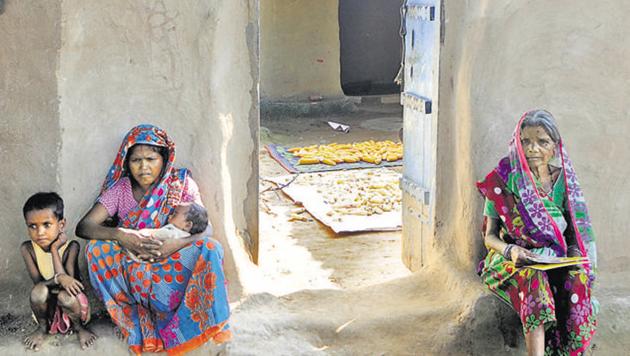
Has MGNREGS fulfilled its promise? The answer in a country as large and diverse as India is, unsurprisingly, mixed. More than a decade in its existence, the programme’s reach and scale remain impressive with nearly 51 million beneficiary households in 2017 generating 2,342 million person-days of employment, and expenditures at 0.3% of the GDP. Most studies also show that participation in the scheme favours poor households, and helps alleviate poverty and distress during crises. In 2017, 53.5% of those provided employment through the programme were women while 39.1% belonged to Scheduled Castes (SC) and Scheduled Tribes (ST). Studies also show that the programme helped improve rural wages where it was implemented well.
But weak administrative capacity has stymied its impact. According to administrative data for 2017, the nine poorest states — whose poverty rates are higher than the national poverty rate — account for only 32% of the total employment generated. Paradoxically, MGNREGS performance has been weaker in poorer states such as Bihar, where it is needed the most, a 2012 World Bank study found. Evaluations in Bihar and Rajasthan showed that weak local implementation dampened the programme’s poverty effects despite effective targeting. As the graph shows, a household in the poorest decile is four times less likely to participate in the scheme in Bihar than in Andhra Pradesh (13% against 55%). Strikingly, participation in the scheme in the poorest decile in Bihar is about the same as programme participation in the richest decile in Andhra Pradesh (12%).
Most states also struggle to pay beneficiaries on time. In October 2017, the Supreme Court of India expressed concerns on the delays in MGNREGS wage payments. Major complaints include non-issuance of dated receipts, non-payment of unemployment allowance, incomplete payment of wages, and delayed payments. The last has been attributed to inadequate and slow fund releases, and challenges imposed by technology. Addressing delays is essential to ensure that intended benefits of the programme are not undermined. Given the mixed track record of MGNREGS’s ability to provide insurance to workers, there are many who question the rationale of scheme’s existence itself. They point out that the programme is too complex, cumbersome and ambitious to implement, and suggest simpler transfer schemes. There is expanding political interest in exploring basic-income support schemes, which guarantee fixed cash transfer to every person. Drives to open bank accounts under the Jan Dhan Yojana), the system of Aadhaar, combined with near-ubiquitous mobile technology have paved the way for making such a scheme a feasible option in the future.
{{/usCountry}}Most states also struggle to pay beneficiaries on time. In October 2017, the Supreme Court of India expressed concerns on the delays in MGNREGS wage payments. Major complaints include non-issuance of dated receipts, non-payment of unemployment allowance, incomplete payment of wages, and delayed payments. The last has been attributed to inadequate and slow fund releases, and challenges imposed by technology. Addressing delays is essential to ensure that intended benefits of the programme are not undermined. Given the mixed track record of MGNREGS’s ability to provide insurance to workers, there are many who question the rationale of scheme’s existence itself. They point out that the programme is too complex, cumbersome and ambitious to implement, and suggest simpler transfer schemes. There is expanding political interest in exploring basic-income support schemes, which guarantee fixed cash transfer to every person. Drives to open bank accounts under the Jan Dhan Yojana), the system of Aadhaar, combined with near-ubiquitous mobile technology have paved the way for making such a scheme a feasible option in the future.
{{/usCountry}}How does the impact of MGNREGS compare to the potential impact of a universal basic income based on the same aggregate budget? Evidence suggests that public works can yield stronger welfare impacts than basic income transfers provided citizen demand for works is honoured with immediate supply of employment, and assets so generated are of high value. But, neither of these requirements can be achieved without a strong and capable panchayat machinery. While the policy framework for ensuring flexibility in creating durable and locally valuable assets is in place, credible implementation requires gram panchayats to define and plan their local shelf of works. Activists suggest that ensuring all household demands for work are honoured may require one labour-intensive public work to be open in each panchayat throughout the year. These are costly investments in enhancing the capability of the programme’s delivery chain.
It bears repeating that MGNREGS aims not only at providing insurance, but also enhancing local productivity, rural wages, citizen voice and empowerment through rights and decentralised governance. For the scheme to meet its transformational promise, it needs heavier and sustained investment in local government and administrative capacities.
MGNREGS was one of the first programmes to allocate large-scale management powers and finances to panchayats with minimum of 50% of the funds executed by the gram panchayat. Evidence suggests that the responsibility of MGNREGS implementation raised stakes in local village-level elections. On the flip side, evidence from states such as AP and West Bengal shows that MGNREGS gave new resources to local clientelistic networks.
To many, the challenge of reforming India’s welfare administration seemed insurmountable given its paternalism, politics and corruption. Through making work a justiciable act, MGNREGS has been successful in conceptualising and forging a new compact between the administration, local political leadership and citizens. The scheme incentivised much needed policy and administrative focus on empowering panchayats and reforming the front-line welfare bureaucracy. This part of the programme’s ambitious agenda remains critical and unfinished.