NEW DELHI: Imagine an outbreak of a coronavirus taking hold in parts of Asia. At first, the virus begins to grow where it was found but slowly, and inevitably, it begins to spread to other parts of the world. Scientists have seen nothing like the pathogen before, but the symptoms are as familiar as the flu. It spreads when someone coughs, and leads to fever, body ache and chills. Every now and then, however, it sickens the patient severely, leading to fatal pneumonia. For a country with crowded cities and an overstretched health system like India, this virus is bad news: even a small proportion with fatal disease could become a huge number. Eventually, the first case is found and a lumbering government machinery is activated into a state of alert, frenetically expanding facilities and marshalling resources to brace for a wider outbreak.
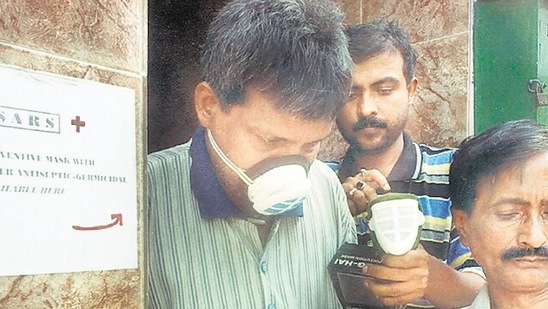
But, the virus fails – it fails to make any significant impact in the Indian population and six months later, only a handful are confirmed to have had the infection.
Against the backdrop of the pandemic today, when a pathogen that fits the above description has ravaged the world and killed millions of people in two years, the idea of a coronavirus that fizzles out may seem like alternate reality -- but that is precisely how things turned out in April of 2003 when the first Sars (severe acute respiratory syndrome) virus, the predecessor of the Sars-CoV-2, arrived in the country.
Reports from back then, like the ones pictured here, have an eerie similarity to the early days of discussions in 2020. For instance, clinicians and authorities were closely tracking whether cases were mild or serious, or if the virus was airborne. A crucial sign that government officials looked for was whether it reached local, community transmission. Suspect cases and foreign arrivals from hot spot regions in Hong Kong, Singapore and China Guangdong (where the virus was first found) were quarantined and allowed to go only after they tested negative. Those who came in close contact, such as an entire wedding party in Pune, were isolated en masse.
There was panic among the people too, when Air India pilots refused to fly to outbreak cities, triggering action from the airline that eventually ended in litigation. And there was resentment at ill-preparedness, when doctors in many cities went on strikes to protest the lack of personal protective equipment.
{{/usCountry}}There was panic among the people too, when Air India pilots refused to fly to outbreak cities, triggering action from the airline that eventually ended in litigation. And there was resentment at ill-preparedness, when doctors in many cities went on strikes to protest the lack of personal protective equipment.
{{/usCountry}}According to the World Health Organization, by the end of 2003, there were just three Sars cases in India with no fatalities. Globally, the number of cases was 8,096 with 774 deaths, most of which occurred in China, Hong Kong and Singapore.
The legacy of the Sars outbreak almost 19 years ago is best captured in the last two years. It demonstrated that a wide pandemic was possible, and in how the world responded to it at the time and the retrospective analysis of those measures later provided a template for public health measures that were invaluable in 2020 – even though one can argue that many lessons, especially on the futility of panic, were ignored.
Perhaps the most important part of that legacy was in science. As scientists took apart the Sars coronavirus in labs in the years they followed, they gleaned invaluable insight into such pathogens. Along with the decades of the research into HIV, the insights the Sars virus offered are the foundation that allowed vaccines for the Sars-CoV-2 to be developed in record time.