As smog from farm fires covers the national capital and other parts of northern India , leaving residents gasping for breath, it turns out that there are some villages in Punjab that haven’t reported a single case of post-harvest stubble burning. These villages are now being held up as examples for the rest of the breadbasket state to follow.
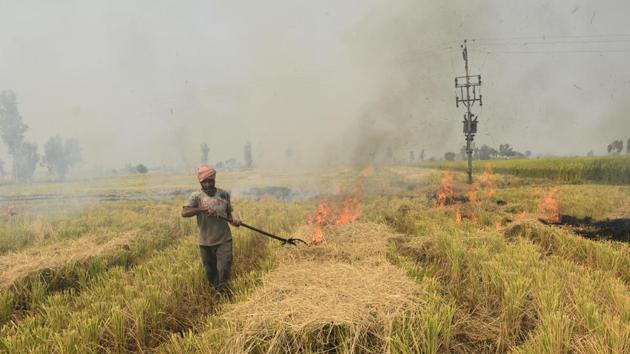
Persuasion and handholding by the agriculture department and non-governmental organisations (NGOs) and pilot projects by the United Nations have helped wean some villages off the practice that has become an annual phenomenon at this time of the year.
The collective resolve of the primary stakeholders, the farmers, and religious beliefs have been the biggest driver behind the practice ending in these villages.Farmers admit they are reaping a richer harvest by opting for in-situ management of crop residue that has increased soil fertility and reduced pollution.
No farmer in Burj Deva Singh village, 35 km from Chandigarh, has burnt stubble for six years. Drawing inspiration from Gurbani,the Sikh religious scripture. farmers of the village say that burning stubble is against the teachings of the Sikh Gurus. Leading them is Gurbachan Singh Burj, a progressive farmer who owns 40 acres.
“The Gurbani says polluting the environment is against the teachings of our Gurus. I have pledged to not only stop burning hay in my fields but also to encourage other farmers to end this practice,” said Buri, who has made appeals in gurdwaras and at religious functions to farmers to shun stubble burning.
{{/usCountry}}“The Gurbani says polluting the environment is against the teachings of our Gurus. I have pledged to not only stop burning hay in my fields but also to encourage other farmers to end this practice,” said Buri, who has made appeals in gurdwaras and at religious functions to farmers to shun stubble burning.
{{/usCountry}}Chief agriculture officer of Tarn Taran, Harwinderjit Singh, said: “We have been citing the example of this village to encourage farmers from other villages to follow suit.”
Rajesh Rana, principal scientist at the Punjab Agricultural University (PAU) in Ludhiana, who visited the village on Friday, said: “This is encouraging. I have asked the farmers of this village to take part in PAU camps to motivate others.”
Most farmers in Burj Deva Singh use the Happy Seeder machine to sow wheat without taking out the chopped stubble. Mulching stubble increases soil fertility. “Now we don’t need any pesticide or manure,” said Buri.
Khosa Pando, on the outskirts of Moga, has 3,200 acres under paddy, cultivation.The village is a rare bright spot in the district, not reporting a single case of stubble burning this harvest season.
Behind this encouraging trend is the Guru Sahib Charitable Trust, a village-based NGO, led by Baba Gurmeet Singh, who has a Master’s degree in chemistry. He encouraged farmers to manage the stubble instead of burning it by setting up the Udhami Kisan Self-Help Group under which they are provided machines at nominal prices.
A private biomass plant at Hukumat Singh Wala village in Ferozepur district also set up a dumping site with a capacity of 310,000 tonnes. So far, 35,000 tonnes of the paddy straw has been stored at the site.
Ludhiana’s Barewal Dogran sarpanch Amrik Singh, 63, blames farm union leaders for misleading farmers to maintain their dominance. He suggests that the government offer compensation to farmers to discourage them from setting their fields on fire after harvesting their crops.
“If a farmer is sowing other crops instead of wheat then ₹3,000 per acre is spent on diesel for levelling the field. Offering a minimum support price (MSP) for the stubble residue can be an incentive,” he says.