t was supposed to be a historic event. September 7, 2019, it was hoped, would mark the first soft-landing on the South Pole of the moon. As it turned out, it wasn’t to be. The Indian Space Research Organisation’s ground stations lost touch with the robotic lander Vikram just 2.1 km from the lunar surface.
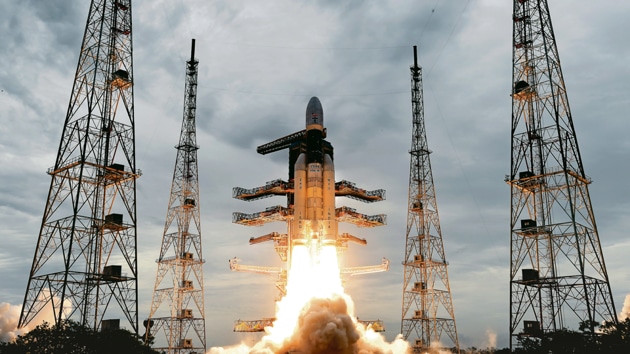
The final moments of the mission, scientists had forecast, would be 15 minutes of terror. After making clinical progress towards its goal in the first 12 minutes, the mission foundered, proving the scientists right. The Lander-Rover system deviated from its path and a required reduction in its velocity doesn’t seem to have happened. The Isro is still assessing data before coming out with a report on the reasons for the deviation and presenting the facts to the world to determine what exactly happened. For all of us, it is important to give the scientific community form Isro a chance and wait for their final judgment.
It is important to note that the Chandrayaan-2 mission had two major components. One, the Orbiter, which actually is a satellite around the moon, positioned at an altitude of around 100 km from the moon. Two, the lander-rover system, which was to land on the moon’s surface for collection of in-situ observations.
The mission encountered problems only with the second component.The lander-rover unit was more a technology demonstration and less a collection of significant observations over a wide area. Both the lander and rover had sensors connected to them and they would have added to existing knowledge of the moon, particularly in seismography, surface chemical composition, thermo-physical characteristics of the top soil and composition of the tenuous lunar atmosphere. It was expected that the data picked up by the lander-rover unit, along with data received from orbiter, would go a long way in increasing our understanding of the origin and evolution of the moon. Now, that no longer looks possible.
{{/usCountry}}The mission encountered problems only with the second component.The lander-rover unit was more a technology demonstration and less a collection of significant observations over a wide area. Both the lander and rover had sensors connected to them and they would have added to existing knowledge of the moon, particularly in seismography, surface chemical composition, thermo-physical characteristics of the top soil and composition of the tenuous lunar atmosphere. It was expected that the data picked up by the lander-rover unit, along with data received from orbiter, would go a long way in increasing our understanding of the origin and evolution of the moon. Now, that no longer looks possible.
{{/usCountry}}The biggest saving grace for Isro has been the orbiter. It has a designed life of one year. It has already started sending photographs. It has eight sensors which are to give information about the moon’s topography and mineral identification and distribution on the moon’s surface. These inputs are expected to assist in the generation of a three-dimensional map of the moon’s surface. Some of these payloads are expected to expand on the observations received from the first mission to moon, Chandrayaan 1, which took place in 2008. Observations by the present mission are expected to offer more insights about the moon’s surface because it is viewing the moon from an orbit (100 km) that’s nearer to the lunar surface than the 2008 orbit (150 and 270 km). More importantly, the quality and resolution of the sensors has improved vastly from 2008.
One of the major expectations from Chandrayaan-2 is more information on the availability of water on the moon’s surface. There are two important sensors which would assist in enhancing human knowledge about the presence of water on moon. The Imaging IR Spectrometer (IIRS) sensor would assist in the complete characterisation of water/hydroxyl feature near 3.0 µm for the first time at high spatial (~80 m) and spectral (~20 nm) resolutions. The other sensor is the Dual Frequency Synthetic Aperture Radar (DFSAR). The main scientific objectives of this payload include high-resolution lunar mapping in polar regions, quantitative estimation of water-ice in the polar regions and estimation of regolith (lunar dust) thickness and its distribution. All such measurements would provide the knowledge required to judge availability of water.
All in all, Chandrayaan-2 mission could be considered as a partially successful mission. Now, it is important for Isro to undertake a detailed assessment of what has gone amiss about the soft-landing. Isro is not the only state in the world to face such challenges. Even major powers with substantial technology base have failed with similar missions in the past. It is said that ‘only one amongst every three attempts’ have received the success in the initial attempt with such missions. However, from Isro’s perspective they should have been that one agency which has the received success in first go. It is important for Isro to quickly learn from these mistakes and move ahead. They need to continue with their hard work and the success would automatically follow.