The death of more than 150 children due to acute encephalitis syndrome (AES) in Bihar has generated a lot of debate on the poor state of health services in India’s states. Not all of India’s health care institutions are substandard though.
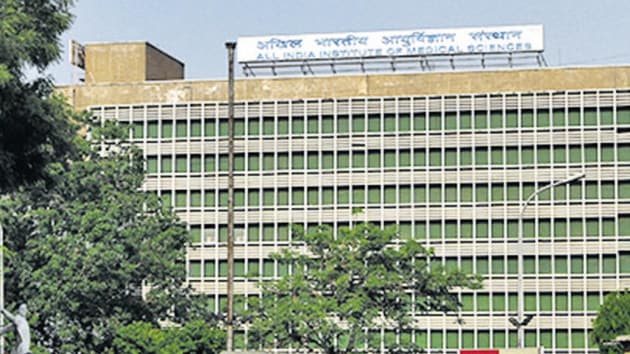
Even in the public sector, there are hospitals such as the All India Institute of Medical Sciences, New Delhi (AIIMS-Delhi) that can offer cutting-edge treatment for various kinds of illnesses. However, even hospitals such as AIIMS-Delhi are working under a severe squeeze of both personnel and resources compared to their peers in advanced countries.
An analysis of two reputed hospitals in India, AIIMS-Delhi and Christian Medical College Vellore (CMC-Vellore), with two one hospital in the US (Cedars-Sinai Medical Center, Los Angeles) and one in UK (St. Thomas’s Hospital) shows that the Indian hospitals tend to a lot more patients at a fraction of the cost than the ones abroad.
Both AIIMS-Delhi and CMC-Vellore treated more than two million outpatients in 2017-18, the latest year for which data is available.
The average number of outpatients treated by these two hospitals was twice the average outpatients treated in Cedars-Sinai and St. Thomas’s (let’s give the numbers). For inpatients, AIIMS-Delhi and CMC-Vellore treated 1.6 times the number for the two foreign hospitals (again, give the numbers). If one were to adjust inpatient treatments for number of beds, AIIMS-Delhi is far ahead of all three hospitals. It treated almost 100 patients a year per bed, which means that an average patient spent less than four days in the hospital. The extraordinarily high number of patients per bed in AIIMS also explains why it is so difficult to get admitted to the hospital. How do we know this – is there a waiting time?
{{/usCountry}}The average number of outpatients treated by these two hospitals was twice the average outpatients treated in Cedars-Sinai and St. Thomas’s (let’s give the numbers). For inpatients, AIIMS-Delhi and CMC-Vellore treated 1.6 times the number for the two foreign hospitals (again, give the numbers). If one were to adjust inpatient treatments for number of beds, AIIMS-Delhi is far ahead of all three hospitals. It treated almost 100 patients a year per bed, which means that an average patient spent less than four days in the hospital. The extraordinarily high number of patients per bed in AIIMS also explains why it is so difficult to get admitted to the hospital. How do we know this – is there a waiting time?
{{/usCountry}}See Chart 1: Outpatients per day and inpatients per bed in each hospital

A lot of the patients who come to hospitals such as AIIMS-Delhi and CMC-Vellore are from far-off places. Forty-six per cent of all inpatient admissions at CMC-Vellore were from outside Tamil Nadu in 2017-18. Fifty-three per cent of all inpatient admissions at AIIMS-Delhi in 2017-18 were from outside Delhi – mostly from Uttar Pradesh, Bihar, Haryana and Rajasthan in 2017-18. At the cancer department, this number was 68%.
While AIIMS-Delhi handles a lot more patients than the other three hospitals, it has been facing a significant shortage of doctors at the faculty level.
According to the 2017-18 annual report, the existing faculty (doctor) strength of 689 in AIIMS was 19% less than the sanctioned number. Between 2015-16 and 2017-18, AIIMS-Delhi suffered a decline of 15 in the number of professor-rank doctors.
How do less than 700 doctors manage more than two million outpatients and 100,000-plus inpatients? Approximately 2,000 trainee doctors – junior residents who have completed their MBBS and senior residents who have completed their Master’s degrees – take a large share of the burden. “About 90% of the work is done by the residents, especially from 5pm till next morning 9am until the faculty arrives. There is a huge work pressure,” said Dr Amarinder Singh Malhi, president, Resident Doctors Association, AIIMS-Delhi?. “Much of the workload at AIIMS-Delhi is handled by junior and senior residents, who are allowed to spend a maximum of three years after completing their Master’s degree,” said a doctor who is currently working at CMC-Vellore, but did his post-graduate degree and senior residency at AIIMS-Delhi for six years.
To be sure, AIIMS-Delhi is not the only hospital which uses the services of resident doctors. JN Medical College at Aligarh Muslim University has about 300 consultants (senior doctors), and about 850 resident doctors, said Mohd Talha, president of its Resident Doctor Association. Jawaharlal Institute of Postgraduate Medical Education and Research, Puducherry had 310 senior residents and 550 junior residents as on March 2018, as per the latest annual report available.
Hospitals such as AIIMS-Delhi and CMC-Vellore also handle a lot more students at subsidised rates than their western counterparts.
The most important fact is that Indian hospitals such as AIIMS-Delhi and CMC-Vellore tend to a lot more patients and students than their western peers at a fraction of the money spent by the latter.
A comparison of purchasing power parity (PPP) adjusted expenses per patient and per bed proves this point. A PPP comparison is better than simple conversion of dollar and pound sterling to rupees as different currencies have different purchasing powers in their countries.
See Chart 2: per patient/bed expense for four hospitals in PPP terms.
These numbers suggest that even top-notch medical institutions in India might be working under a much bigger squeeze than their international counterparts. The situation in the larger health care system in the country is, of course, much worse.