
Foreigners Tribunals, the quasi-judicial bodies that will decide on the citizenship status of individuals who do not figure in the final list of the National Register of Citizens (NRC) in Assam – will have to come up with a final decision within four months, rules framed by the Ministry of Home Affairs (MHA) said.
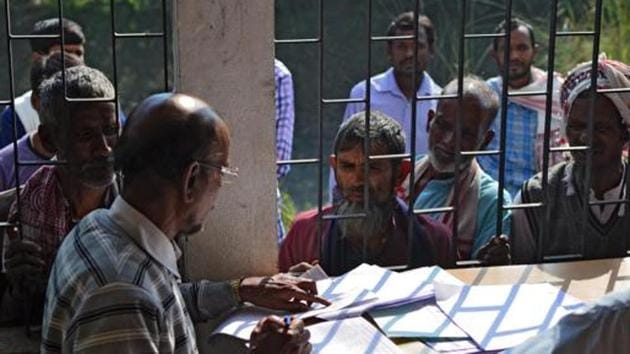
The final list of the NRC – one of the key demands of the 1985 Assam Accord that ended decades of insurgency in the north-eastern state and proposed a framework to weed out illegal immigrants - will be released on July 31.
At present, there are 100 tribunals, which deal with the cases of people suspected to be illegal immigrants by the border organisation of the Assam Police or marked D (doubtful voter) in electoral rolls. The process of appearing before such a tribunal, receiving a final verdict, and appeal can continue for more than a decade.
Exercising its powers conferred by the Foreigners Act, 1946, the MHA order said a person whose name is not part of the final list of the NRC, currently being updated in Assam, can approach any such tribunal with a certified copy of the rejection order received from the NRC authorities along with the grounds for appeal. “The final order of the tribunal containing its opinion shall be given within a period of one hundred and twenty days from the date of production of the records,” the MHA order added.
The first draft of the NRC was published on July 30, 2018, and about four million people in Assam were excluded from it. The process is being monitored by the Supreme Court but activists have complained of irregularities and bias against Bengali-speaking Muslims. According to the latest MHA order, the appellant may appear either in person or through a legal practitioner or a relation authorised by the appellant in writing, subject to the acceptance of such representation by the tribunal.
{{/usCountry}}The first draft of the NRC was published on July 30, 2018, and about four million people in Assam were excluded from it. The process is being monitored by the Supreme Court but activists have complained of irregularities and bias against Bengali-speaking Muslims. According to the latest MHA order, the appellant may appear either in person or through a legal practitioner or a relation authorised by the appellant in writing, subject to the acceptance of such representation by the tribunal.
{{/usCountry}}ABOUT THE AUTHOR
Follow the latest breaking news, major developments and agenda-setting stories from India and around the world with the newsdesk at Hindustan Times. Operating round the clock, the desk brings together experienced editors, reporters and correspondents to deliver fast, accurate and contextual reporting across subjects that influence public policy, governance, business, society and international affairs. The HT News Desk covers politics, elections, government policies, the economy, business and markets, science and technology, the environment, law and order, infrastructure, education, climate issues and geopolitics, while closely tracking developments across states, institutions and global capitals. The team also leads coverage of major breaking news events, policy announcements, court proceedings, natural disasters, public emergencies and significant international developments. Reports published by the newsdesk are based on information gathered from reporters on the ground, official statements, government agencies, court records, regulatory filings, recognised institutions and other authoritative sources. Stories undergo editorial scrutiny and verification processes to ensure accuracy, fairness and relevance, and are updated as events evolve and additional information becomes available. Whether covering a key political decision in New Delhi, an economic policy shift affecting millions, a landmark court ruling or a major global event, the HT News Desk aims to provide readers with reliable, fact-based journalism that delivers not only the latest developments but also the context and analysis needed to understand their wider implications.