
 E-Paper



‘Turbans thrown into dustbin’: Indian deportee on stay at US detention camp
Davinder Singh, who was among the second batch of Indian deportees from the US, detailed the disrespect at a detention camp towards articles of Sikh faith

 Prefer HTon Google


An Indian immigrant who was recently deported from the United States, detailed how articles of Sikh faith such as the turban were reportedly disrespected and thrown into dustbins in detention centres for the deportees, reported PTI.
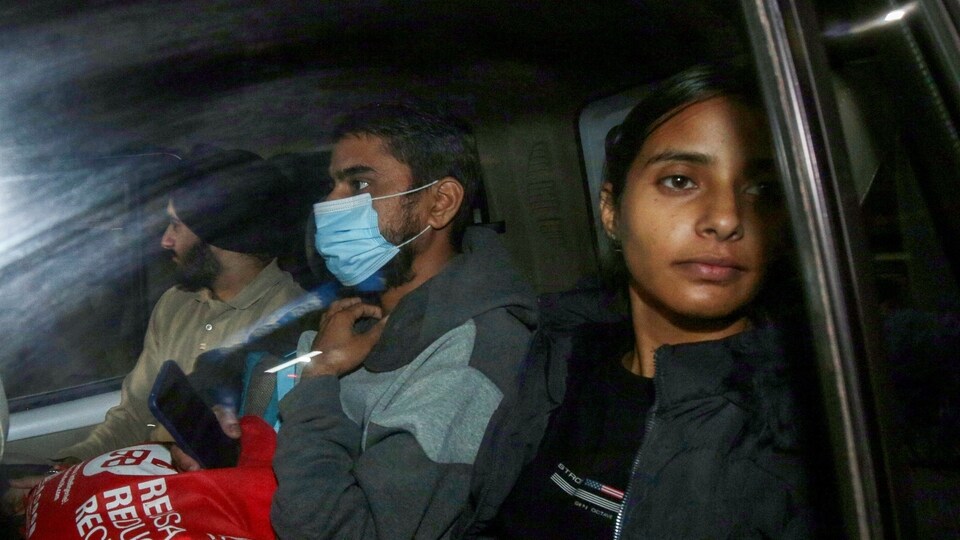
Davinder Singh, 21, was among the second batch of 116 illegal Indian immigrants brought back in a US military aircraft on the night of February 15.
Also Read: 33 Gujarat residents deported from US land in Ahmedabad from Amritsar
Singh was sent to a detention centre after being apprehended for illegally crossing the border into the US. He detailed his traumatic experience at the centre, stating that he saw US officials throwing the turbans of Sikh undocumented immigrants into dustbins.
"It was very painful watching turbans being thrown into a dustbin," Davinder told PTI.
Also Read: Was everyone shackled during the second deportation flight from the US? Here is the answer
Singh said that around 60-70 immigrants from different countries were kept in a hall under the constant surveillance of US officials. He, along with some other Sikh immigrants, used to recite 'Chaupai Sahib' and ‘Japji Sahib’, holy texts in their religion, to survive their stay.
Also Read: ‘A test for Indian diplomacy’: Chidambaram on second US aircraft arriving with deported Indians
He said that the immigrants were not provided proper food, and were given only “wafer-thin” blankets to deal with the cold as air conditioners were being run at low temperatures.
"When we would tell them we were feeling cold, they wouldn't bother at all," he said. Singh described his 18-day stay at the detention centre as the worst days of his life and termed it as “mentally traumatic”.
Davinder Singh added that they were only given a small packet of chips and a packet of juice five times a day. Besides that, they were given a roll of half-baked bread, half-baked rice, sweet corn, and cucumber. As a vegetarian, Davinder could not eat beef as well.
He also stated that he was only able to take a bath twice during his entire stay.
"I didn’t comb my hair for 18 days. We were wearing the same clothes, which got dirty during the travel, for 18 days," he added.
Hailing from the village of Nangal Jalalpur in Punjab's Hoshiarpur district, Singh migrated to the US for a better life, undertaking a long journey on June 28 across Amsterdam, Suriname, Guatemala and even through the Panama forest.
He crossed the US border on January 27, after which he was apprehended by the US Border Patrol, along with several others. After being deported, Davinder, who has studied till 12th grade, plans to work at his father's electronic goods repair shop in Tanda, Hoshiarpur.
He regretted trying to immigrate to the US, spending close to ₹40 lakh for the endeavour.


