E-Paper



Unacceptable that India is not in UNSC, says German envoy Walter Lindner
Lindner said the UN may have its faults and shortcomings, but “it’s the only one we have…If we don’t agree with many things, we have to reform it. I’m totally in favour of reforming the UN system to make it more credible and acceptable.”

 Prefer HTon Google


India and Germany, which are working closely on multilateral issues, are both ideal candidates for permanent membership of a reformed UN Security Council (UNSC) that reflects the realities of today’s world, German ambassador Walter Lindner has said.
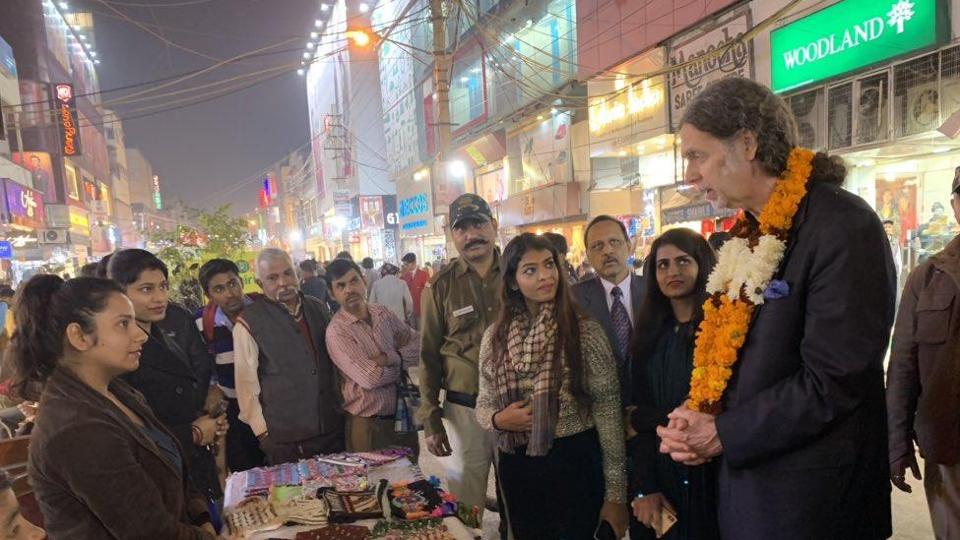
Following German Chancellor Angela Merkel’s visit to India last month, the two countries are now focusing on implementing more than 20 existing MoUs and cooperation in key areas such as smart cities, green mobility and climate change, Lindner said in an interview.
The envoy reiterated Merkel’s position that the security lockdown and communications blackout in Kashmir is “not sustainable”, saying Germany, like other members of the European Union (U), wants all restrictions to be lifted “as soon as possible”. Lindner said all countries stand to lose if the UN isn’t reformed as people won’t rely on the world body “because they will say it is not reflecting the reality”. The G4 – Brazil, Japan, India and Germany – have been mutually supporting each other for permanent membership of a reformed Security Council, he said.
“India is not there (in the Security Council) with 1.4 billion people. This is just not acceptable,” he said. “It (Security Council) has to reflect today’s reality. Of course, India has to be there.”
Lindner said the UN may have its faults and shortcomings, but “it’s the only one we have…If we don’t agree with many things, we have to reform it. I’m totally in favour of reforming the UN system to make it more credible and acceptable.” Merkel’s visit has given a “good extra push” to bilateral relations and the two sides “are on the same wavelength on many things (such as) multilateralism”, he noted.
Pointing to Merkel’s concerns about Delhi’s poor air quality during her visit – the AQI had touched 1,000 – the envoy said the two countries are working on several schemes for smart cities and green mobility that are aimed at tackling climate change. This includes German funding for solar panels at a metro station near the Delhi airport and “last mile connectivity” from metro stations in various cities.
On the issue of Kashmir, Lindner noted that several EU member states had already described the changes in the erstwhile state as a “domestic issue of India” and called for the opening of a “negotiation channel” between India and Pakistan. He added: “We would love to see the restrictions lifted...security issues are there and we understand.” What Merkel said about the situation in Kashmir being “not sustainable means that the restrictions can’t be kept forever”, he added. “They should be lifted, and for us, the sooner the better. This is also the European position,” he said.