...
...
Next Story

US clears sale of Harpoon missiles, torpedoes for India’s P-8I aircraft

The US State Department approved the sale following a request for these two military hardware made by the Indian Government, the Pentagon said amidst China flexing its military muscles in the strategic Indo-Pacific region and the Indian Ocean.

Updated on: Apr 14, 2020, 13:15:55 IST
Hindustan Times, New Delhi | By
Prefer HTon Google
Advertisement

The US State Department has cleared two deals to sell India Harpoon Block II air launched missiles and lightweight torpedoes worth $ 155 million. The anti-ship missiles and the torpedoes would be integrated with the P-8I aircraft, also called the “submarine killer”.
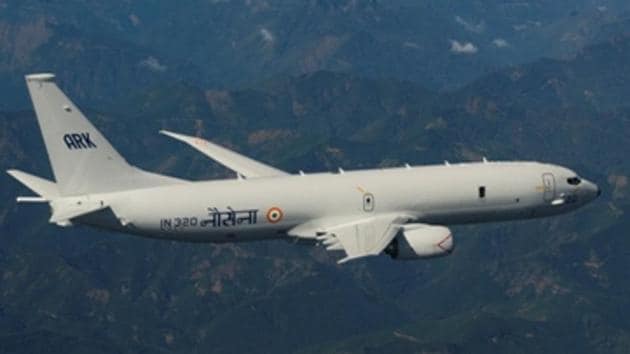
The Harpoon missiles and the torpedoes cleared by the US State Department will be equipped in Indian Air Force’s P-8I aircraft. (Boeing/Image courtesy)

The 10 AGM-84L Harpoon Block II air launched missiles that have a range of about 124 km is estimated to cost $ 92 million. The 16 MK 54 All Up Round Lightweight Torpedoes and three MK 54 Exercise Torpedoes are expected to cost $ 63 million, the Defense Security Cooperation Agency said in two separate notifications to the Congress.

According to the Pentagon, the Harpoon missile system will be integrated into the P-8I aircraft to conduct anti-surface warfare missions in defence of critical sea lanes while enhancing interoperability with the United States and other allied forces.

“India will use the enhanced capability as a deterrent to regional threats and to strengthen its homeland defense. India will have no difficulty absorbing this equipment into its armed forces,” the Pentagon said.

The Harpoon missiles will be manufactured by Boeing and will be integrated into the P-8I aircraft, the Indian variant of Boeing’s P-8s. This is a multi-mission aircraft designed for long-range anti-submarine warfare, anti-surface warfare, and intelligence, surveillance and reconnaissance mission.

The 3.84 metre long missile has a 500-pound penetration, high-explosive blast warhead that gives it enough firepower to destroy coastal defence and surface-to-air missile sites, industrial installations and docked ships.

According to the Pentagon, this proposed sale will support the foreign policy and national security of the United States by helping to strengthen the US-India strategic relationship and to improve the security of a major defensive partner, which continues to be an important force for political stability, peace, and economic progress in the Indo-Pacific and South Asia region.

China is engaged in hotly contested territorial disputes in the South and East China Seas. Beijing has also made substantial progress in militarising its manmade islands in the past few years, which it says it has the right to defend, according to news agency PTI.

China claims sovereignty over all of the South China Sea. But Vietnam, Malaysia, the Philippines, Brunei and Taiwan have counter claims. In the East China Sea, Beijing has territorial disputes with Japan.

The South China Sea and the East China Sea are stated to be rich in minerals, oil and other natural resources. They are also vital to global trade.

 
ABOUT THE AUTHOR
Shishir Gupta

Shishir Gupta is Executive Editor at Hindustan Times and one of India's top journalists covering national security, strategic affairs, foreign policy and geopolitics. Over the past three decades, he has extensively reported on India's military, diplomatic and security landscape, covering every major conflict and national security challenge, from the 1999 Kargil War and the 2020 East Ladakh standoff to Operation Sindoor in 2025. He has also covered major terror attacks, including the IC-814 hijacking, the 26/11 Mumbai attacks and the 2025 Pahalgam terror strike, along with numerous Pakistan-backed terrorist incidents in the Kashmir Valley and across India. He has reported on national and state elections for more than three decades. A recognised authority on strategic affairs, Gupta has covered India's nuclear programme since the Pokhran-II (Shakti series) tests in May 1998 and has written extensively on global nuclear issues, Indian diplomacy and the country's expanding global outreach. He has also reported widely on international conflicts and terrorism, with a special focus on the Indian subcontinent. Gupta has interviewed Prime Minister Narendra Modi more than four times, including Modi's first interview with the print media after becoming Prime Minister in May 2014. His other interviews include three with the Dalai Lama, as well as conversations with Benjamin Netanyahu, Amit Shah, Yogi Adityanath, S. Jaishankar, Nirmala Sitharaman and Piyush Goyal. He is the author of Indian Mujahideen: The Enemy Within (Hachette, 2011) and Himalayan Face-off: Chinese Assertion and Indian Riposte (Hachette, 2014). He was awarded the Chevening-Wolfson Joint Scholarship at Wolfson College, University of Cambridge, UK, in 1998 and participated in the International Visitor Leadership Program (IVLP) of the US State Department in 2006. He received the Ben Gurion Prize from Israel in 2011 and the K. Subrahmanyam Prize for Strategic Studies in 2015 from the Manohar Parrikar Institute for Defence Studies and Analyses (MP-IDSA). Since 2024, he has hosted Point Blank, Hindustan Times' weekly YouTube show on global geopolitics.

Get the latest India News, breaking headlines and real-time updates from across the country. Stay informed about politics, government policies, crime, weather and major national developments.
SHARE THIS ARTICLE ON
Hindustantimes wants to start sending you push notifications. Click allow to subscribe