The first batch of US-built heavy-lift Chinook helicopters and Apache attack helicopters will be delivered to the armed forces in March, moving India’s military capacity and capability to the next level. The first of the Chinook helicopters are already bound for Mundra port in Gujarat from US defence contractor Boeing in containers and expected to arrive next month. India spent $3 billion on 15 Chinook and 22 Apache attack helicopters, with the option to buy six more Apaches already approved by the Donald Trump administration.
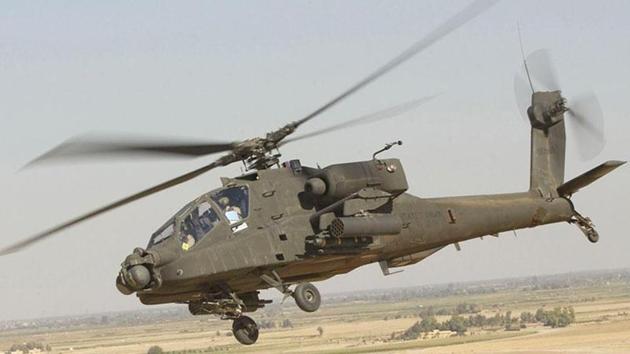
According to US and Indian diplomats, the aerial platforms will be reassembled by the contractor and flight-tested before being handed over to the Indian armed forces. The Chinook helicopters will be stationed at Chandigarh air base, which supplies to the critical Siachen and Eastern Ladakh sectors. The Apaches with hellfire missiles will be handed over to the Indian forces and stationed at Hindon airbase in Ghaziabad. Induction of these two platforms will be a gamechanger for the Indian military which still relies on Russian Mi-17 medium lift helicopters for rapid induction of forces and an obsolete squadron of Russian Mi-26 helicopters. Indian attack capacity is limited to two squadrons of Mi-35 helicopters, which were used by the erstwhile Soviet Union during its occupation of Afghanistan in the 1980s.
While India is concerned over the departure of Jim Mattis as US defense secretary, the signals from Washington indicate that his successor Patrick M Shanahan will be equally positive towards New Delhi in his attitude and open to a major defence ally of the country acquiring platforms to boost its capacities on land, sea or in air. The next major India-US deal in the works is for the acquisition of Predator-B armed drones by the Indian forces with discussions for this already in the preliminary stages.
{{/usCountry}}While India is concerned over the departure of Jim Mattis as US defense secretary, the signals from Washington indicate that his successor Patrick M Shanahan will be equally positive towards New Delhi in his attitude and open to a major defence ally of the country acquiring platforms to boost its capacities on land, sea or in air. The next major India-US deal in the works is for the acquisition of Predator-B armed drones by the Indian forces with discussions for this already in the preliminary stages.
{{/usCountry}}However, the two sides will have to do serious spadework to sign the Basic Exchange and Cooperation Agreement (BECA) for geospatial cooperation as both the Defence Research and Development Organization (DRDO) and the Indian Air Force (IAF) have concerns over sharing Indian terrain mapping with the US and vice-versa. India has already signed the Logistics Exchange Memorandum of Agreement (LEMOA) and Communications Compatibility and Security Agreement ( COMCASA). Together, the three, along with the General Security Of Military Information Agreement (GSOMIA), form foundational agreements that the US signs with key defence partners. India signed GSOMIA in 2002, LEMOA in 2016 and COMCASA in 2018.