New Delhi: The United States special coordinator for Tibetan issues, Uzra Zeya, is expected to travel to India and meet the Dalai Lama in Dharamsala next month – the first major contact between the two sides under the Biden administration.
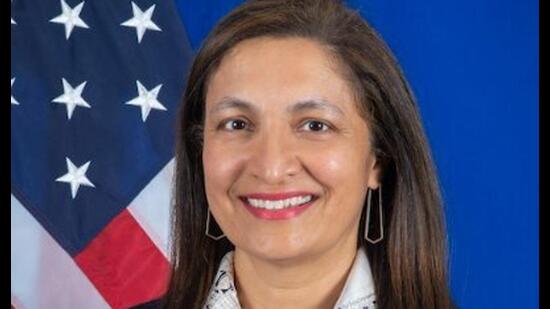
Zeya, the under secretary of state for civilian security, democracy and human rights, was appointed the special coordinator for Tibetan issues last December. She is expected to be in Dharamsala in Himachal Pradesh for meetings with the Dalai Lamai and leaders of the Tibetan government-in-exile during May 18-19, people familiar with the matter said.
Such visits by senior US officials to Dharamsala are usually arranged in close coordination with the Indian side. It is unlikely the US side would have gone ahead with arrangements for the visit without a nod from the external affairs ministry.
The people cited above said the visit had been in the pipeline since last year, especially since the Dalai Lama, 86, has largely been confined to Dharamsala for the past two years because of the Covid-19 pandemic. Within the Tibetan government in-exile, the upcoming visit is being seen as a strong demonstration of US support for the Tibetan cause.
Zeya, an Indian-American, is responsible for coordinating US government policies, programmes and projects concerning Tibetan issues. She has been tasked by US secretary of state Antony Blinken to promote “substantive dialogue”, without preconditions, between the Chinese government and the Dalai Lama or his representatives and democratically elected Tibetan leaders for a “negotiated agreement on Tibet”.
She is also tasked with promoting human rights and fundamental freedoms of Tibetans, including their freedom of religion, and supporting efforts to preserve their linguistic, cultural and religious heritage. The Biden administration has also made it clear the Chinese government should have no role in the succession process for the Dalai Lama.
In recent weeks, Zeya was part of US efforts in Geneva to lobby for support from various countries, including India, for Ukraine-relations matters at the United Nations, including the vote to suspend Russia from the Human Rights Council.
{{/usCountry}}In recent weeks, Zeya was part of US efforts in Geneva to lobby for support from various countries, including India, for Ukraine-relations matters at the United Nations, including the vote to suspend Russia from the Human Rights Council.
{{/usCountry}}The upcoming visit is unlikely to go down well with China, especially against the backdrop of the dragging military standoff on the Line of Actual Control (LAC). The Chinese side has bristled at official contacts of any kind between the Dalai Lama or the Tibetan government in-exile and the Indian or foreign governments.
After the Tibetan Parliament-in-Exile and the India Tibet Coordination Office organised a dinner reception for Indian MPs and ministers last December, the Chinese embassy’s political counsellor resorted to the unusual step of writing a letter to several MPs who attended to express Beijing’s concern over the event. The letter asked lawmakers to refrain from providing support to “Tibetan independence” forces.
The external affairs ministry described the tone of the letter as “inappropriate”.
Penpa Tsering, the Sikyong or head of the Central Tibetan Administration (CTA), is currently in the US and made a courtesy call on Zeya in Washington on Monday. The delegation accompanying Tsering appealed to Zeya to “assist in resolving the Sino-Tibet conflict at the earliest and the swift return of...the Dalai Lama to Tibet”, according to a statement from CTA.
Tsering also met Kurt Campbell, coordinator for Indo-Pacific affairs in the US National Security Council.
Former US special coordinator for Tibetan issues, Sarah Sewall, visited Dharamsala with a delegation in 2016.