NEW DELHI: The Waqf (Amendment) Act 2025, which introduces sweeping changes to the regulation and management of Islamic charitable endowments, came into effect on Tuesday, a government order said.
The amendments were passed by the Lok Sabha on April 3, Rajya Sabha on April 4 and received the presidential assent on April 5.
“In exercise of the powers conferred by sub-section (2) of section 1 of the Waqf (Amendment) Act, 2025 (14 of 2025), the Central Government hereby appoints the 8th day of April, 2025 as the date on which the provisions of the said Act shall come into force,” a gazette notification signed by minorities ministry joint secretary Shersha C Shaik Mohiddin said.
Also Read: Waqf debate spans law, politics, freedoms, rights and regulation
The Act overhauls key provisions governing the administration, recognition and control of Islamic charitable endowments – waqfs -- triggering a series of legal challenges by political leaders, religious bodies, and community representatives.
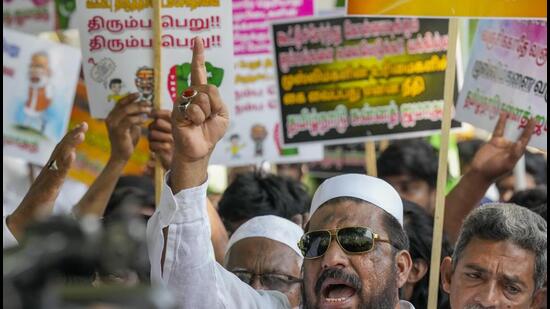
The law has already drawn legal challenges from a host of political leaders and organisations, including Dravida Munnetra Kazhagam (DMK), the Indian Union Muslim League (IUML), All India Majlis-e-Ittehadul Muslimeen MP Asaduddin Owaisi, Congress MP Mohammed Jawed, Delhi legislator Amanatullah Khan, Jamiat Ulema-i-Hind President Maulana Arshad Madani, Samastha Kerala Jamiatul Ulema, Association for Protection of Civil Rights, among others.
The Union government has justified the changes to the central Waqf law as necessary to enhance transparency, curb mismanagement and ensure better regulation of Waqf properties.
{{/usCountry}}The Union government has justified the changes to the central Waqf law as necessary to enhance transparency, curb mismanagement and ensure better regulation of Waqf properties.
{{/usCountry}}The petitioners have contended that the Act was a direct assault on the constitutional and religious rights of the Muslim community in India. According to the petitions, the Act imposes conditions that are not rooted in Islamic law, such as requiring individuals to demonstrate that they have practised Islam for at least five years before they can create a waqf, thereby excluding new converts and other individuals and infringing religious autonomy.