Congress Lok Sabha MP Shashi Tharoor on Thursday welcomed the government’s twin announcements — the addition of over 10,000 new undergraduate and postgraduate seats in government medical colleges and a ₹70,000 crore investment in the shipbuilding sector — calling the medical education expansion a “significant” step for the country.
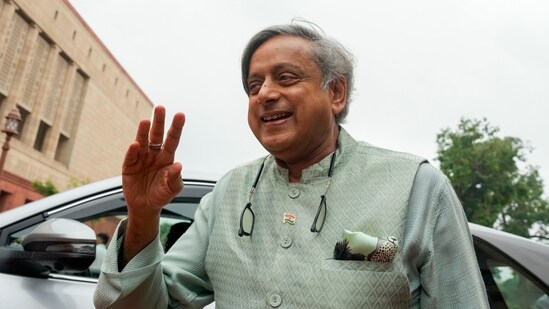
He praised the decision to increase medical seats over the next four years, highlighting the long-standing shortage of affordable opportunities for aspiring doctors.
“Welcome news: the Government of India’s decision to add 10,023 new undergraduate and postgraduate seats in government medical colleges over the next four years is a significant and welcome step. For too long, the immense shortage of affordable seats has forced countless aspiring doctors from middle-class families to study abroad, often to countries with questionable educational standards,” Tharoor wrote in a post on X.
Tharoor emphasised that the move is crucial for providing quality medical education within India and preventing the drain of talent and resources.
{{/usCountry}}Tharoor emphasised that the move is crucial for providing quality medical education within India and preventing the drain of talent and resources.
{{/usCountry}}Urging the government to continue expanding seats to meet rising demand, he added, “The medical dreams of young Indians shouldn’t be crushed by the lack of affordable seats.”
On the industrial front, he expressed excitement over the government’s ₹70,000 crore investment in the shipbuilding sector, calling it a “major step toward making India a global maritime power.”
Tharoor suggested Kerala’s coastline, particularly near the new Vizhinjam port, offered ideal locations for new shipbuilding yards and urged the government to explore this potential to create a hub for employment and economic growth.
Prime Minister Narendra Modi officially commissioned the Vizhinjam International Seaport on May 2, 2025. India’s first deep-water transshipment port, it is designed to handle both container and multi-purpose cargo.
Vizhinjam, also the country’s first semi-automated port, features an AI-driven control room and India’s first Indigenous Vessel Traffic Management System (VTMS).
These innovations have reduced vessel turnaround times, optimised traffic flow, and increased capacity for large ships, providing real-time operational updates.
The second and third phases of the Vizhinjam port are set to expand its capacity from 1 million TEUs (twenty-foot equivalent units) to 3 million TEUs annually by 2028.