
 E-Paper



Why El Niño leaves pain in its wake
An El Niño event, a weather glitch, could appear in the second half of the monsoon season and reduce rainfall around July, the peak month for summer planting

 Prefer HTon Google


“Come rain or shine, we have to do farming,” said Makhan Lal, a cane grower from Shamli, a fertile belt about 100 km from the national capital. “We can’t afford to skip a season.”
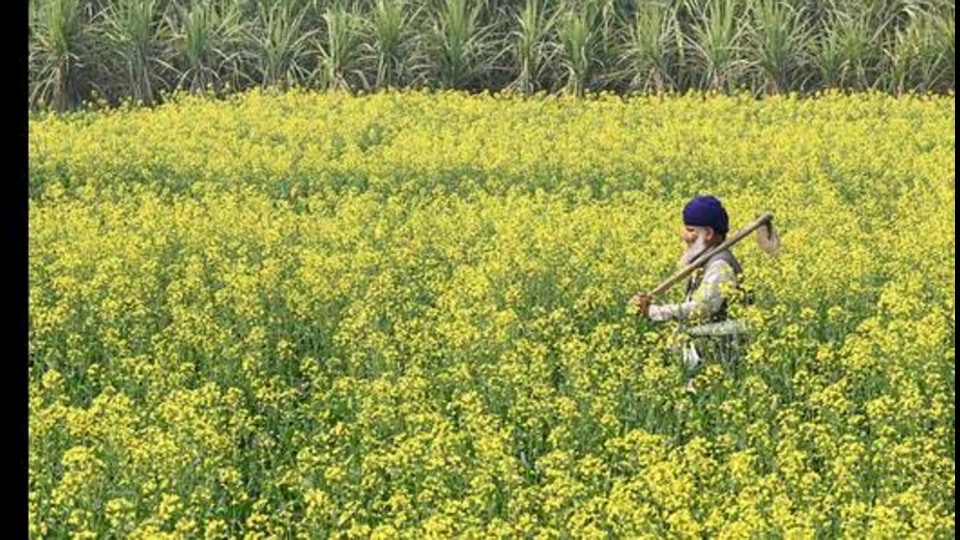
Cultivators in India’s food-bowl states, such as Uttar Pradesh, are worried about an El Niño event, a weather glitch that could appear in the second half of the monsoon season and reduce rainfall around July, the peak month for summer planting in India, the world’s largest exporter of rice and an agricultural powerhouse.
Scientists are fairly sure the weather phenomenon, marked by higher sea surface temperatures, will ripple around the globe this year, bringing dry summers in South Asia and flooding in South America. El Niño triggered 10 of at least a dozen drought years in India since 1950.
The impacts on Asia’s third-largest economy are neither uniform across crops nor the country’s four agro-climatic zones. They can still crimp farm incomes and drag growth in a nation where agriculture accounts for roughly 15% of GDP and employs close to half the population.
El Niño and La Niña are two alternating cycles of the so-called El Niño-Southern Oscillation, a weather pattern in the tropical Pacific. When the ocean warms up, it causes El Niño. La Niña, the opposite phenomenon, occurs when swathes of the Pacific cool, bringing robust rains to India.
Steady and evenly spread monsoon rains are the lifeblood of the nation, vital for irrigation, drinking, and hydropower. Plentiful harvests drive up rural incomes, generating demand for goods. For instance, nearly half of all motorcycles are sold in rural India, according to industry data. Such purchases keep the economy humming.
Drought-like conditions can shave food output, plummet yields, or result in poor-quality produce. The agriculture sector has posted decent growth in the past five years, averaging an inflation-adjusted 4.4%, according to the government’s Economic Survey 2025-26.
Monsoons are also influenced by the so-called Indian Ocean Dipole, or IOD, which refers to the temperature difference between two regions deep in the Indian Ocean. If IOD remains positive, then it can offset the El Niño’s effects, though not always. The good news is that the India Meteorological Department expects a positive IOD this summer, the weather bureau said in a pre-monsoon forecast last week.
Even a moderate El Niño event can hurt growth. In 2019, when a weak El Niño swept the globe, farm gross value added (GVA), a measure of growth, slowed to 2.10%.
A fall of 2% percentage points from “this benchmark” (of roughly 4% farm growth) would involve an overall fall in GVA growth of nearly 0.3% points, according to economist DK Srivastava. In 2010, the year after India suffered its worst drought in three decades due to an El Niño event, farm growth turned negative by 0.20%. The June-September monsoon season accounts for nearly one-half of the country’s annual food supplies.
Srivatava’s research shows total foodgrain production fell in 12 out of 15 El Niño years. Oilseeds output fell in 13 out of these years. Sugarcane production tends to escape any major impact because it is a hardier crop.
Research shows that output is most impacted in states such as Uttar Pradesh, Punjab, Madhya Pradesh, Rajasthan, West Bengal, Bihar, and Haryana, mainly because they grow the largest amount of food, nearly two-thirds of total production. With fewer or poorer quality produce, farmers lose income.
India’s food reserves have been growing amid rising production. Output in 2025-26 is seen rising 3% to 348 million tonnes. “Droughts no longer stoke famines like they used to in colonial times. But they can cause a lot of pain to farmers and push up inflation,” said Rahul Chauhan of iGrain Ltd, a research centre.


