Patna’s air quality was far worse than India’s most polluted city, New Delhi, during the last four winter months.
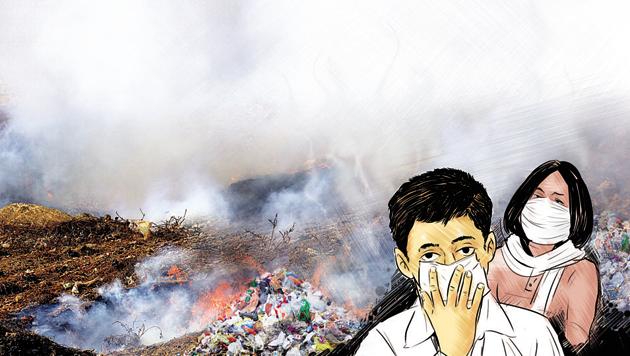
“It was hazardous in Patna as the ambient air quality went from ‘poor’ to ‘very poor’, with particulate matter (PM) in the air rising nine times than the national standard.
According to a recent report of Centre for Environment and Energy development (CEED), an NGO, not a single day in the four months long winter season in 2016-17, was observed under the ‘good to satisfactory’ air quality category in Patna.
It said, 56% of days were rated ‘very poor’, 17% of days fell under the ‘severe’ category and the remaining 27% days were classified under ‘moderate’ to ‘poor’ category.
The monthly mean concentration of PM was recorded to be highest in the month of December, which rose to 263 µg/m3 followed by November, when it was 253 µg/m3.
“The findings are based on data from real time air quality monitoring station set up at the Indira Gandhi planetarium in Patna.
CEED also presented a comparative picture of ambient air quality of two of the most polluted cities in the world - Delhi and Patna. The calculated monthly mean concentration of PM in Patna was found to be higher than Delhi during the entire period except November,” said Ankita Jyoti of CEED.
{{/usCountry}}CEED also presented a comparative picture of ambient air quality of two of the most polluted cities in the world - Delhi and Patna. The calculated monthly mean concentration of PM in Patna was found to be higher than Delhi during the entire period except November,” said Ankita Jyoti of CEED.
{{/usCountry}}Shockingly, air quality worsened on November 5, when the concentration of particulate matter rose to 542 µg/m3 against mean national standard of 60 µg/m3, which was a total of nine times higher than the safety limit.
The day observed very low temperature (16 degree Celsius ) as compared to all other days of the season.
Temperature played an important role in rising pollution level on that day due to thermal inversion, when cold air settled at the bottom of the atmosphere and hot air, being lighter, remained at the top layer, making wind speed stable. This restricted the pollutants from dispersing.