Amid renewed US pressure over India’s Russian energy imports, External Affairs Minister S Jaishankar on Monday underscored the need for a “more equitable global order”.
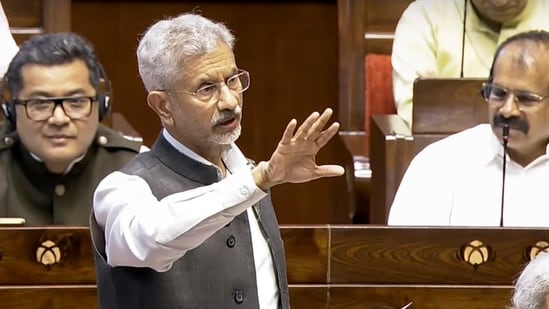
Speaking at the inaugural BIMSTEC Traditional Music Festival ‘Saptasur’ in New Delhi, he said, “We live in complicated and uncertain times, and a collective desire is to see a fair and representative global order, not one dominated by a few. That quest is often articulated as political or economic rebalancing.”
His comments came shortly after India strongly rebutted US President Donald Trump’s latest warning of increased tariffs over Russian oil and defence purchases. India termed the targeting “unjustified and unreasonable” and reaffirmed that it would take “all necessary measures” to protect its national interests and economic security.
The Bay of Bengal Initiative for Multi-Sectoral Technical and Economic Cooperation (BIMSTEC), established in 1997, brings together countries in the region to foster economic and technical collaboration.
What was the MEA's response to Trump's allegations?
India’s foreign ministry spokesperson Randhir Jaiswal criticised the US and EU for singling out India over its oil imports from Russia amid the Ukraine conflict.
Highlighting the West’s ongoing trade with Moscow, Jaiswal said, “In this background, the targeting of India is unjustified and unreasonable. Like any major economy, India will take all necessary measures to safeguard its national interests and economic security.”
{{/usCountry}}Highlighting the West’s ongoing trade with Moscow, Jaiswal said, “In this background, the targeting of India is unjustified and unreasonable. Like any major economy, India will take all necessary measures to safeguard its national interests and economic security.”
{{/usCountry}}This marks the second time Donald Trump has threatened India with penalties over its Russian energy imports. Last week, the US announced a 25% reciprocal tariff on India effective from August 7, along with unspecified penalties. Meanwhile, the EU's latest sanctions package targets the Vadinar refinery in Gujarat — jointly owned by Russia’s Rosneft — and bans imports of refined petroleum products made from Russian crude and exported via third countries.
Defending India’s position, Jaiswal said, “India began importing crude from Russia because traditional supplies were diverted to Europe after the outbreak of the conflict.”
He added, “The US at that time actively encouraged such imports by India for strengthening global energy markets stability.”
He also cited ongoing EU trade in goods with Russia and American imports from Russia for its civil nuclear industry to underscore the West’s continued economic engagement with Moscow.