Kathmandu
India-Nepal relations appear to be on the mend after a very turbulent phase following violent protests against the new constitution adopted by the Himalayan nation in last September.
Amendments to the statute, which seek to delimit constituencies based primarily on population and to increase the number of parliamentary seats in the Terai region, are responsible for the thaw.
The United Democratic Madhesi Front (UDMF) has rejected the amendments, which address some demands raised by protesting Madhesi parties, but the move has brought New Delhi and Kathmandu closer.
“Relations had dipped for few months due to misunderstandings. But they are warming up gradually due to collective efforts from both sides,” Deputy Prime Minister Kamal Thapa, who also holds the foreign affairs portfolio, said at a function on Monday.
New Delhi, which did not welcome the promulgation of the constitution as it did not address concerns of the Madhesi people, has described the amendments as positive and expressed the hope that all outstanding issues will be resolved soon.
“Resolution of all internal issues should be found through talks with a spirit of flexibility and compromise,” said Indian ambassador Ranjit Rae.
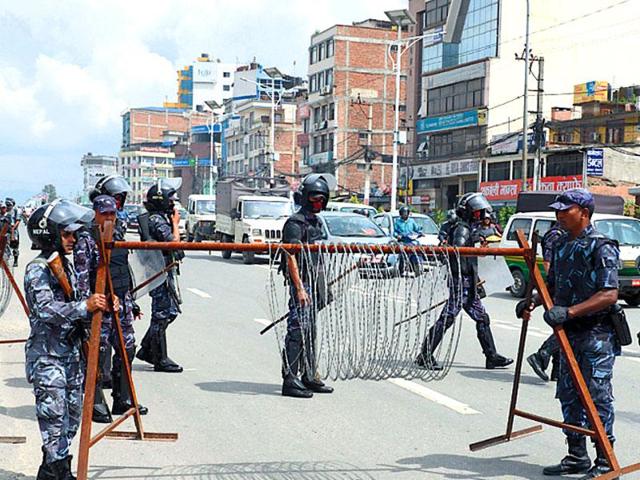
Madhesis under the banner of the UDMF have been protesting against the constitution since August as they felt its provisions discriminate against people living in the Terai plains bordering India.
{{/usCountry}}Madhesis under the banner of the UDMF have been protesting against the constitution since August as they felt its provisions discriminate against people living in the Terai plains bordering India.
{{/usCountry}}Protesters blocked the key border trade point at Birganj, resulting in a severe shortage of petroleum products. Kathmandu accused New Delhi of siding with the Madhesis and enforcing an unofficial blockade – a charge India has denied.
The UDMF’s demands include fresh demarcation of states and proportional representation of Madhesis in all state bodies. As the recent amendments remain silent on demarcation, the front has announced fresh protests.
“The protests will continue till there is a package deal on all our demands including fresh demarcation of states,” Upendra Yadav, chief of the Federal Socialist Forum-Nepal, a constituent of the UDMF, told Hindustan Times.
On Tuesday, Prime Minister KP Sharma Oli indicated to a group of editors he wouldn’t visit India till the blockade is lifted. But there are signs that it may end in the next few weeks.
Goods have been ferried across the “blocked” Birganj border in horse-drawn carts over the past few days, and the smooth movement of vehicles through other border points has eased the shortage of essential goods and fuel.
Differences within the UDMF on ending the blockade have led to speculation that the protests may peter out.
Officials on both sides believe the blockade will end in a gradual manner and preparations are underway for Oli’s visit to New Delhi towards the second half of February.
Once that happens, India-Nepal ties are expected to head north.