Five cities, five performers, and a simultaneously timed global debut of a play that seeks to answer a question that matters everywhere: what do toxic relationships look like from the inside of one? On October 10, New Delhi will be one of the five cities in the world where Kenyan playwright Cosmos Bii’s play, Yes, I Cheated On You, will be staged.
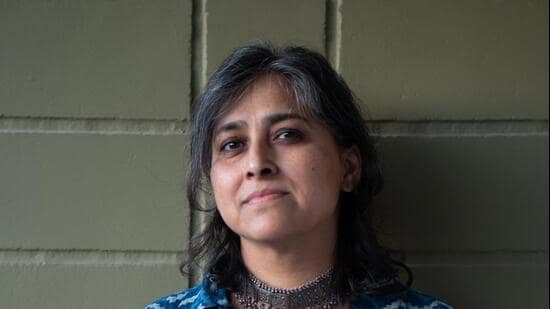
Structured as a monologue by a single actor, it will also be performed in Tubingen (Germany), Luxembourg, and Eldoret and Kisumu in Kenya. Anita Khemka, a 53-year-old photographer will perform it in New Delhi on Saturday.
The play examines “the emotional machinery that produces intimate partner/gender-based violence”rather than focusing on the final act of violence itself, Bii said.
“Too often we focus on the final act of violence without interrogating the attitudes and behaviours that precede it. We’re asking the audience to look further upstream. When does concern become surveillance? When does love become possession? At what point does insecurity make one controlling?” Bii, a lecturer in the department of literature, linguistics, foreign languages and film studies at Moi University, Eldoret, said.
“The idea was to premiere the play in as many places as possible, so that we can generate a conversation across countries at the same time,” he added.
{{/usCountry}}“The idea was to premiere the play in as many places as possible, so that we can generate a conversation across countries at the same time,” he added.
{{/usCountry}}The play will be performed in five other cities on October 17: Mombasa, Nakuru and Nairobi in Kenya, Kampala (Uganda) and Paris (France). “The adaptation is especially relevant in places like India and Kenya, which continue to see intimate partner/ gender-based violence,” Khemka said.
Kenya has been rocked with protests in the past two years. More recently, in June, thousands of women took to the streets to demand that the government declare gender-based violence as a national crisis. In Delhi last week, hundreds of students protested against the rape of a 17-year-old in a park in Aastha Kunj, Kalkaji. The issue of women’s safety has been a long-standing matter of concern in the Capital city — the top court even took suo moto cognisance of the issue on September 28 and asked the state to conduct a safety audit across public spaces in New Delhi.
The play, however, is not just about a violent relationship. The actors were given the liberty to change parts of the scripts to make the play suit their local contexts, Bii said. Khemka, who met Bii at an international AIDS conference in Brazil in July, joined the production and began attending director Octavios Onyango’s rehearsals over video in September.
She made changes to the script to make it more pertinent to our context, she said.
Earlier this year, the photographer relocated to Kashmir with her two daughters and husband, an artist who hails from the state. “The play isn’t biographical, but it does bring in the politics of our everyday lives. The fact that I am married to a man from a minority religion and am mother to two daughters had a bearing on everything I wanted to say,” Khemka said.
The play centres on a character named Terry, whose husband, Jeff, has migrated to a location outside the country. The couple has two children — a boy and a girl. The protagonist is the only performer on stage but all other members of her family, including her husband, are referenced in her narration.
The character of the husband is suspicious and asks several questions about her comings and goings: his questions open the door to the conflict inherent in their marriage. The actors had varying reactions to Terry.
Corinna Jankowski, a 23-year-old German performer who will be showing her piece in the University of Tubingen, said that she did not like Terry at first. Eventually, she grew to like her.
“She goes through so many emotions through the course of the play, she’s certainly not a unidimensional woman,” she said.
“This is something we want the audience to come away with. That they can say out aloud, ‘yes, I am insecure about my wife,’ or ‘I am concerned about the way the children are being raised,’ rather than give in to violence,” Onyango said.