Hyderabadi Haleem
A Yemeni Sultan and more delicious hidden history
By Sam Dalrymple
I’ve always been a fan of haleem, that delicious concoction of dal and mutton, but nothing prepared me for what I was to taste on my visit to Hyderabad last month. A soft and warm explosion of flavour that lingered on my mind, as well as my tongue, it was nothing short of a revelation.
I decided to embark on a quest to discover the origins of haleem, a quest which took me in a completely unexpected direction. A few days later I found myself weaving my way through Hyderabad’s winter traffic, and on my way to visit the military. My destination: a large officer’s mess for the Basanta Brigade called Saif Gulshan. It was in this unlikely location, at the heart of the Mehdipatnam Military Garrison, that modern haleem came into being.
After hours of organising permissions, two veterans of the 1971 war in Bangladesh kindly guided me through a series of check posts, regaling me with extraordinary stories of Army derring-do. The landscape changed suddenly, the city vanished and it seemed as if we had passed into an English country landscape watercolour. At its heart was a large mansion of wooden jharokhas and pointed arches of stucco, the last surviving building of the Qu’aiti estate.
In the nineteenth century, the young and ambitious owner of Saif Gulshan had sailed across the sea and carved out a kingdom of his own in Eastern Yemen. For over a hundred years—in an extraordinary and largely forgotten moment in history—his family ruled over the ‘Qu’aiti state’ from their estate at Saif Gulshan on the outskirts of Hyderabad.
{{/usCountry}}In the nineteenth century, the young and ambitious owner of Saif Gulshan had sailed across the sea and carved out a kingdom of his own in Eastern Yemen. For over a hundred years—in an extraordinary and largely forgotten moment in history—his family ruled over the ‘Qu’aiti state’ from their estate at Saif Gulshan on the outskirts of Hyderabad.
{{/usCountry}}The Qu’aiti family opened the floodgates for a period of remarkable cultural fusion. New palaces erupted from the sands of Arabia, based off of Hyderabadi architecture, serving Indian delicacies such as biryani, lime achaar, and samosas.
Cultural exchange flowed in both directions. Every autumn, when the Qu’aiti court moved to the city of Hyderabad, great pots of ‘Harees’ would be cooked for the Sultan’s Arab subjects during Ramadan. As word spread of the intriguing dish, dal and Telangana spices were added to make it more palatable to the Deccani palate, and the new concoction was christened Haleem. The Sultan is said to have introduced it to his employer, the Nizam of Hyderabad, and within a single generation, it became a staple of Hyderabadi cuisine.
Hyderabad State surrendered to the Indian Army on 17th September 1948, merging with India soon after. The Qu’aiti State was destined to survive for another 19 years until, by strange coincidence, it was absorbed into South Yemen on 17th September 1967. The connections between Hyderabad and Yemen were severed, but its legacy remained. Today, haleem is one of the great cultural exports of Hyderabad, a Ramadan staple for millions of Muslims across the world who are often unaware of its intriguing origins.
So often we confine history as something that is just stuck within dusty history books but as I learned in Hyderabad last week, this isn’t always the case. The past is everywhere: in the stories we tell, in the buildings we live in, and even in the way we eat. We just have to learn to listen close enough.
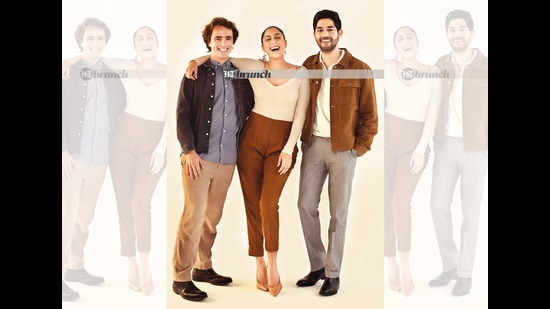
Sam Dalrymple, 25, is the author of Five Partitions: The Making of Modern Asia, to be released in 2022
Reimagining the now
How one crashed phone led to a brighter future
By Karuna Ezara Parikh
I recently experienced a horrifying thing. As I departed for a vacation after two long, soggy, batshit years, my phone crashed. It capsized as I dashed hysterically towards Majnu-Ka-Tila to board a bus which would deposit me in that stoner-struck town that rhymes with the word “banally”. After that I’d trot off on a trek to Paradise. Now, I thought, as I vigorously stubbed a screen as viciously unalive as shark-eye, I would have no photos of Paradise. We arrived, tortured by a night of sleeping upright just for fun, and I immediately dragged my exhausted husband off, not for a massage or momos or beers, or whatever the kids get high on these days, but to a phone repair store where the most interesting thing was a couple of dogs I suspect were carpets because they slept through everything, even the holiday revellers screeching behind bobbly children in lurid puffer jackets over a proliferation of tights. We spent several hours waiting upon the miracle of jugaad-tech, our aching bums getting progressively icier on a metal bench as we watched honeymooners, distinguishable by the brides’ heels in a town 98 per cent slanted, and spirals of blood-toned bangles wrestling with sweatshirt sleeves as sindoor-drenched selfies were taken. Far off, I spotted the edge of a goddamn brilliant sunset, but first, a selfie.
That night, over stiff whiskeys drunk beneath the soothing pat of live music, after many ghost-limbed dips into my empty pocket to record the guitarist for an imagined future where this video would matter, I succumbed. My phone—each day’s first greeting—wasn’t going to make it. The next morning, valiantly, I set off over the hills, Decathlon’s blessings upon me. You know the end of this story already. There is no profundity in it, only a blazing common sense we seem to have lost, possibly the same day we took our first selfie, diving into some inability to ever truly look inward again. Of course, I adapted. Humans do. It’s how we’ve aligned to the insanity of the scroll, where our brains are stabbed every few seconds with glossy, jagged new information, all unrelated and somehow parading as necessary.
Cheesecake/ Manmohan/ #prayfor/ Madonna’s nipple/ Scottish castle/ new book/ AI/ rape/ Dandan noodle/ Succession. This was my brain. Then, suddenly it was whale-song: moooooountaaaaaaiiiiiinnnnn/ treeeeeeeeee. It was slooowwwwww and BIG and very gentle. It was amniotic. When I returned to “civilisation” post the dusty wilderness of the off-grid, I found nothing changed. I hadn’t missed a single thing. Everyone was still outraged or pouting, things had been launched and cancelled, governments had not fallen or stooped further. The ouroboros status quo I had died from briefly, continued. When that electric tapping connection to the world spluttered off under offensive html, I had called it a faithless blindfolder, but in absentia it became a door to the ‘now’ I was desperately missing by constantly watching. I’m aware of piling irony so high here (disconnect to connect/ plug out dive in/ stop watching start living) I risk becoming a luxury township advertisement, but isn’t it precisely, that, when we reside outside the present to witness “real time”? Somewhere, we forgot that ‘post’, means after. Switched off, my device became a time machine, a pair of spectacles, maybe a tight smack—the kind mothers want to give our consistently bowed heads. As for the trek—I have pictures. They are unphotoshopped, full colour, 3D and profoundly indelible.
Karuna Ezara Parikh is the author of The Heart Asks Pleasure First (2020) and Where Stories Gather (2021)
Putting the you in future
Creating opportunities in a brave new world
By Vivan Marwaha
When I get asked about the future, I think about Nazneen*, a beauty salon owner I met in Hyderabad while researching and writing my book, What Millennials Want.
Nazneen was two months pregnant when she fled her abusive marriage in Qatar and returned home to Hyderabad. One day into her tough pregnancy, Nazneen saw a video on YouTube which caught her attention and changed her life. It was a make-up tutorial in Hindi. She was fascinated—here was a woman giving her tips in her own language about how to apply the right make-up and look glamorous. She watched hundreds of hours’ worth of make-up videos, practising on herself and then on girls in her neighbourhood.
Over time, her craft evolved, and people started talking about Nazneen’s make-up skills. Her family and friends told her she was good, and she could charge money for her work. So, she did. She evolved from bridal make-up to nail polish to hair styling and eyebrow threading, and soon hired another woman to help her, operating out of her parents’ living room. WhatsApp became her word of mouth, and Instagram and Facebook were where she conducted all her marketing—uploading ‘before’ and ‘after’ pictures, finding new clients without spending a single rupee. After a few months, her parents’ home was too small for Nazneen’s growing business, and when I first met her, Nazneen was opening her own salon in Hyderabad with a staff of five other women. She had gone from taking pocket money from her parents to living on her own, and even supporting her parents with her income.
Nazneen’s story may have never existed 10 or 20 years ago. She learned all her skills on the internet, and technology enabled her to become a successful entrepreneur. In many ways, she represents the future—she had a rough past but didn’t let that define her. She transformed her life sitting at her parents’ home, capitalising on the internet and social media.
From my travels across India to write my book—I visited more than 50 small towns and cities across 13 states, interviewing more than 900 millennials—I realised that as young Indians come of age and find their place in this brave new world, the internet can provide ladders to incredible success and opportunities that may not exist in the offline world.
This new future is one where geography, class, gender, religion, and caste will matter less, and talent, drive, and grit will finally determine success. Nazneen will no longer be just a story to tell, but a ubiquitous presence in the lives of everyday Indians. And as the internet continues to democratise, with Decentralised Finance and Web3.0, built on blockchain technology on the way, the opportunities for young Indians to take charge of their own future and destinies is only going to increase.
I’m excited.
Vivan Marwaha, 26, is the author of What Millennials Want, released in 2021
From HT Brunch, December 26, 2021
Follow us on twitter.com/HTBrunch
Connect with us on facebook.com/hindustantimesbrunch