
 E-Paper



It field’s different: The best stories from India’s hockey heroines

 Prefer HTon Google


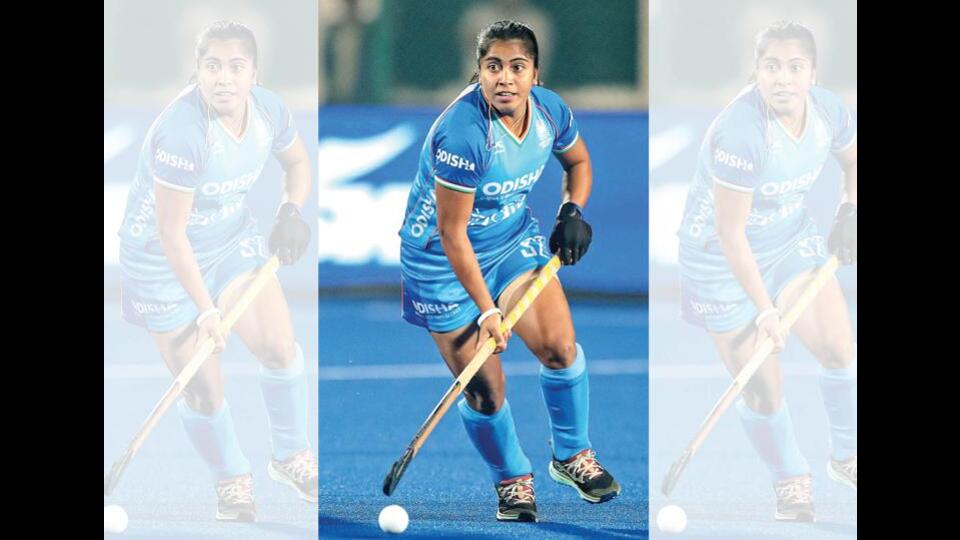
As the Indian women’s hockey team gears up for the Summer Olympics in Paris, meet some players who are hoping to win big
Sportspeople often say they’re driven by hunger – that they’ve got an appetite for winning. Neha Goyal, 27, midfielder on the Indian women’s hockey team, however, recalls being driven by actual hunger. She grew up in Sonipat, Haryana, with an alcoholic father and a factory-worker mother. “My mother made ₹800-900 a month. Our entire household ran on that; our school fees, everything,” Goyal recalls. When a school friend told her that playing hockey meant both new shoes and new clothes, Neha headed straight for the field. She was nine years old.
“I watched the other kids play. Then I told the coach I wanted to play too,” Goyal says. “She gave me a skipping rope and said, ‘jump’. I jumped.” It impressed the coach, former India captain Pritam Rani Siwach enough to take little Neha on and offer support by way of clothes, shoes, even school fees, in addition to training. Goyal played her first tournament at 13, winning ₹2,000 as player of the match. “That’s the day I believed I could turn this into a career and start to support my family.”
Goyal is one of the 11 women on the Indian Women’s Hockey team that has its eyes set on the Paris Olympics this year. They’ve worked hard and long, and they’re dreaming big. They won the Jharkhand Women’s Asian Champions Trophy 2023 in December. They are now hard at work, training and hoping to seal their spot at the Paris Olympics in the FIH Hockey Olympic Qualifiers next week. The last Olympics, held in Tokyo, saw them lose in the third-place match and miss a spot on the podium. But the team has built itself up, and is now ranked sixth in the world.
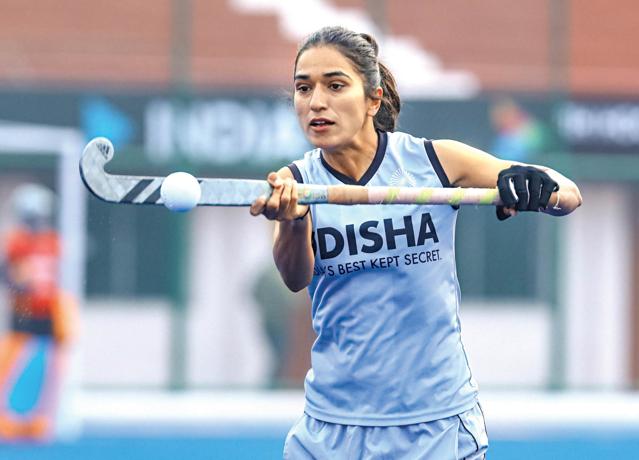
Midfielder Monika Malik, 30, is also from Haryana and was dragged to a hockey game by her friend, at 14. “I used to love playing sports anyway,” Monika says. “I went along with her for fun.” By 2013, Malik had played her first tournament and won her first medal. She says she still plays with as much enthusiasm as she did when she started. “There’s no end to hockey,” she says. “You learn something every day. I’m still learning, even now.”
Malik’s dad, an assistant sub-inspector with Chandigarh Police, realised the full extent of his daughter’s talent when he saw her play for India in the 2014 Asian Games, and return with a Bronze. “I’m from a middle-class family. Everyone wants to get government jobs,” she says. She currently works as an officer on special duty with the Indian Railways. Hockey also brought Malik and her sports-loving father closer. “He really takes care of me. Sometimes he calls me up to ask, ‘Diet kaise chal rahi hai? (How is the diet going?) ’”Malik says, laughing.
Savita Punia started playing hockey in 2004 by chance. Her teacher at the Haryana government school knew she wasn’t interested in cricket or any other sports, but suggested to her father that she try out judo, hockey or badminton at a local sports camp. “My mother had health issues and I was taking care of her. I never thought they’d send me,” Punia admits. But they did.
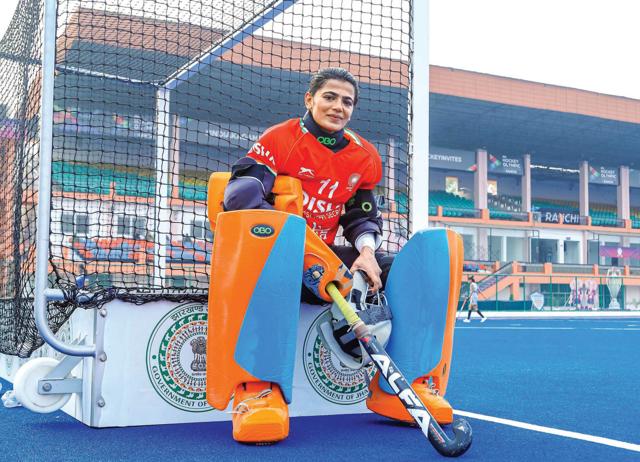
Before leaving, Punia sat down with her grandfather, with whom she was very close. “He told me that 25 years ago, he’d gone to Delhi and watched a hockey game. He said it was very difficult and required immense skill and brains.” It was literally all she knew. But she did well enough to be whisked away to the Sports Authority of India centre in Hisar for more training.
The first few weeks were hell. Punia was homesick, crying at night and pleading with her parents to take her back home. When her father finally came to get her, the coach told him he hoped she’d eventually play for India and be a goalkeeper. She only found out when she got home and was devastated. But the hockey gods threw in a miracle. Her father had already bought her a goalkeeper’s kit. “His salary was ₹13,000 a month and he went and spent ₹18,000 on it,” says Punia. “I figured, the least I could do is give it another shot.”
Now 33, Punia is the team’s captain. The women practise morning and evening every day. “Our coach Janneke Schopman and mental conditioning coach Peter Haberl focus on our mental health as well. We have breathing exercises before breakfast,” Goyal says. Malik adds that training is intense. “But our recent win has boosted our confidence.”
They’re also celebrating other small wins on their way to Paris. Both Goyal and Punia say they feel like they’re at par with the men’s team, a feat that even cricket hasn’t achieved. “The men’s team is doing well, and we’re trying to be as good as they are. Ultimately, we’re both teams for all of India. What does men or women have to do with it?” asks Goyal.


