
 E-Paper



Keeping the faiths: How some Indian families are doing Diwali differently

 Prefer HTon Google


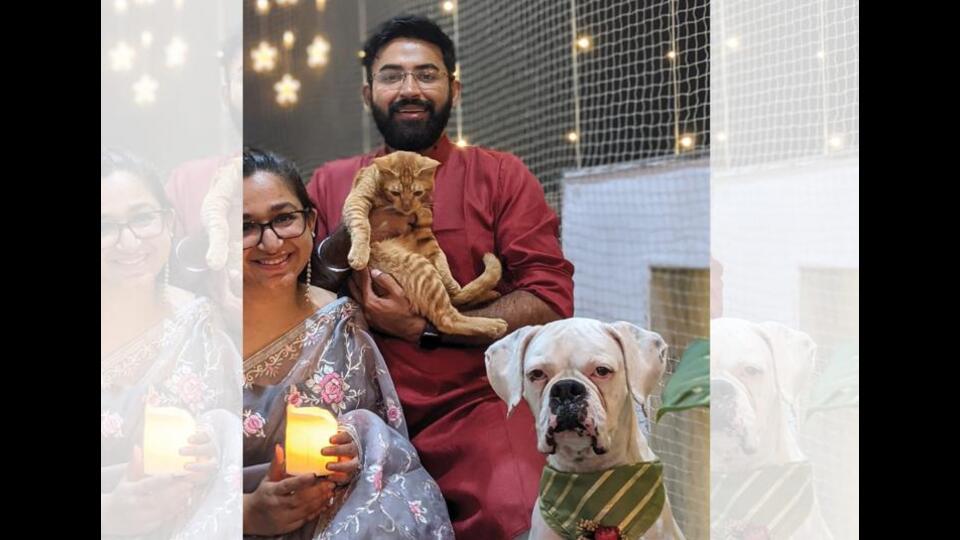
When interreligious families celebrate Diwali, the festival gets a sparkling remix. Rituals are reborn, kids have a blast, and love shines brighter
When Farzana Hussain and Ishaan Puri got married after 10 years of dating, they wed in court. The two now live and work in London and don’t consider religion a part of their identity. They celebrate Eid, Diwali and Christmas. “All celebrations revolve around food and drinks,” says Hussain.
Her nephew, she says, didn’t know his parents were Muslim until recently; he is nine. “He thinks my husband and I are Christian, and that my cousin is Hindu, because she lives in Mumbai and celebrates Ganesh Chaturthi.
When it comes to love, religion has a way of stretching at the seams, accommodating interfaith couples, distance and a child’s curiosity. This Diwali, see how some families have blended diverse customs, food habits and of course, celebrations.
Recipe for peacetime
Sadaf Chowdhary, 36, and Yatin Grover, 34
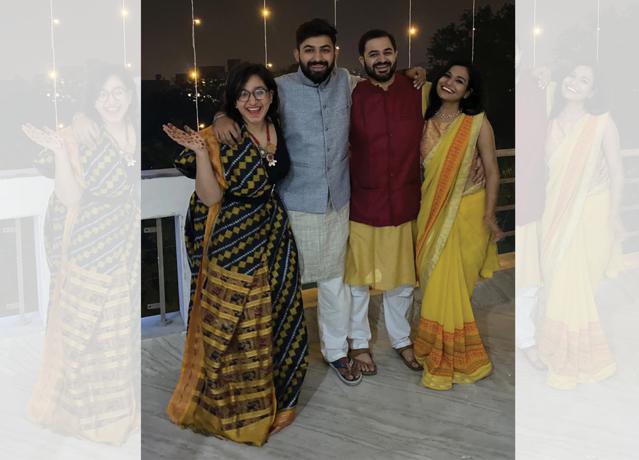
The lawyers met at work in 2014 and tied the knot in 2018. Yatin was born into a Punjabi Hindu family from Gurgaon, with Sikh lineage on his maternal side. Chowdhary was born to a Muslim family from Lucknow. Neither wanted to convert to the other’s religion. Both also retained their birth names.
“Eid and Diwali are our favourites! We celebrate most Eids in Lucknow with my family and spend Diwali with Yatin’s side of the family, in Gurgaon,” says Chowdhary. “We try to bring both families together to celebrate at least two festivals together in a year.” This year, both families celebrated Eid and Holi together.
They’ve also started their own tradition. They choose one non-profit or orphanage each year for Eid and Diwali to sponsor education and meals for children. Plus, they cook biryani for the local dog gang.
It has taken a little while to get here. “I remember my first Eid with my in-laws,” Chowdhary recalls. “No one showed any enthusiasm.” One acquaintance commented that Chowdhary shouldn’t celebrate Eid anymore, because she’d switched to her husband’s side. It hurt, but her response was to invite them over for an Eid dinner. “Everyone got enthusiastic and dressed up. We fed children at a local orphanage, then came home to a hearty meal. The acquaintance also joined us and had nothing more to say after that night,” she says.
Chowdhary and Grover have, over time, realised that to steer out of tricky social situations, the couple must respond as a team and not opposing forces. Nosey relatives? That’s just irrelevant noise.
A full calendar
Annie Arakkal Marwaha, 44, and Sameer Marwaha, 44
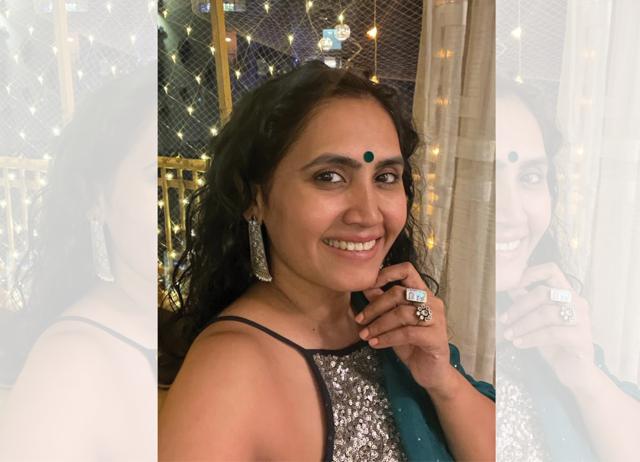
Most folks may know Annie Arakkal Marwaha from the radio. She’s the voice behind Afternoons with Annie on 94.3 Radio One. Few might know is that she and her husband, Sameer Marwaha, come from conservative families. Arakkal Marwaha is a Christian from Kerala, Marwaha is a Punjabi. They met at work, hit it off, and dated for about three years before marrying in 2006.
Marwaha grew up in Maharashtra. “He said that Ganpati is one festival he wants to celebrate every year and introduce our son to,” says Arakkal Marwaha. When the Hindu month of Bhadrapada rolls around, they bring home a Ganesh idol, keeping the décor minimal but enjoying the celebration. “Last year, my father and my son made a clay idol at home, because we’re also trying to keep it as organic and sustainable as we can,” she says. They also celebrate Easter, Onam, Diwali and Christmas, and observe Good Friday. “Sameer sets up the tree,” says Arakkal Marwaha.
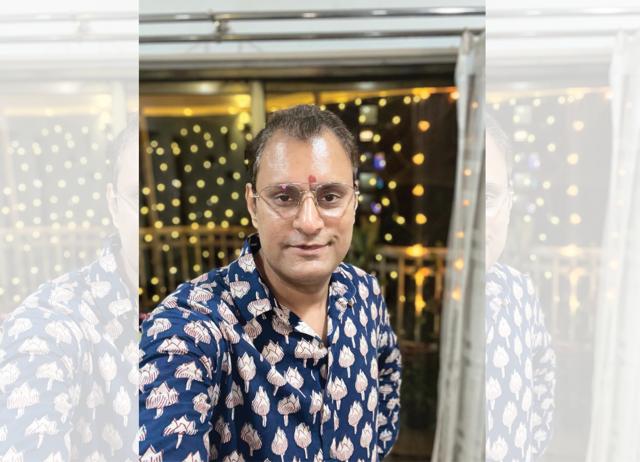
The mix and match developed of its own accord. Arakkal Marwaha took cues from her mother-in-law for rituals. “In Christian communities, a statue of Mother Mary is usually taken ceremoniously from home to home in May and October. It visits our home too. When I’m decorating the statue or the altar, I do a mix of bright red or bright white – colours usually seen during Ganpati. The floral arrangements are also not typically Catholic or Hindu. I have my in-laws over, they pray with us. On Diwali, we meet their family. On Onam, everybody is over at my place,” Arakkal Marwaha says. “I sing the bhajans better than anyone else in the family. My son knows both the main prayers from church and the prayers said during pujas.”
Picking and mixing
Darrell Pinto, 42, Pradnya Pinto, 42
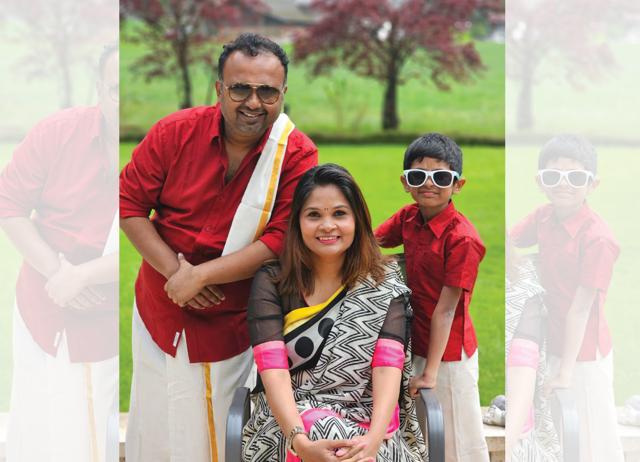
“I always wanted a Catholic wedding, I hate wearing saris,” admits Pradnya Pinto, who was raised in a Hindu home, and works in corporate compliance at the National Stock Exchange. Luckily, she met banker Darrell Pinto, a Christian, in 2005 and had her dream wedding in 2010. “I never wanted a Hindu wedding. There are so many rituals and I find them quite boring. I’m not a religious person, though I do believe in God,” she says.
They had their fair share of battles before the wedding, but converting to the spouse’s faith was not one of them. “I don’t have the patience for customs. Diwali, for me, means good clothes, stepping out, meeting people.”
The two celebrate Christmas and Easter. Her in-laws live with them, and they’re staunch Catholics. “So, we follow the Catholic rituals at this time, but visit Pradnya’s parents’ house during Diwali or Dussehra. We celebrate all the festivals together,” says Darrell Pinto.
At Christmas, the wife does the decorating. For Diwali, the husband gives up meat. Their son enjoys the best of both worlds and being fussed over by Christian and Hindu grandparents. “My in-laws have also been very respectful – they call my parents and wish them – and my parents call them over for Diwali,” Pradnya Pinto says.
Neither of them have fielded snarky comments from relatives or friends. “A family friend, an old uncle in Mangalore [where Darrell is from], told me, in front of my parents, that I’d have to convert to Christianity to marry Darrell,” she recalls. “My dad was silent. I was too. It was Darrell who spoke up and said, she’s not going to do any such thing’.”


