
 E-Paper



Make a scene: The cheat code to appreciating cinematography

 Prefer HTon Google


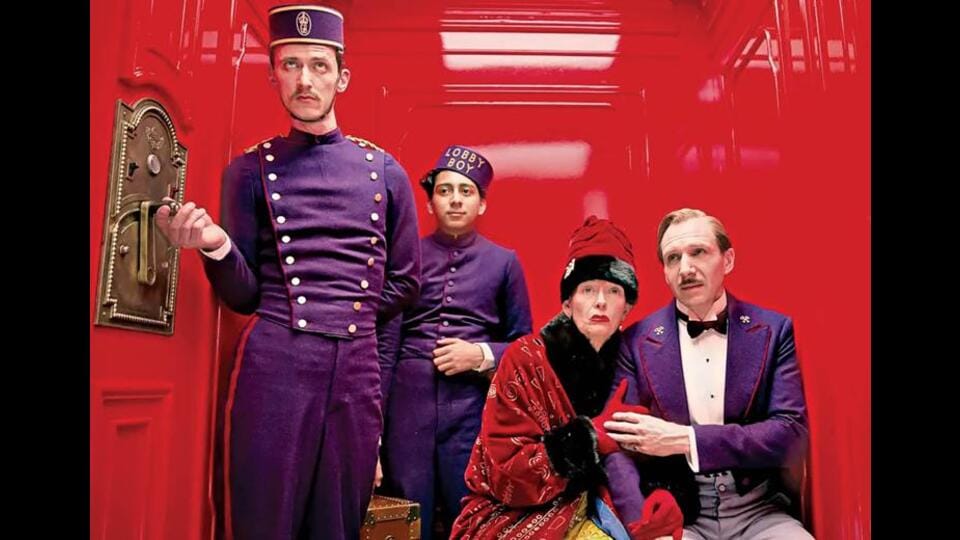
Cinematography is what makes some films seem magical and others, a mess. Here’s what to look for during your next binge night
It’s easy to get lost in Asteroid City (2023), Darjeeling Limited (2007), The Grand Budapest Hotel (2014) and The French Dispatch (2021). What is it about Wes Anderson’s style that hooks us in? Is it symmetry, the perfectly composed frames or that muted pastel palette? Turns out, it’s all that and a little bit more.
Anderson’s signature visual elements are easy to identify. What about the distinctive look of A Death in the Gunj (2016), Call Me By Your Name (2017), Gully Boy (2019), Gangubai Kathiawadi (2022) — or most Sanjay Leela Bhansali films, really — that makes us want to watch them over and over even if we’re only half following the plot? Pooja Rajkumar Rathod, cinematographer for the 2023 documentary Secrets of the Elephants and Satya Rai Nagpaul, cinematographer for 2022’s Ghoomketu, both BAFTA Breakthrough India 2023 honourees, offer a quick guide to following a film’s visuals.
Stay composed. Cinematography is essentially visual storytelling, and good cinematography will tell the story effectively, says Nagpaul, whose recent project, Nocturnes, has been picked up by Sundance in the World Cinema Documentary Competition. Consider where the camera has been placed, the lighting, and how they create the mood. “Audiences are fantastically image-literate now,” he says. “If you say ‘composition’, they understand, unlike previous generations, which didn’t have mobile phones. All the elements that are in the frame, how they’re balanced, that is your composition.” Think of the 2016 film Fitoor. Sorry Tabu, but the framing in that movie is more memorable.
Keep an eye out. Good cinematography is like a box of Easter eggs. It packs in several things that subtly add to the story. The Grand Budapest Hotel uses colour to signify the decline of the hotel’s grandeur. Scenes start off with bright, saturated reds and purples, but as the building loses its shine, so does the visual palette.
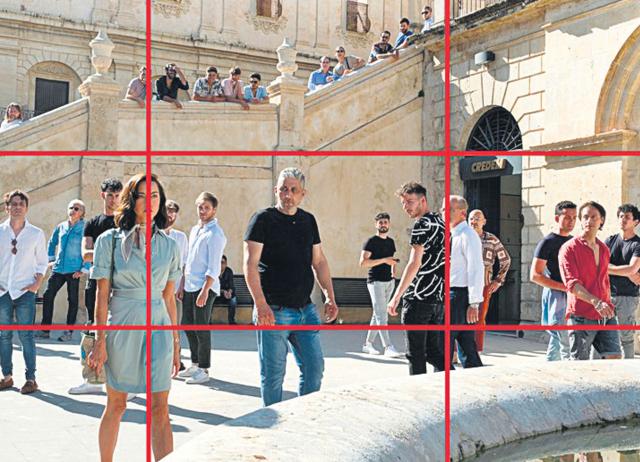
Rule it out. Rathod recommends looking for the classic rule of thirds. Imagine the screen as a grid, using two horizontal and two vertical lines. In a well-known scene from S2 of The White Lotus, Aubrey Plaza is positioned off-centre, attracting the audience’s eye—the same way the crowd of men are drawn to her. The men occupy the remaining two-thirds of the shot, giving the impression of crowding her, and viewers pick up on it immediately.
Get in the mood. “When you look at an image, you respond to it emotionally,” says Nagpaul. “And when you respond to an image emotionally, you’ll notice that a large part of your response is coming from the mood that is being set.” Haider (2014) used snow, fog and nighttime to add multiple layers of emotion to a story of revenge, betrayal and loss.
Catch the rays. “If you can use natural light in a dramatic way, like backlit shots, that is a sign of good cinematography,” says Rathod. Tumbbad (2018), a period film praised for its cinematography, draws on blue and grey, and red and gold, in the costumes, the set design and in the lighting. There’s hardly any sunlight; viewers rarely have a clear idea of whether it’s day or night.
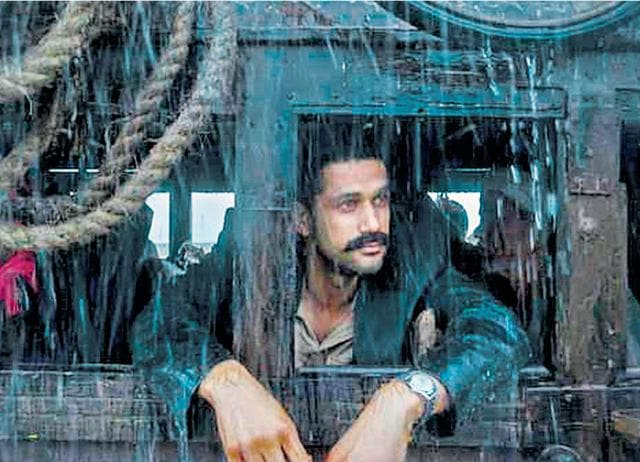
Keep moving. Movement and how you compose it, gives the story life, Nagpaul says. “It’s all guided by the story. The camera is not just a record button, it should move you emotionally,” he says. Rathod is of a similar view. “If an elephant is moving, the way I’m moving my camera should make the viewer feel like they’re moving with the elephant,” she says. “It says a lot about how comfortable you are with your camera and how much you know your subject. The way I pan for a langur is very different from the speed at which I pan for an elephant.”


