
 E-Paper



Top shots: How girlbosses are changing TV for the better

 Prefer HTon Google



Women are calling the shots at more TV studios and networks. The result? Stories that fight stereotypes and let women characters break away from silly binaries
Virgin, vixen, vamp. Mother, muse, martyr. Banshee, boss lady, bitch. If women on screen tend to look like cardboard cutouts – lacking depth and individuality – it is largely because no one has cared to present them as they really are. Most women work in front of the camera, rather than behind it. But over the past few years, viewers have noticed the start of a change, from glitzy to gritty.
Much of this is because there are more women behind the scenes, with the power to shape stories, explore new storylines, show women as complex and fun, flawed and real.
This isn’t a coincidence, it’s an acknowledgement that women are serious consumers too. “Barbie made a billion dollars,” says Mrinalini Khanna, vice-president at Lionsgate India. “In one week this year, the Top 10 artists on the Billboard charts were all women. Taylor Swift is now a billionaire. The kind of buying power women have is becoming more obvious.”
The path ahead is rocky – as it is when stereotypes are set in stone. “If you want to show a ‘bad’ woman on screen, she’s having a drink. A man having a drink, however, is supposed to be sexy,” says Nimisha Pandey, chief content officer at Zee5. So, women are stepping in, determined that the stories they greenlight have none of these tropes.
They’re fighting battles of their own too. “Women in entertainment, in leadership positions, hit a ceiling after a point,” Pandey says. “When it’s all creative, there tend to be more women. When the stakes get high, when more money starts to come in, then companies want a man handling it.”
Meet four women fighting the good fight at the top, to create shows and series that everyone, men and women, can be proud of.
Taking the fight to the screen
MRINALINI KHANNA, vice-president, Originals, Lionsgate India
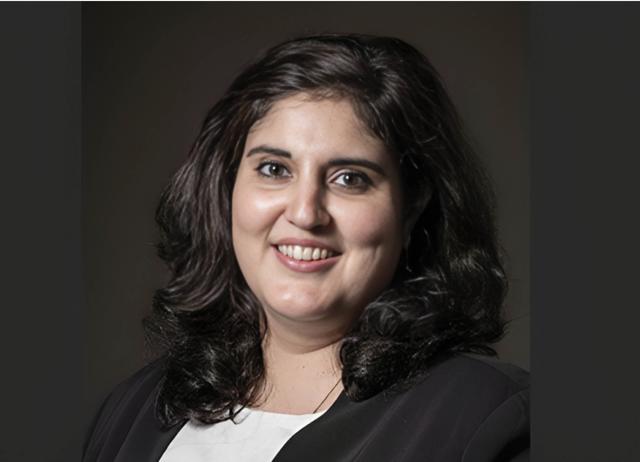
She grew up in Delhi and studied to be an architect. But much to her father’s chagrin, she landed her first job with NDTV working on a show about interior design in 2003. TV, she found, was much more interesting than poring over blueprints, so Khanna moved to Mumbai in 2007, for a job as a script supervisor at Endemol. She worked her way up to the head business development, set up the media company’s premium scripted division and producing shows such as The Test Case and Mission Over Mars [for Alt Balaji] and Bombay Begums, Trial by Fire and Tooth Pari [for Netflix].
Khanna, 45, has been with Lionsgate India since 2021, setting up their studio, and is busy producing films and series. Change has come, slowly but surely, to the industry in the two decades she’s worked in it. “It was believed that women controlled the remote from morning until afternoon, before the man returned home and took charge,” she says. As households began adding more TVs, or screens, it became evident that shows could offer more than tired tropes.
![Khanna has produced shows such as The Test Case and Mission Over Mars [for Alt Balaji] and Bombay Begums, Trial by Fire and Tooth Pari [for Netflix].](https://www.hindustantimes.com/ht-img/img/2023/12/07/original/01e4e9ce-94ff-11ee-b497-7d5526698aa9_1701975176481.jpg "Khanna has produced shows such as The Test Case and Mission Over Mars [for Alt Balaji] and Bombay Begums, Trial by Fire and Tooth Pari [for Netflix].")
“There’s a marked shift between the generation I grew up in and the generation I produce for today,” Khanna says. Women are now front and centre in the viewership game. And Khanna knows that merely switching a male character for a female one in a story rings hollow. “And because there’s diversity, it brings in sensitivity too, which perhaps stories weren’t able to do earlier.”
So, having a woman not just on screen but in the decision-making seat helps. Scripts featuring well-rounded women characters are more likely to get greenlit. Still, Khanna often struggles to get films and shows to represent women fairly. “Everyone thinks that at a pyjama party, women wear sexy lingerie and have pillow fights,” she says. “But there are sides of women that mainstream entertainment never shows. You have to fight to show women and loyalty in their marriage, to remove the idea that if a woman is professionally ambitious, she’s a witch. We need to fight for it from the writing stage.”
Khanna says she’d love to see film about women on a road trip, portraying a nuanced female friendship, warts and all. “It’s easy to have good-looking women play likeable characters. The fight is to expand on what defines likeability in a woman. And I hope that’s a fight we continue to win.”
Her pick:
“One of my favourite portrayals of women is Deepika Padukone in Cocktail. I think that’s the first time we saw a party girl with a heart. And I love Tara Khanna (played by Sobhita Dhulipala) in Made in Heaven, because that is such a grey yet loving character. It beautifully shows how hungry she is to escape her circumstances.”
Shining through the details
NIMISHA PANDEY, chief content officer, Zee5
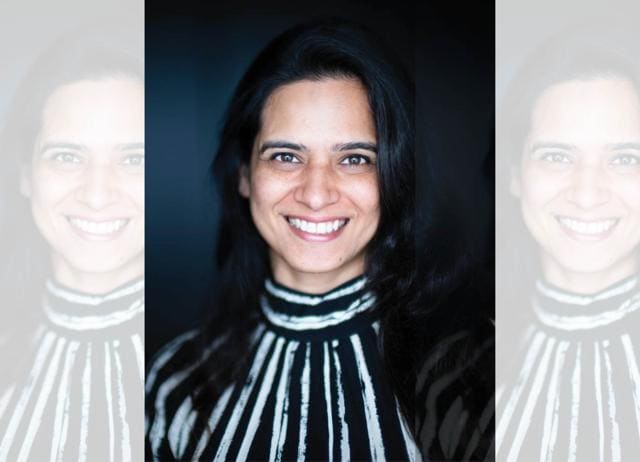
As someone in charge, Pandey believes that when there are more women in the room, decisions are more intuitive than they are strategic. “When we’re hearing scripts or pitches, men may not find anything wrong. When there’s a woman in the room, she will ask, ‘But why does a girl working in a newspaper only have to be on the fashion beat?’ It is such a small thing, but so important.”
Pandey, 40, learnt early where the power lay. She moved from Delhi to Mumbai as an intern and loved the city, the TV world and her independence. As a lowly programming executive at Sony Entertainment Television in 2004, she had a good view of the creative and business sides of TV. She knew she’d rather make the decisions than just offer opinions and switched sides. In 2015, when Ekta Kapoor was raising money for her ALTT platform, she approached Pandey to be her head of content. “We’ll be able to tell the stories you won’t be able to tell on TV or film,” Pandey recalls Kapoor saying. She took the plunge. She’s since also been Netflix’s director of international Originals, greenlighting shows such as Mismatched, Yeh Kaali Kaali Aankhein and Heera Mandi, and moved to Zee5 in 2021.
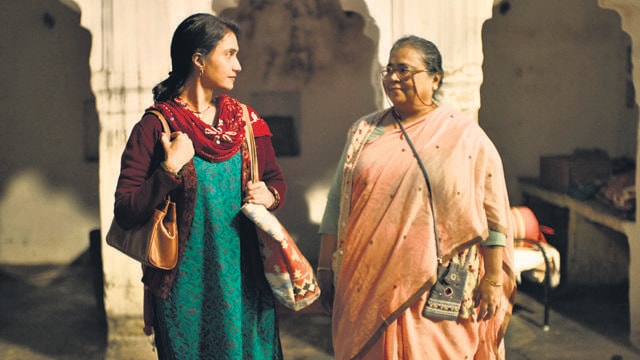
Pandey remembers inviting pitches for Jaanbaaz in 2022, which was to feature stories about real heroes. “All the stories came in and they were all men. It didn’t even occur to anybody that they could think of a woman !” This, she says, is why you need decision-makers who are aware of what’s getting left out.
It affects the way shows get conceptualised, developed and shot. She aims for scripts that break stereotypes, in big ways and small. Saas Bahu Achaar, a TVF show on Zee 5 greenlit by Pandey has Amruta Subhash play the protagonist, who is from a lower class, is illiterate and going through a divorce because her husband has fallen in love with somebody else. To make money and fight for custody, she starts to sell achar. “What is really beautiful here is the relationship with the other woman,” says Pandey. “More often than not, you’d see the other woman as the villain. Here, the other woman also has a traumatic past and is a supportive mom to her children, too. Why should your hatred be directed at the other woman?”
Her pick:
“Amruta Subhash has finally got her due with Lust Stories. I used to hear people say that she was not glamorous for the lead. But if you can bet on Manoj Bajpayee and Pankaj Tripathi why not a woman? You need a strong woman voice in the room to do that.”
Weaving in the change
ARADHANA BHOLA, managing director, Fremantle India
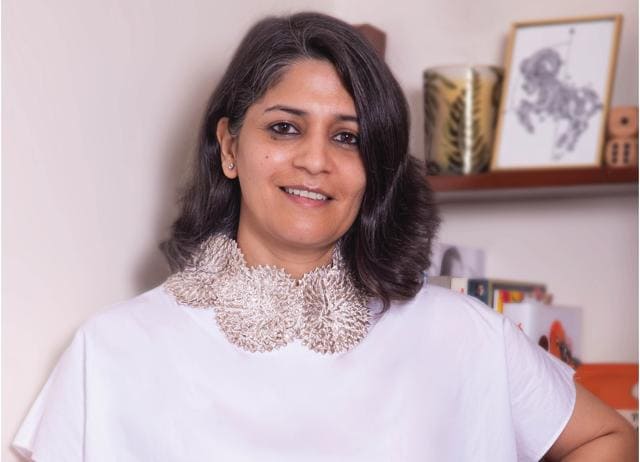
Early in her career, Bhola, 47, was being headhunted by a company head who was keen on having her on his team. Shortly before joining, she discovered that she was pregnant. When she shared the news with her new employers, they ghosted her overnight. “It clearly didn’t deter my professional growth, but it stayed with me,” says Bhola, who has spearheaded shows such as Indian Idol and India’s Got Talent.
The bias against the female workforce still persists, she says. “If she’s young, the belief is that she’ll get married; if she’s married, it’s that she’ll get pregnant; if she has a family, it’s that she won’t be able to excel at work. Does one ever ask that of male workers?” So, at Fremantle India, Bhola takes pride in the fact that women don’t just populate several departments, they also head them. Finance, production and social media are all led by women. It changes the shows they put out in subtle but necessary ways. There’s representation on screen in unlikely spots. “On the recent 10th season of India’s Got Talent, two of our three judges are women: Kirron Kher, who proves that age is just a number, and Shilpa Shetty, a mother of two who’s living her best life professionally.”
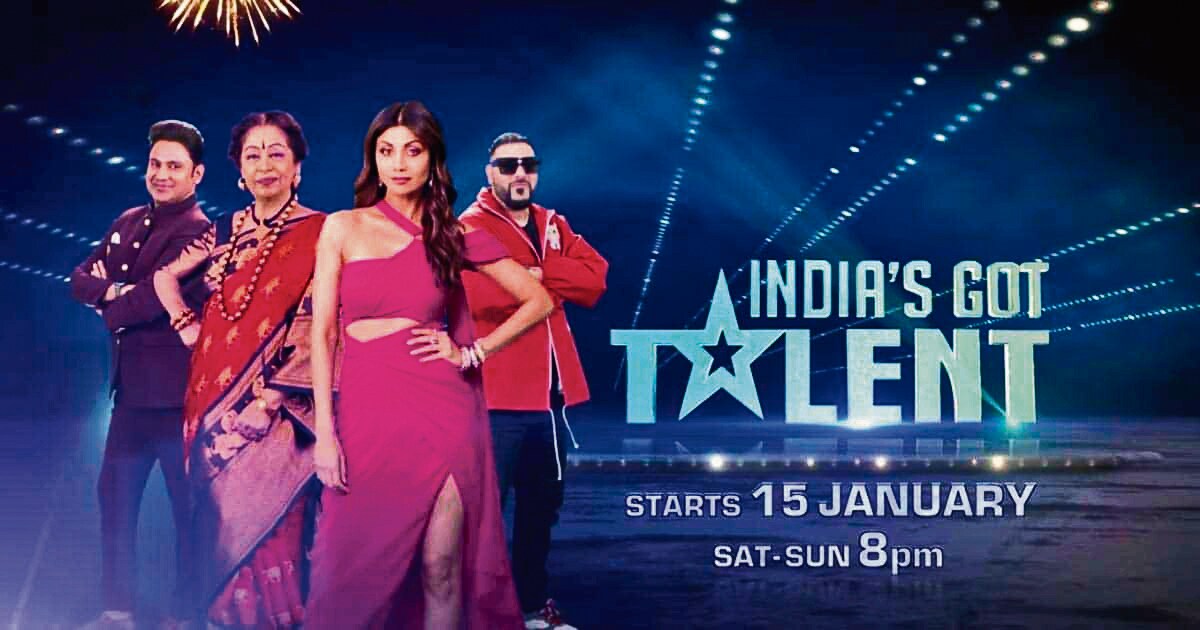
Change isn’t about men versus women -- it is about men and women, Bhola says. “But sometimes grand gestures are required to draw the public’s attention. “I remember when Shah Rukh Khan, with whom we’ve created two seasons of TED Talks India, put Deepika’s name before his in the credits of Chennai Express,” she says. “He makes light of it, but it was a big step because he was breaking tradition and more importantly, the mindset that goes with it.”
That sort of progressiveness is slowly spreading. “In Dahaad, Gulshan Devaiah plays a supporting role to Sonakshi Sinha’s character, yet holds his own. In Jaane Jaan, two male characters serve as a foil to the female protagonist. It is heartening to see female-centric plots being created with well-crafted male characters as well.”
Of course, change starts from within. “Last week in a casting discussion, a team member proposed a name for a role and the external agent objected on account of skin tone. It didn’t take me a second to dismiss it,” scoffs Bhola. “What thrilled me was that most people in the room, including men, seconded it.”
Her pick:
“We are a country of 1.4 billion of which nearly half is female. The voice of that half needs to be better represented, to be better heard and of course, better entertained.”
Opening up the game
KANCHAN MARATHE, Producer and co-founder at Little Mad Pictures
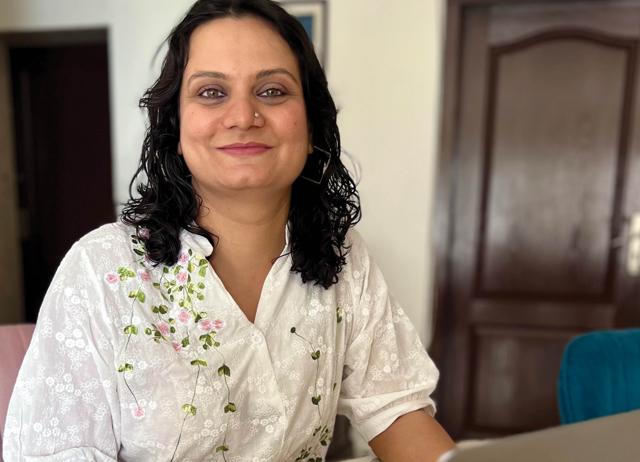
Marathe grew up in Indore, studied in Pune and learnt film production in Mumbai before starting work as a line producer in 2005. In 2011, she joined Viacom 18 Motion Pictures, working on movies such as Tanu Weds Manu, Kahaani, Shaitaan, Gangs of Wasseypur, OMG and Special 26. She moved on to producing streaming shows such as Jamtara and Taj Mahal 1989, joined Netflix in 2020, and later co-founded her entertainment company with Rohit Vedprakash in 2022. Among other projects, they are currently developing a film based on Puja Changoiwala’s 2020 book Gangster on the Run, about the transformation of Rahul Jadhav from a gangster to an ultra-marathoner.
“We were aware of the fact that there were enough male-centric stories. We wanted stories that represent women,” says Marathe, 40. She offers Raveena Tandon’s character, Kasturi Dogra, in the Netflix show Aranyak. “She has flaws, she has aspirations, she’s also a mother. That’s how we look at male characters most of the time.” Her co-founder Vedprakash, who was then Director Local Language Originals at Netflix, greenlit the show.
Marathe has seen the industry and with audiences change over the last decade. Ekta Kapoor’s ’90s soap operas about domestic Indian life may now seem regressive and cringey. “But it was content made specifically for women, for the first time,” she says.
The watch-anywhere, continue-anytime nature of streaming networks meant that shows for women needn’t be confined to the afternoon slot for housewives or expensive evening primetime. New stories won’t come out of existing industry systems. “If the content has to change, we need more women to hold creative jobs,” Marathe says simply. “We need more women directors, more women writers, women musicians. For Thappad [2020, a drama film about a woman whose almost perfect life is shook up when her husband slaps her at a party] to happen, Mrunmayee Lagoo has to write that film. I don’t know if a man is ever going to be able to write a script like Thappad.”
Indian viewers seen plenty of English-language shows in which women writers and producers have created brave and sensitive work. Marathe looks to HBO’s 2017-2019 blockbuster murder mystery Big Little Lies, written by Liane Moriarty and starring an ensemble cast of women including Reese Witherspoon and Nicole Kidman. “What an interesting story. It talks about how mothers can be flawed and blind, and yet we empathise with them. That kind of storytelling hasn’t reached India yet.”
What has done well in India are better fleshed-out parts for mainstream heroines. “Deepika Padukone’s character in Jawan was just written so well,” Marathe says, referring to how, even though it was a small part in a mainstream, commercial film, her character made the biggest impression. “I was impressed watching all the female characters in Jawan,” Marathe says, “within the boundaries of that mainstream hero-worship kind of thing. Those are the efforts that we also need to acknowledge.”
Her pick:
Producers say ‘Oh, we must have a woman in the writing room.’ But what does that mean? Are you going to find someone who can impact the story? Because that’s the important part.”


