
 E-Paper



Why are musicians hating on fusion? A fresh look at the OG mashup genre

 Prefer HTon Google


Musicians are suddenly wary of calling their work fusion. Done right, the genre drives change, keeps sounds evolving. But what’s right? Hear from the artists
Mic drop. Fusion music is no longer cool. Mention the term at a jam session, and instrumentalists will roll their eyes. Gig organisers think twice before putting it on promotional posters and Reels. Musicians don’t include the term in their repertoire. Listeners are not searching for fusion in their music apps.
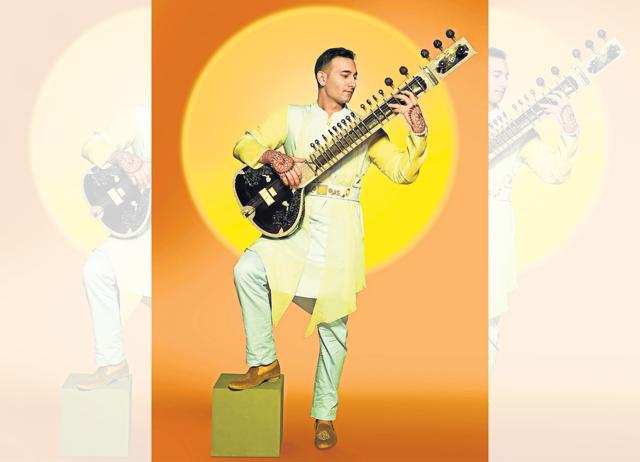
“Fusion always had a bad reputation,” says Rishab Rikhiram Sharma, 25, a sitarist, music producer and composer based in New York. “If someone said they were doing a fusion concert or album, they were immediately looked down upon by Hindustani classical purists.”
Sharma speaks from experience. He grew up in Delhi, picked up the sitar at age 10, and learnt from Pandit Ravi Shankar. He’s from the fourth generation of Indian classical-instrument makers who created the first electronic sitar and who operate Rikhi Ram’s Music in Delhi. Sharma shot to fame during his Sitar for Mental Health live sessions in 2020. Hate for fusion music wells up largely when it’s not done right, he finds. “Knowing nothing about an unfamiliar genre, but combining it with one you know, for the sake of it, doesn’t give birth to mind-blowing music.”
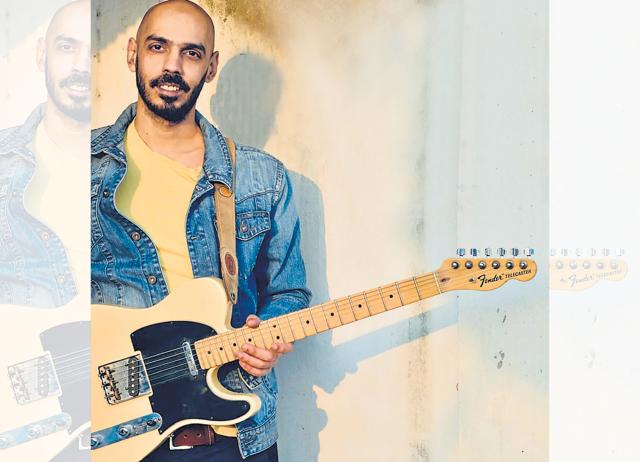
The new wave of disdain stems largely from how easy it now is to sample music from different cultures online and use software to force-fit two or more unfamiliar genres. “When it is too easily accessible, you lose interest in what could be a beautiful journey,” says Kolkata guitarist Rohan Ganguli, 43, who gained recognition in 2001 as part of the band Cognac and now plays with his eponymous quartet. He started off by playing the blues, got into rock and roll, studied jazz and now plays a fusion of Blues, Indian classical and jazz.
On Reels, in ad jingles, even in songs, much of it sounds audibly off – a flat mishmash, lacking sparkle. “People can’t relate to it because it doesn’t have a melody or beat driving it,” says Nisa Shetty, 29, actress, singer and songwriter, who divides her time between Mumbai and Delhi.
What are we getting right and wrong this time?
Mix tape
Fusion’s problem – in food, fashion, language and the arts – is that it’s a descriptor rather than a formally defined category. In music, Ganguli describes it as disparate tunes and types going into a melting pot and making a new sound. “Call it what you want, the idea stays the same.” he says. It means that even musicians who take offence to the term end up playing fusion music one way or another.
Musicians have been formally blending disparate styles through the 1950s and ’60s, as Hindustani classical musician and sarod exponent Ali Akbar Khan performed in the West. Miles Davis pissed off the purists with this jazz-rock-funk experiments in the late 1960s (Bitches Brew, 1970, changed jazz forever). His collaborators, guitarist John McLaughlin, keyboard player Joe Zawinul, and saxophonist Wayne Shorter, drew new sounds from their fusion work.
Griping about it in India is particularly pointless. Even established forms such as Hindustani classical music have survived because of collaboration and innovation. “There would have been an Islamic influence on local music during the Delhi Sultanate or Mughal rule,” Sharma says. Amir Khusrau (1253–1325), a composer in Persian, Turkish, Arabic, and Braj Bhasha, introduced ragas such as Yaman Kalyan, Zeelaf and Sarpada to Hindustani classical music. Naimat Khan, aka Sadarang, the chief musician in the court of Muhammad Shah (1719-1748), and his nephew Feroze Khan, aka Adarang, adapted the khyal form to the one we know today.
Contemporary music carries even more connections. Ganguli started out playing the Blues. “In my head, I was already fusing different worlds together,” he says. “I am an Indian, living in India and Indian culture feeds my intellect. But I like music that comes from different continents.” It’s what makes his brand of fusion different from everyone else’s.
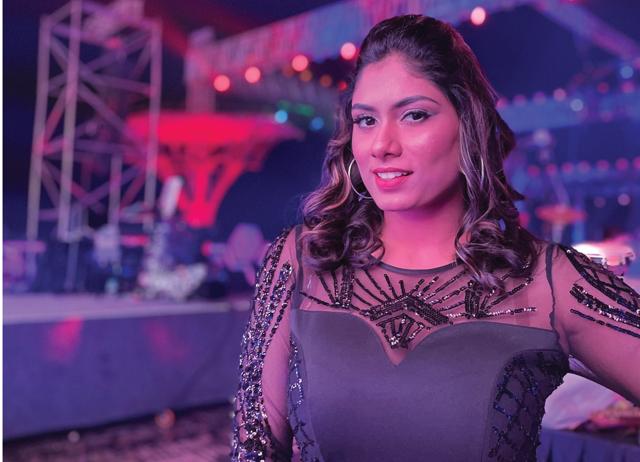
Shetty learnt Hindustani classical music as a child and studied Western styles in school. When she writes original music, the Hindustani sound finds its way in “even though the song might just be with a guitar”. She’s working on an untitled angry break-up song. But she’s not calling it fusion. Because it’s not. Not everything needs to be, just because you had Hindustani Classical training.
Familiar strains
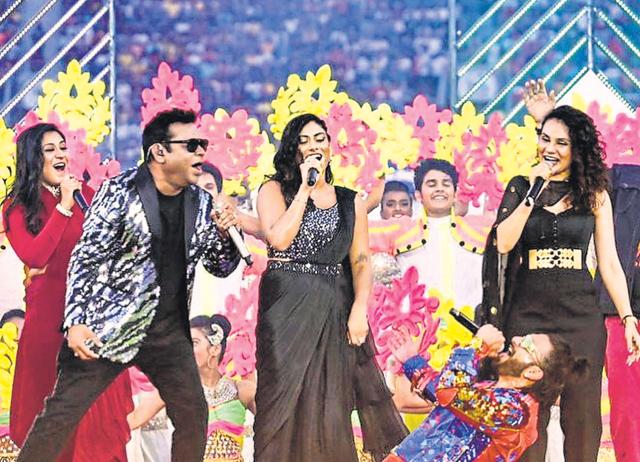
For great examples of fusion music, look to Bollywood, says Shetty. It’s The Time To Disco (Kal Ho Naa Ho, 2003) “starts with a tabla, then a synth comes in, then an 8O8 [the drum machine that defined ’80s and ’90s techno and house],” she says. “That is fusion music. The song is in Hindi and there are English lyrics too.” On the Dil Chahta Hai (2001) soundtrack, there are instruments from everywhere, including the didgeridoo in Jaane Kyun. Film music has drawn in Spanish, Turkish and Arabic elements, and we’ve sing along, en masse, not caring that it’s fusion.
Ravi Shankar popularised sitar music in the US by incorporating Indian and Western concepts into his work. Shakti, a band formed by English guitarist John McLaughlin, Indian violin player L Shankar, Zakir Hussain on tabla and TH “Vikku” Vinayakram on ghatam, did it in 1973. Contemporary bands such as Advaita have given the East-West blend a modern touch. India’s three-time Grammy winner Ricky Kej performs around the world in Hindi, Punjabi, with artists from the US, Europe and beyond.
Ganguli produced the song Yeh Naina by Aaryan Banthia last September. He used the drums, tabla, a horn section and piano harmonium. There are qawwali backing vocals mixed with pop sounds with an alaap at the end. Sharma is working on a Sitar For Mental Health tape, just featuring the sitar, while he continues creating Hindustani classical-fused low-fi and hip-hop compositions. “I don’t need heavy instrumentation because the sitar is meditative in its nature. It doesn’t always need to be ‘fusion’,” he says.
Get it right
There’s no single correct way to compose fusion music but getting it right is a delicate game. Traditional Indian music focuses on a single voice. Music in the West has relied on harmonies and counter-melodies. “Indian classical musicians should have a good understanding of harmony and the dissonance jazz embodies,” Sharma says. “Jazz musicians should understand the theory of ragas.” There must be a shared understanding of the collaboration rather than two or more musicians doing their own thing. And as with all the arts, the disparate elements must journey to a meaningful end. “When you think that your own identity is getting lost, stop, take a backseat and re-evaluate.”
Without fusion there would be no new music, Sharma says. “Music is only sum of its parts: different sounds, cultures, styles fusing together. It’s still happening today, maybe we just need a new term for it.”


