...
...
Next Story

Hardly Anyone Shops at This Mall—and That’s Made It a Huge Success

Published on: Nov 16, 2026, 08:27:40 IST
WSJ
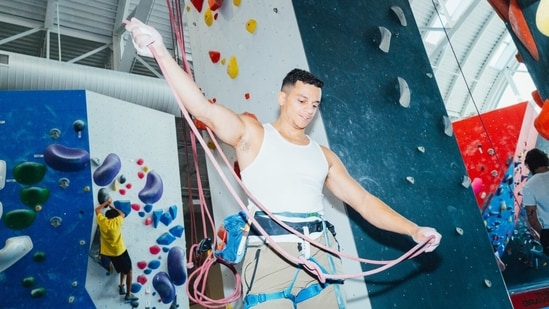
PREMIUMDaniel Fishman gets ready to climb at the Gravity Vault at the Samanea Mall.
Daniel Fishman gets ready to climb at the Gravity Vault at the Samanea Mall.
Advertisement

A Long Island retail emporium eliminated most stores and reinvented itself with games and entertainment such as laser tag and axe-throwing.

WESTBURY, N.Y.—Daniel Fishman grew up near the Samanea New York mall in this Long Island city, but he never set foot there. “I didn’t even know this mall really existed,” he said.

Now, he’s a regular mall rat. The 25-year-old visits Samanea twice a week, though not to go shopping. He and friends scale the rock climbing wall, sometimes spending up to four hours there, before grabbing a plate at the mall’s new soul-food restaurant.

“This mall is cool,” said

Athletic customers enjoy the I.FLY Trapeze at Samanea Mall.

The mall’s occupancy has soared to 76% today from 22% in 2019. Foot traffic is growing each year and outpacing the broader indoor mall sector, according to data firm Placer.ai.

“It is definitely moving in the right direction,” said Matt Mullen, owner of Empire Adventure Park, which opened at the mall in 2024, when “there was barely a pulse in this place.”

American malls, under threat from the decline of department stores and the rise of online retailers, are emerging from a long downward spiral that once looked as though it might destroy the industry. About 200 malls have closed since 2008, according to real-estate data firm Green Street, leaving about 900 operating across the U.S.

Today, more malls are leaning in to new food offerings like Korean hot-pot restaurants and entertainment venues to boost foot traffic and appeal to younger customers. Samanea went for what might be the most extreme version of this strategy: Roughly three out of every four tenants are devoted to food or activities.

Until recently, the mall had been in a protracted decline. It started in 2009, when department store Fortunoff, which anchored the mall, went bankrupt and closed. Saks Off Fifth, another anchor, left a few years later. By 2012, the mall was nearly empty and in foreclosure.

Chinese building-materials and real-estate company Lesso Group purchased the property, then known as the Mall at the Source, in 2017. It originally tried to remake it into a home-furnishings marketplace, shifting in 2019 to courting restaurants and other retailers.

Part of Ryco's Escape Room & Lounge.
A control center at Ryco’s escape room.

Then, the mall’s general manager, Dominic Coluccio, saw demand for entertainment intensify when people were itching to go out after the pandemic. A nearly empty mall offered ample space for businesses looking to give them things to do.

Samanea’s cavernous dimensions also lent itself to activities. The food court’s high ceilings provide a rare opportunity outside of industrial warehouses to build a full-service rock-climbing gym.

Weekends are the mall’s busiest time, but on a recent Saturday afternoon, the main corridor was far from bustling. That is because customers typically stay for an hour or more at attractions, instead of popping in and out of retail stores. Visitors spent an average 89 minutes per trip at Samanea Mall so far this year, according to Placer.ai, about 23% longer than the typical indoor mall.

Saturdays at Samanea kick off with children’s birthday parties. Empire Adventure Park, which caters to children under age 14 with trampolines and laser tag, was in full swing.

Empire Adventure Park plays host to a large number of children’s birthday parties.
Krista Pisaryuk and her children visit the ValoJump at Empire Adventure Park.

Fatima Szlamka, who was hosting her son’s sixth birthday celebration, hadn’t been to the mall since high school and mainly shops online. It was a relief to have another venue available for children’s entertainment, after many of these businesses closed during the pandemic.

“You end up going to the same place multiple times,” she said. “So, we ventured out a little bit from our close neighborhood, but everybody was happy to do it.”

Samanea’s survival isn’t guaranteed. Nearly a quarter of the mall remains vacant. Several tenants said that they would like to see more foot traffic, particularly on weekdays. Some would like more traditional shops. Right now, the mall has a couple retailers that purchase returned items from Amazon and resell them at rock-bottom prices.

“If people are just there casually walking around to shop a little bit, I think that’s just another opportunity to capture some of the people in the area,” said Michael Ma, co-founder of the Nan Xiang Xiao Long Bao restaurant.

When mall foot traffic looks light in common areas, it could be because customers are spending longer inside single attractions.

Cracks are also showing in entertainment retail’s recent surge. Popular pickleball chain the Picklr blamed costs associated with its rapid expansion for its decision to seek Chapter 11 protection last month.

Northeastern mall owner Pyramid Management Group has also increased food and entertainment, with 30% of its portfolio’s square footage leased to these concepts, triple the amount two decades ago. But the mall owner still depends on visitors filling shopping bags.

Samanea’s general manager said he is open to leasing space to certain traditional retailers, but entertainment venues will continue to power the mall’s turnaround.

“Each time a guest returns, they can then create a new experience,” Coluccio said.

Write to Kate King at kate.king@wsj.com

WESTBURY, N.Y.—Daniel Fishman grew up near the Samanea New York mall in this Long Island city, but he never set foot there. “I didn’t even know this mall really existed,” he said.

Now, he’s a regular mall rat. The 25-year-old visits Samanea twice a week, though not to go shopping. He and friends scale the rock climbing wall, sometimes spending up to four hours there, before grabbing a plate at the mall’s new soul-food restaurant.

“This mall is cool,” said Fishman. “They’ve got more activity-stuff going on over here.”

The mall owners have turned what was once a collection of fading retail shops into an entertainment emporium, pumping new life into the ailing property. It now attracts families with young children to play laser tag and jump on trampolines. Gen Zers swing on a trapeze or roam the escape room. Couples on date nights visit the axe-throwing bar.

Athletic customers enjoy the I.FLY Trapeze at Samanea Mall.

The mall’s occupancy has soared to 76% today from 22% in 2019. Foot traffic is growing each year and outpacing the broader indoor mall sector, according to data firm Placer.ai.

“It is definitely moving in the right direction,” said Matt Mullen, owner of Empire Adventure Park, which opened at the mall in 2024, when “there was barely a pulse in this place.”

American malls, under threat from the decline of department stores and the rise of online retailers, are emerging from a long downward spiral that once looked as though it might destroy the industry. About 200 malls have closed since 2008, according to real-estate data firm Green Street, leaving about 900 operating across the U.S.

Today, more malls are leaning in to new food offerings like Korean hot-pot restaurants and entertainment venues to boost foot traffic and appeal to younger customers. Samanea went for what might be the most extreme version of this strategy: Roughly three out of every four tenants are devoted to food or activities.

Until recently, the mall had been in a protracted decline. It started in 2009, when department store Fortunoff, which anchored the mall, went bankrupt and closed. Saks Off Fifth, another anchor, left a few years later. By 2012, the mall was nearly empty and in foreclosure.

Chinese building-materials and real-estate company Lesso Group purchased the property, then known as the Mall at the Source, in 2017. It originally tried to remake it into a home-furnishings marketplace, shifting in 2019 to courting restaurants and other retailers.

Part of Ryco's Escape Room & Lounge.
A control center at Ryco’s escape room.

Then, the mall’s general manager, Dominic Coluccio, saw demand for entertainment intensify when people were itching to go out after the pandemic. A nearly empty mall offered ample space for businesses looking to give them things to do.

Samanea’s cavernous dimensions also lent itself to activities. The food court’s high ceilings provide a rare opportunity outside of industrial warehouses to build a full-service rock-climbing gym.

Weekends are the mall’s busiest time, but on a recent Saturday afternoon, the main corridor was far from bustling. That is because customers typically stay for an hour or more at attractions, instead of popping in and out of retail stores. Visitors spent an average 89 minutes per trip at Samanea Mall so far this year, according to Placer.ai, about 23% longer than the typical indoor mall.

Saturdays at Samanea kick off with children’s birthday parties. Empire Adventure Park, which caters to children under age 14 with trampolines and laser tag, was in full swing.

Empire Adventure Park plays host to a large number of children’s birthday parties.
Krista Pisaryuk and her children visit the ValoJump at Empire Adventure Park.

Fatima Szlamka, who was hosting her son’s sixth birthday celebration, hadn’t been to the mall since high school and mainly shops online. It was a relief to have another venue available for children’s entertainment, after many of these businesses closed during the pandemic.

“You end up going to the same place multiple times,” she said. “So, we ventured out a little bit from our close neighborhood, but everybody was happy to do it.”

Samanea’s survival isn’t guaranteed. Nearly a quarter of the mall remains vacant. Several tenants said that they would like to see more foot traffic, particularly on weekdays. Some would like more traditional shops. Right now, the mall has a couple retailers that purchase returned items from Amazon and resell them at rock-bottom prices.

“If people are just there casually walking around to shop a little bit, I think that’s just another opportunity to capture some of the people in the area,” said Michael Ma, co-founder of the Nan Xiang Xiao Long Bao restaurant.

When mall foot traffic looks light in common areas, it could be because customers are spending longer inside single attractions.

Cracks are also showing in entertainment retail’s recent surge. Popular pickleball chain the Picklr blamed costs associated with its rapid expansion for its decision to seek Chapter 11 protection last month.

Northeastern mall owner Pyramid Management Group has also increased food and entertainment, with 30% of its portfolio’s square footage leased to these concepts, triple the amount two decades ago. But the mall owner still depends on visitors filling shopping bags.

Samanea’s general manager said he is open to leasing space to certain traditional retailers, but entertainment venues will continue to power the mall’s turnaround.

“Each time a guest returns, they can then create a new experience,” Coluccio said.

Write to Kate King at kate.king@wsj.com

All Access.
One Subscription.

Get 360° coverage—from daily headlines
to 100 year archives.

E-Paper
Full
Archives
Full Access to
HT App & Website
Games
 
Explore Lifestyle stories on Fashion,Health, Relationships, Festivals, Travel, recipe Fitness and Happy Eid 2026 Wishes. Get expert tips, trending updates, and practical ideas to improve your daily routine on Hindustan Times.
SHARE THIS ARTICLE ON