
 E-Paper



Why Pregnant Women Face a Tough Call on Antidepressants


 Prefer HTon Google


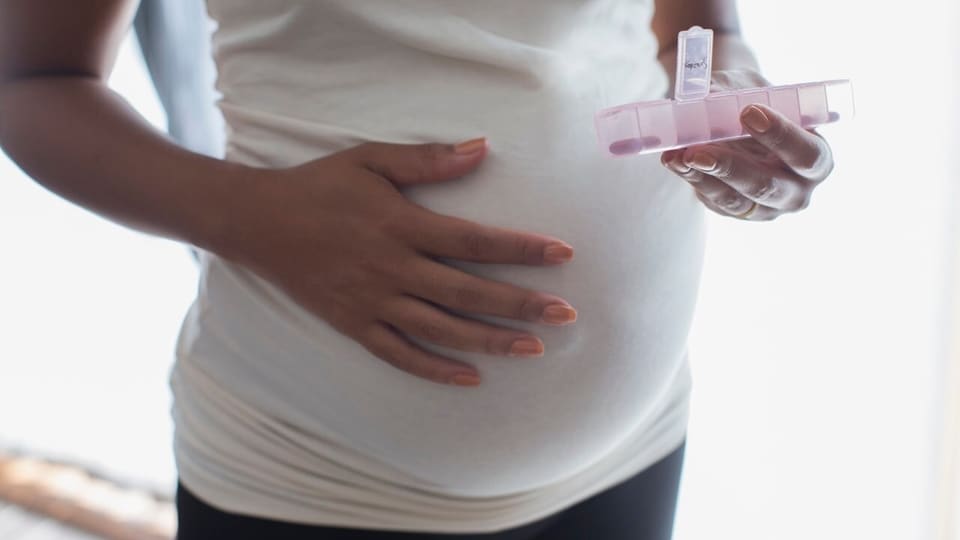
A debate at a government panel about selective serotonin reuptake inhibitors (SSRIs) sparked a backlash.
It isn’t uncommon: depression and anxiety during pregnancy.
Many women struggle with what’s best for their own health and their baby’s. Should they keep taking selective serotonin reuptake inhibitors (SSRIs), the most common and well-studied class of antidepressants? Start them if they have a new diagnosis or relapse? Or push through without any medication?
Only about 5% of pregnant women take SSRIs despite perinatal depression and anxiety disorders affecting roughly 20% of women, says Dr. Kay Roussos-Ross, a professor and OB-GYN at the University of Florida College of Medicine.
A recent U.S. Food and Drug Administration panel debated whether SSRIs should carry a black-box warning, the latest in Health and Human Services Secretary Robert F. Kennedy Jr.’s criticism of the overuse of psychotropic drugs.
The debate is set against the backdrop of the country’s stubborn maternal mortality rate, which is among the highest in the developed world. Mental-health conditions are the leading cause of pregnancy-related deaths occurring up to a year postpartum.
Nearly all the invited FDA panel speakers focused on the risks of SSRIs during pregnancy. This prompted a backlash from doctors and professional groups, who said you can’t look at the risks of SSRIs without weighing them against the risks of untreated depression.
Like many things related to medicine, a black-and-white answer is hard to come by, especially since it’s easy to cherry-pick studies to support an argument.
Ethical concerns and feasibility
Not to mention it is challenging to assess medication safety in pregnant women, notes Krista Huybrechts, a professor of medicine and epidemiologist at Harvard Medical School who conducts such studies. Randomized controlled studies, which show true cause and effect, aren’t typically conducted in pregnant women because of ethical concerns and feasibility, so scientists must rely on observational studies that make it difficult to disentangle effects.
Huybrechts says older studies might have shown that women taking SSRIs during pregnancy had an increased risk for negative health outcomes, like a higher risk of having babies with congenital malformations. But she says more recent, higher-quality studies—which do a better job of controlling for confounding factors—find any risk is likely minimal.
She says it is inappropriate to focus on the findings of one or two studies supporting a specific argument. Rather it is important to look at the entire body of evidence.
“Nobody can ever in absolute terms say that a medication is absolutely safe” during pregnancy, says Huybrechts. But if you review all the evidence, in women with severe depression, “the benefits clearly seem to outweigh the risks,” she says.
Dr. Adam Urato, chief of maternal-fetal medicine at MetroWest Medical Center in Framingham, Mass., disagrees.
“This is a chemical-exposure problem,” says Urato, who presented at the FDA panel. “It’s chemicals going into the mom, crossing the placenta, going into the baby, and they’re having these impacts.”
Animal studies show pregnancy complications and altered fetal development, particularly in the brain. He points to human studies linking SSRIs with miscarriage, birth defects and preterm birth, as well as pregnancy complications and long-term development issues.
Untreated depression
Supporters of SSRI use in pregnancy counter that untreated depression raises similar risks, including preterm birth, miscarriage and pregnancy complications, as well as poor prenatal care and impaired bonding. Those can translate into issues later.
Urato says he counsels his patients about both the risks and benefits of taking an SSRI during pregnancy. “A lot of the patients I take care of decide to stay on their antidepressants, and I don’t fight with them, I don’t argue with them,” he says. “I actually support my patients and their decisions.”
Barbara Akman, a 42-year-old in Worcester, Mass., is one such patient. Akman says she has struggled with depression and anxiety since her 20s. After realizing she was losing her temper with her older children, she began taking an SSRI and found it improved her mood significantly.
When she became pregnant with her third child, she chose to stay on an antidepressant even after Urato informed her of the pros and cons. “I was just so set on staying on them that I kind of didn’t hear all of the cons,” she says.
She regretted that temporarily when her daughter, Sabrina, was born and within 48 hours was experiencing symptoms of neonatal adaptation syndrome, a usually transient state in which newborns withdrawing from an SSRI experience jitteriness, fussiness and respiratory issues.
“That was heartbreaking to watch her go through,” Akman says. But the symptoms dissipated in a couple of days, and she doesn’t regret her decision to stay on the medication. “I had to think about my other kids at home,” she says.
Neonatal adaptation syndrome happens with about 25% to 30% of women who take SSRIs during pregnancy. Doctors say it typically comes on within 24 to 48 hours, when babies are still in the hospital, and is transient, resolving in a couple of days or up to a couple of weeks. (Some doctors, like Urato, say the effects can be severe and longer-lasting).
No ‘zero risk’ options
Dr. Simone Vigod, a psychiatrist at the Women’s College Hospital in Toronto, says there are no “zero risk” options if a pregnant woman is depressed. Both taking medication or forgoing treatment could result in negative health outcomes.
“No option, including being untreated, comes without potential risk for some kind of undesirable outcome,” she says. “So it is really tough.”
It’s unclear how many women opt to stop taking antidepressants during pregnancy, but large cohort studies estimate about half of women do, says Dr. Tiffany Moore Simas, an OB-GYN at UMass Memorial Health.
She acknowledges the potential risks of SSRI use, which include a small increase in newborn pulmonary hypertension (an absolute risk of one to two cases per 1,000 births) and maternal postpartum hemorrhage.
“You can’t choose whether or not you have a mental-health condition,” she says.
“You have a choice on how you treat them, and SSRIs are often not only appropriate but can be lifesaving.”
For mild depression, therapy and lifestyle changes may be enough, doctors say. But for moderate to severe cases, medication is often necessary.
Doctors such as Moore Simas worry that adding a black-box warning will further stigmatize treatments. “One of the best ways to optimize the health of a baby is to optimize the health of a mother,” she says.
Write to Sumathi Reddy at Sumathi.Reddy@wsj.com
Catch your daily dose of Fashion, Taylor Swift, Health, Festivals, Travel, Relationship, Recipe and all the other Latest Lifestyle News on Hindustan Times Website and APPs.


