Indians often pride themselves on their cuisine, which is a smorgasbord of vibrant and timeless flavours. And as much as we appreciate global cuisine, a dish without some finger-licking Indian spices doesn’t bring the trophy home for those used to these flavours. So, as the patriotic fervour runs high ahead of the 73rd Republic Day, we tell you how the desi cuisine has influenced platters globally.
“Our cuisine is an amalgamation of multiple ingredients, indigenous produce, crafts and techniques. We’ve given the world a lot to be inspired from,” says chef Tarun Sibal. Reminding us of the significance of chicken tikka masala in the UK, being their national dish, Sibal goes on to list more dishes that have made their mark abroad. He says, “Pop culture references maintain that the humble kulfi is the mother of all ice creams. The roti canai, also known as roti prata, is an Indian-origin flatbread that became popular in Southeast Asia, especially in countries like Brunei, Indonesia, Malaysia, Singapore and Thailand.”
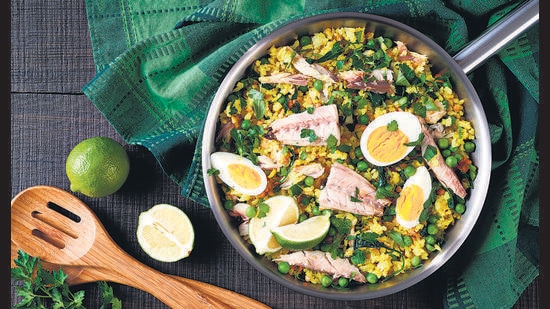
Not just that, the British Kedgeree (a mix of rice, fish and boiled eggs) is a derivative of the Indian khichdi (a mix of rice, lentils and vegetables). “Since Britishers couldn’t pronounce Khichdi, it became Kedgeree for them. This dish is still popular in the country. Even British mulligatawny soup (a curry soup, most often made with chicken, fruits, vegetables and rice) is inspired by a South Indian recipe,” informs Sadaf Hussain, chef and author. It’s believed the name originates from the Tamil words, ‘milagu’ and ‘tannir’ (black pepper and water), and is a variant of rasam.
For that matter, turmeric latte, which is touted as a superfood in the West, is a derivative of haldi doodh. “Globally, turmeric latte became popular for its quality to boost immunity and some countries tried to get a GI tag over this, but haldi doodh is Indian and is mentioned in our Ayurvedic texts,” adds Hussain.
{{/usCountry}}For that matter, turmeric latte, which is touted as a superfood in the West, is a derivative of haldi doodh. “Globally, turmeric latte became popular for its quality to boost immunity and some countries tried to get a GI tag over this, but haldi doodh is Indian and is mentioned in our Ayurvedic texts,” adds Hussain.
{{/usCountry}}The Malasiyan street snack, murtabak (a stuffed pancake) likely owes its origin to the Mughlai paratha that travelled from Lucknow to the erstwhile Calcutta (now Kolkata) in the late 19th century. Food historian and author Anoothi Vishal shares, “Murtabak took a new form in Calcutta, as a folded paratha into which keema is stuffed (instead of the Lucknowi egg-coated paratha, eaten with keema or nuqti kebab). Since the Bengal presidency was the headquarters for British outposts in Malay, and there was a labour movement, most likely this migrated to Malay, Sri Lanka and so on.” The Bunny Chow (a hollow loaf of white bread filled with curry) is a similar example of an Indian dish turned into South Africa’s fave street food.
The Mauritian cuisine is also influenced by its Indian counterpart. “Mauritian alouda (cold milkshake) is said to be the cousin of Indian falooda. Another is Mauritian dholl puri (a flatbread stuffed with yellow split peas) inspired by Indian puris,” says chef Nishant Choubey.
Catch your daily dose of Fashion, Taylor Swift, Health, Festivals, Travel, Relationship, Recipe and all the other Latest Lifestyle News on Hindustan Times Website and APPs.
Catch your daily dose of Fashion, Taylor Swift, Health, Festivals, Travel, Relationship, Recipe and all the other Latest Lifestyle News on Hindustan Times Website and APPs.